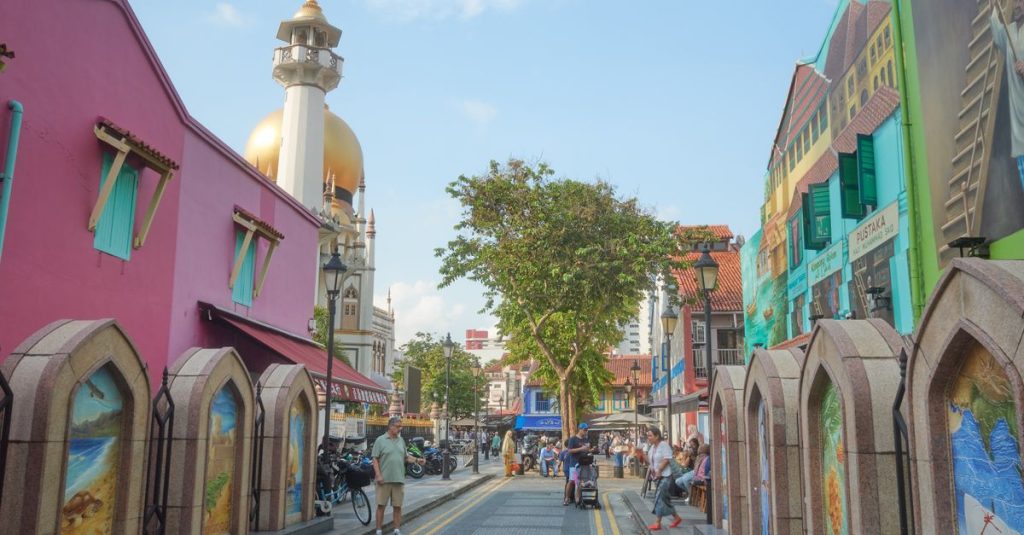
Kampong Glam and Haji Lane: Singapore’s Malay Quarter
Explore Kampong Glam and Haji Lane, Singapore’s Malay quarter, with colourful streets, street art, independent shops and cultural heritage.
Katong and Joo Chiat offer a Singaporean walk where colourful architecture, Peranakan houses and local restaurants form a single landscape. In these eastern neighbourhoods of Singapore, ornate façades tell the story of Peranakan heritage, while restaurants showcase Singaporean cuisine shaped by Malay, Chinese and Indian influences. Visitors come as much to admire the shophouses as to try laksa or choose kueh from a shop.
The best way to discover them is to take your time: look up as you walk through the residential streets, step into businesses open to the public and pause for a meal. Katong and Joo Chiat are more than a collection of photogenic façades. Their appeal lies in the proximity of heritage, everyday life and food, just a few steps from one another.
In brief

Katong and Joo Chiat are best discovered through their streets rather than from a single monument. A walk takes you from shopping streets to residential façades, with opportunities to stop at a café or restaurant. The landscape changes from one street to the next: shops, signs and houses create a lively setting where heritage features sit alongside everyday activities.
To enjoy this variety, take your time rather than trying to see everything quickly. Look at the buildings from the pavement, notice the façade details and take time to read the signs. The shops also offer clues about the neighbourhood’s current life: some attract local residents for meals or everyday shopping, while others are more geared towards visitors.
The visit is best enjoyed by alternating observation with breaks. Stopping for food lets you discover a local speciality, while a leisurely walk reveals the differences between façades and shopfronts. To place this route within a wider exploration of the city, the page about visiting Singapore can help you combine the neighbourhood with other outings.
Remember, however, that these streets are not a static backdrop: the houses and businesses are part of a lived-in environment. Staying in public areas, avoiding blocking entrances and respecting residents’ peace of mind make the walk more pleasant for everyone. This coexistence of tourism and everyday life is what gives Katong and Joo Chiat their character.
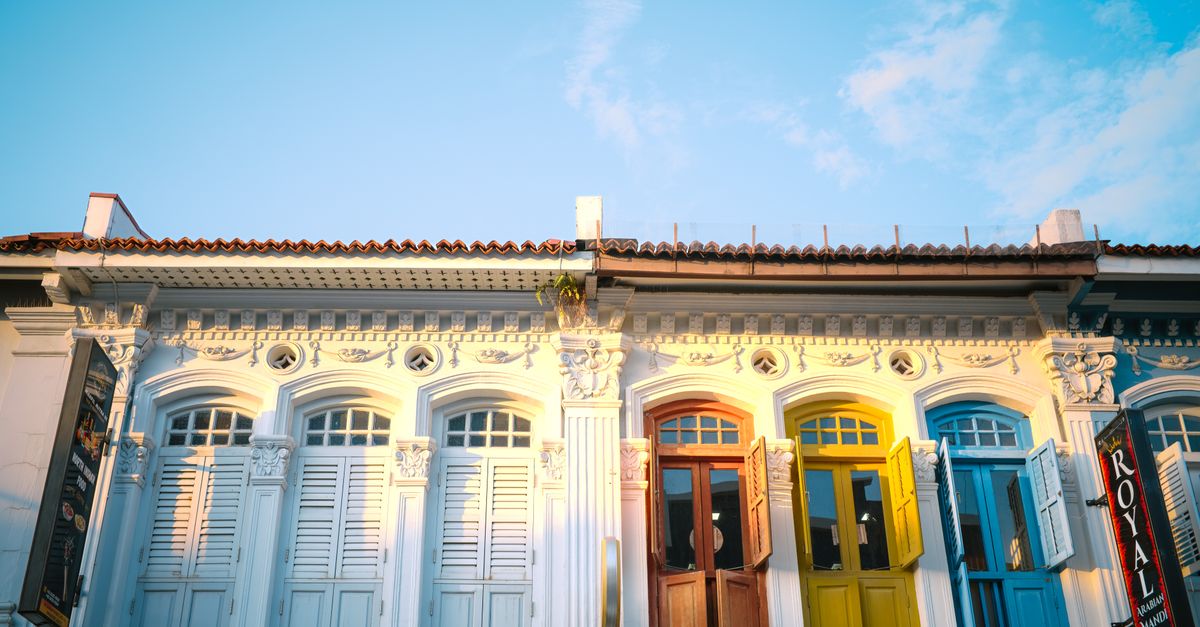
Peranakan houses are among the most recognisable sights in Katong and Joo Chiat. Their façades catch the eye with their colours and detailed ornamentation, which may combine decorative motifs, tiles and sculpted elements. The expression “colourful architecture” aptly describes their visual impact, but their appeal also lies in their variety: two neighbouring buildings may feature very different details.
Shophouses also contribute to this urban identity. Traditionally designed to combine commercial and living spaces, they form an important part of the streetscape in many Singapore neighbourhoods. In Katong and Joo Chiat, looking at them encourages you to notice the proportions of the façades, the openings and the ornaments rather than settling for a hurried photograph.
Peranakan culture reflects a mixed heritage that can be seen in several aspects of local life, including crafts, traditions and food. The houses are a visible expression of it, but they do not tell the whole story on their own. To better understand Singaporean traditions and customs, you can complement your walk with the page about Singapore’s cultural characteristics.
Visitors can view the façades from public areas, but should not assume that every interior is open. Some properties are private or occupied: respect barriers, doors and signs on site. The best approach is to appreciate the architectural details while remembering that these buildings are part of a lived-in neighbourhood.
Singaporean cuisine can be discovered in Katong and Joo Chiat through both full meals and small treats. Laksa, a noodle soup with rich, fragrant and spicy flavours, is one of the iconic dishes to look for in the area. Recipes and versions served may vary from one establishment to another, so it is best to read the menu and choose according to your tastes, particularly if you prefer a mild or spicy dish.
Local restaurants also offer the chance to discover specialities linked to Peranakan traditions and Singapore’s culinary habits. To learn more about the history and characteristics of laksa, see this page about the origins of laksa in Singapore. Visiting at mealtime can be busy; if one establishment is full, the neighbouring streets often allow you to continue your search without turning the meal into a race. You can also explore the wider Singapore food scene.
Kueh refers to various sweet treats and preparations found in the region’s cuisines. Their shapes, colours, textures and ingredients vary, making them a good way to discover flavours beyond the main dishes. In a shop, asking about the name or ingredients of an item is a simple way to choose, especially when the specialities are displayed behind a glass counter.
To explore the neighbourhood’s flavours, alternate a savoury dish with a small sweet treat rather than trying to order everything. Menus, available ingredients and opening hours may change; check the information directly with the establishment before setting off. In Katong and Joo Chiat, food is a practical gateway to Peranakan culture and local habits.
To get online as soon as you land, a Singapore eSIM can be installed before you leave, with no need to look for a local SIM card.
A successful outing mainly depends on a flexible itinerary. Start with a walk through the streets where Peranakan houses are concentrated, then plan a break at a restaurant or sweet shop. Exact distances and the time needed depend on the route and stops you choose; it is best to check an up-to-date map and transport information before setting off.
The neighbourhood is well suited to exploring on foot, but heat and showers can affect your pace. Bring water, choose suitable clothing and take shelter for a break if necessary. To organise your journeys around the city, the section about transport and mobility in Singapore is a useful addition to your preparations.
This route can also form part of a broader exploration of Singapore’s neighbourhoods. The contrast with Tiong Bahru, known for its Art Deco architecture, offers an opportunity to compare different urban atmospheres; the page about Tiong Bahru and its architectural heritage provides another idea for an outing. Each neighbourhood reveals a different side of the city, without requiring you to see everything in one day.
Katong and Joo Chiat suit an outing focused on architecture, food or both. The best time depends on what you want to prioritise: a walk to examine the façades, a meal at a local restaurant or a stop devoted to sweet treats. As opening hours and arrangements vary from place to place, it is preferable to check with the relevant businesses rather than rely on old information.
The visit does not require a packed schedule. Leaving room for detours allows you to notice small shops and details that you might miss on an overly strict itinerary. If you would like to take home a souvenir or explore the city’s shops, the page about shopping in Singapore offers further ideas.
| What to discover | What you can see or taste | Useful tip |
|---|---|---|
| Peranakan houses | Decorated façades, tiles and ornamental details | View them from public areas |
| Shophouses | Street architecture and local businesses | Take time to compare the façades |
| Local restaurants | Laksa and other Singaporean dishes | Check menus and opening hours on site |
| Sweet shops | Kueh in a variety of shapes and textures | Ask about the ingredients if unsure |
The main idea behind the visit is simple: admire the heritage, try the specialities and respect the neighbourhood’s pace. This combination shows why Katong and Joo Chiat are not just places to photograph, but also spaces where history and contemporary life meet.
Visitors mainly come for the Peranakan houses, shophouses and streets with colourful architecture. The walk can be complemented by a meal at a local restaurant.
Laksa is a speciality to look for. Menus and recipes vary between establishments, so check the ingredients if you have preferences or dietary restrictions.
Kueh are sweet treats or preparations from the region, available in a variety of shapes and made with different ingredients. Ask for advice in the shop when choosing.
Some houses are private or occupied and are not open to the public. It is best to admire the façades from the street and follow the signs displayed on site.
To book tours and activities in Singapore ahead, see the options on Klook.
Updated on 14/11/2026
Scroll to see more articles →