Singapore Laksa: Origins, Ingredients and Where to Eat It
Discover the origins of Singapore laksa, its key ingredients and where to enjoy this spicy, creamy noodle soup in Singapore.
Lau Pa Sat is worth visiting for its Victorian architecture and the satay skewers served in the evening on Boon Tat Street. In the heart of Singapore’s business district, this former cast-iron market now houses a popular food centre where office workers and travellers meet. Its main appeal lies in this contrast: a heritage building surrounded by skyscrapers, shared tables and the smoke from the grills.
Inside, the stalls showcase different sides of Singaporean cuisine, from curries and noodles to Indian specialities. Outside, Satay Street gives the meal a livelier atmosphere, with charcoal cooking and large communal tables. Come for the setting as much as for the food, without expecting every stall to be a culinary reference.
The venue fits naturally into a walk around Marina Bay or a visit to Chinatown. To plan your visit, distinguish between access to the building, the activity at the indoor counters and the tables set up in the street: these areas do not necessarily follow the same timetable.
In brief
Also known as Telok Ayer Market, Lau Pa Sat retains an instantly recognisable silhouette. Its octagonal layout, clock tower and high roof contrast with the glass façades surrounding it.
The current structure is associated with municipal engineer James MacRitchie. Its cast-iron elements were manufactured in Glasgow and then transported to Singapore for assembly: an approach that illustrates the movement of industrial techniques within the British Empire.
Look at the ornate columns, arches and metal sections supporting the roof. Their decorative finesse does not conceal their function: these elements support a large covered space while leaving the sides largely open.
This arrangement suits a tropical market, where air needs to circulate between the stalls. It also explains a useful point for visitors: a protective roof does not mean an air-conditioned room, and fans do not eliminate the ambient heat.
The centre of the building helps visitors understand its layout. Looking up from the shared passageways, you can better appreciate the relationship between the central volume, the bays and the different parts of the roof structure.
Listed as a national monument, the building is not simply preserved as an architectural object. Its food-related function maintains daily activity, with the very real demands of serving, cleaning and maintenance.
This continuity makes a visit different from a museum tour. The ironwork details are discovered among orders and trays, without contemporary use completely erasing the former market.
To photograph the columns or the central perspective, keep clear of the queues. The site’s heritage appeal also lies in its everyday life, which is best observed without disturbing the people working there.
Boon Tat Street is the main evening food destination. When the street fills with tables and grills, the atmosphere changes: charcoal smoke, conversation and illuminated façades create a setting very different from lunchtime.
Satay refers to marinated skewers that are then grilled. Chicken is an accessible choice; mutton has a stronger flavour, while other options depend on the vendors present.
Compare the menus before sitting down and check what the platters contain. A platter may include several meats or products with different prices: ask for the total before confirming, as well as any minimum quantities.
Peanut sauce generally accompanies the skewers, along with cucumber, onion and sometimes compressed rice. Check what is included in the order, as side dishes and their presentation may vary.
The best choice is not necessarily the stall that attracts the most passers-by. Look instead at the menu, how busy the grill is and how orders are prepared, without treating a queue as an absolute guarantee.
Ordering gradually allows you to adjust the quantities to the group’s appetite. You can start with the grilled food and then add a dish from inside rather than immediately ordering several assortments.
Anyone with allergies should clearly explain their requirements: the sauce usually contains peanuts, and cross-contact is possible on shared equipment. A skewer served without sauce therefore does not guarantee a suitable meal.
Service and payment arrangements may differ from one stall to another. Clarify where to sit, how to collect the dishes and when to pay; also check Satay Street’s current opening hours with the official operator.
The covered hall brings together several culinary traditions found in Singapore. Its practical advantage is simple: everyone can order from a different vendor and then join the others at a shared table.
To discover local cuisine and eating habits, look at the ingredients and preparation methods rather than just the menu photographs. Rice served with curries, noodles and Indian bread do not suit the same cravings.
| Speciality | What to expect | What to check |
|---|---|---|
| Nasi padang | Rice served with preparations selected at the counter, including vegetables, curries or rendang. | The price depends on the accompaniments selected. |
| Biryani | Spiced, fragrant rice served with different toppings. | The meat, sauce and items included. |
| Roti prata | Flatbread cooked on a hotplate, generally served with curry. | The available fillings and whether it is available when you visit. |
| Wonton noodles | Noodles with dumplings, depending on the vendor’s preparation. | The broth, toppings and condiments. |
For nasi padang, ask for the total after stating your choices, before the plate is served. The presence of fish, meat or certain preparations can significantly change the bill.
A dish made with vegetables is not necessarily vegetarian. Broths, sauces and condiments may contain animal-based ingredients: explain your diet to the vendor rather than relying on appearances.
No hawker centre guarantees the same quality at every stall. Results depend on the vendor, its speciality and the service; it would therefore be misleading to describe the entire indoor selection as exceptional or, conversely, disappointing.
Maxwell Food Centre, Chinatown Complex and Old Airport Road allow you to continue exploring street food. Spreading your tastings across several centres gives you a richer overview than trying to find every iconic dish in one place.
Here, the combination of food and architecture remains the real strength. Choose your dish according to your tastes, rather than assuming that the historic setting guarantees its quality.
The market is located at Raffles Quay in the business district. The Raffles Place and Telok Ayer stations allow you to reach the area on foot; consult the station exit maps to choose the route suited to your arrival.
Do not confuse proximity to the MRT with direct access under the building. Crossings, the exits you use and any works may change the route, as explained in our Singapore transport and travel guide.
Lunchtime lets you observe the activity connected with the neighbouring offices. The evening is better suited to the outdoor grilling experience, but the building being open does not mean that every stall serves food continuously.
Check Lau Pa Sat’s official operator for opening hours, particularly for Satay Street. For a specific speciality, also check whether the relevant stall is open: vendors may follow different schedules.
Compare the displayed prices and distinguish the main dish from drinks, side dishes and extras. Prices change; the vendor’s menu at the time of ordering is the useful reference.
Carry cash without assuming that it is the only payment method. Conversely, the availability of local mobile payment does not guarantee compatibility with your banking app or foreign card.
To put this expense into context during your stay, consult the guidance on budget and cost of living. A simple meal and an evening of shared platters and drinks do not correspond to the same budget.
Finally, choose light clothing and a seat away from the grills if you are sensitive to heat. The roof protects some of the tables, but outdoor conditions remain important for a comfortable meal.
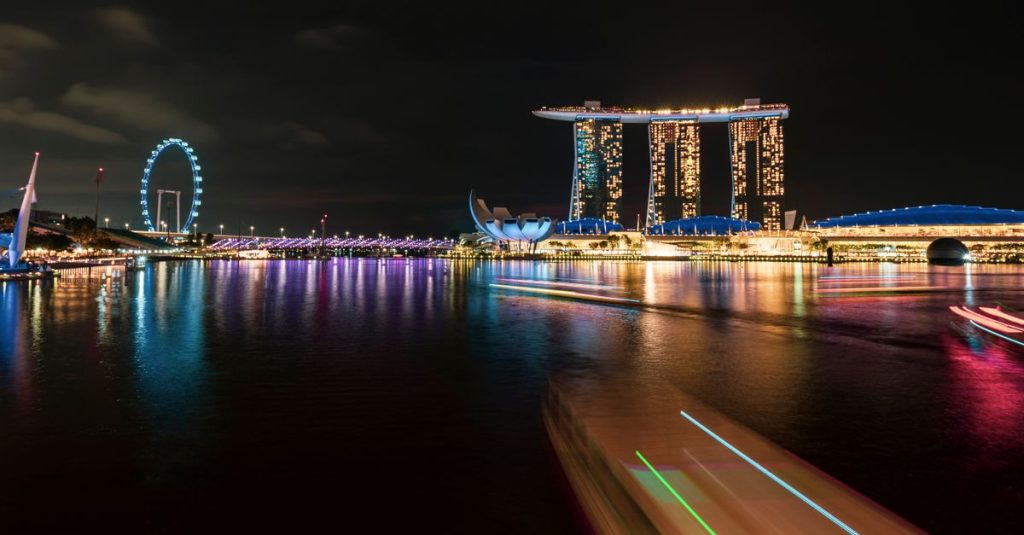
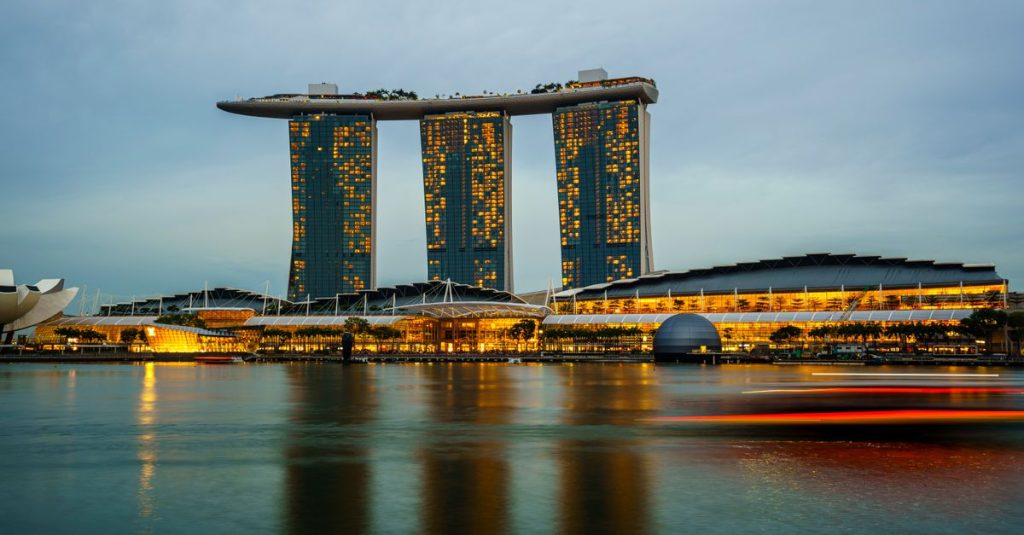
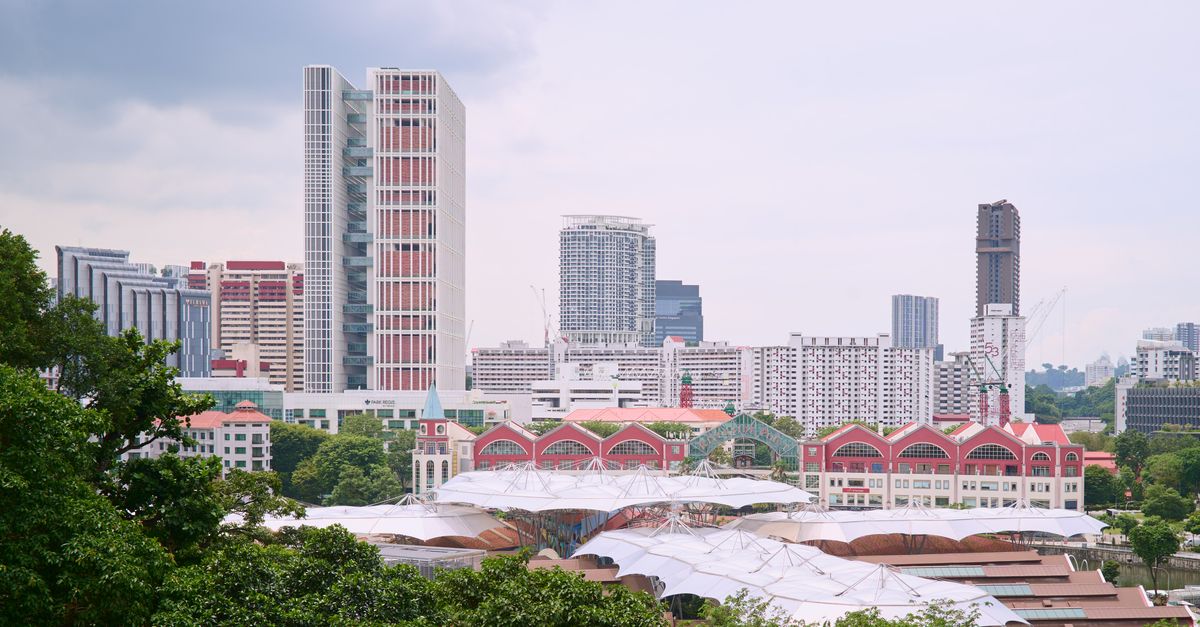
A walk around Marina Bay followed by dinner makes a coherent itinerary. The waterfront offers open views, then arriving in the streets of the financial district reveals the contrast between contemporary towers and the old market.
Merlion Park can be a stop along the way, depending on your starting point. However, plan around the actual route rather than a theoretical walking time: heat, crossings and photo stops can easily change the pace.
Chinatown is another interesting combination, with its shophouses and places of worship. Continuing towards Raffles Quay lets you see how the older districts connect with the financial centre.
To choose between these itineraries, our selection of things to see and do in Singapore helps you organise stops by area. Simply avoid planning a heavy meal elsewhere just before the grilled food.
The variety of counters makes meals easier when tastes differ. Ask for sauces separately where possible and confirm the spice level: a dish considered mildly spiced by the vendor may still be hot for a child.
In busy passageways, keep children away from hot trays and cooking areas. For a pushchair or wheelchair, check on site for the clearest route, as crowds and furniture may make movement difficult.
Families can include this meal in a programme of activities suitable for children and teenagers. Allow some time between the last visit and dinner so that you are not relying on a table becoming available immediately.
Before sitting down, ask whether the seats are free: a packet of tissues may indicate that they have been claimed. After the meal, return trays and crockery to the designated areas and follow the displayed sorting signs.
The evening is particularly suitable for the Satay Street experience, with outdoor grilling. Lunchtime is better for observing the office crowds and choosing from the indoor counters that are open.
No. Access to the building, service at the stalls and Satay Street’s activity should be considered separately. Check the current hours with the official operator and the vendor you want to try.
Look for stalls explicitly indicating vegetarian options and confirm the ingredients. The sauces and broths in a vegetable dish may contain animal-based products.
The usual arrangement relies on tables available on site rather than conventional reservations. For a group or a specific request, ask the operator directly before your visit.
Updated on 28/10/2026
Scroll to see more articles →