Singapore Laws: Chewing Gum, Fines and Banned Items
Discover the main Singapore laws on chewing gum, fines, vaping, drugs, medicines and daily rules to avoid penalties during your stay.
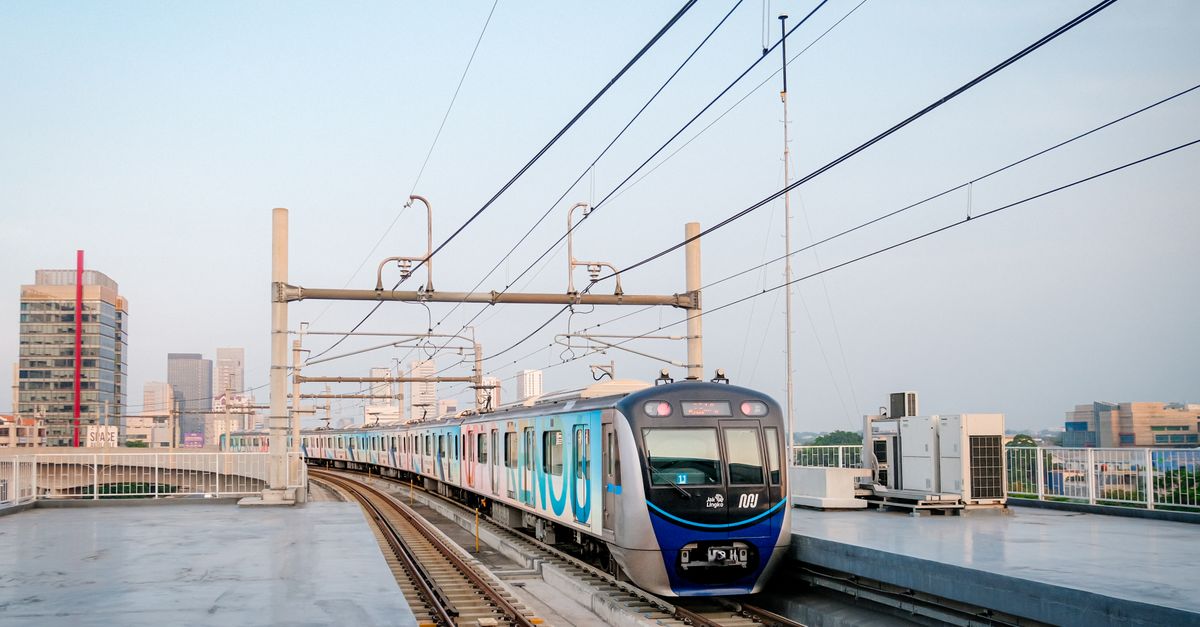
The Singapore MRT connects the main districts, many attractions and Changi Airport. You can travel with a compatible contactless bank card, a rechargeable EZ-Link card or a Singapore Tourist Pass. The best option mainly depends on your journeys, your bank’s fees and whether you prefer pay-as-you-go travel or a pass.
MRT fares are based on the distance travelled. It is therefore best to plan your routes rather than automatically buying a tourist pass. Check the connections, find the exit closest to your destination and use the same payment method throughout the journey. For prices, accepted cards and operating times, check the latest information from the official organisations before travelling.
In brief
Start by reading the MRT map from your departure station, destination and possible connections. Each line has a name, colour and code. Using these reference points together helps avoid confusion, particularly at major interchanges where several routes meet.
The main MRT lines do not all serve the same purpose. Some cross the central districts, while others connect residential areas or allow you to bypass the centre without making several changes.
| Line | Colour | Useful landmarks |
|---|---|---|
| North South Line | Red | Orchard, City Hall, Raffles Place |
| East West Line | Green | Bugis, City Hall, Raffles Place and branch to Changi |
| North East Line | Purple | Little India, Chinatown, HarbourFront |
| Circle Line | Orange | Botanic Gardens, Promenade, Bayfront, HarbourFront |
| Downtown Line | Blue | Botanic Gardens, Little India, Chinatown, Bayfront, Expo |
| Thomson-East Coast Line | Brown | Orchard, Maxwell, Marina Bay, Gardens by the Bay |
The MRT forms the backbone of rail travel in the city. The LRT provides more local services, particularly around Bukit Panjang, Sengkang and Punggol, with connections to the main lines.
This distinction explains why some descriptions group different networks under one name. When planning a visit, it is better to look for the stations you actually need than to rely on a total number of lines that may change as new extensions open.
The Land Transport Authority, or LTA, publishes the updated official map. Check it for extensions and distinguish sections in service from those announced or shown as future lines: a line drawn on a project map is not necessarily accessible.
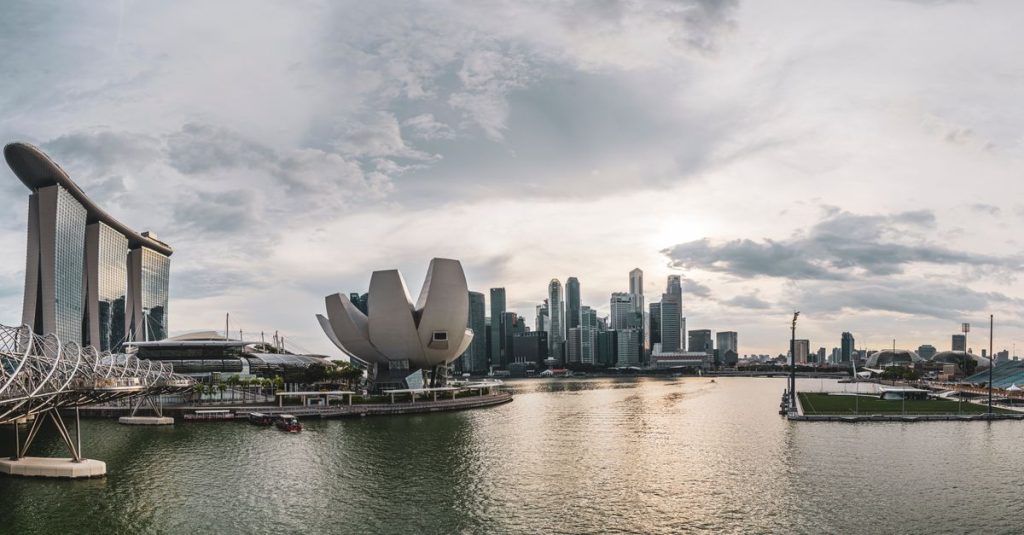
For Marina Bay Sands, Bayfront is a practical reference point. Gardens by the Bay can be approached from Bayfront or from the station bearing the garden’s name, but these entrances do not lead to the same part of the site.
The same applies to Orchard Road: Orchard is not always the closest stop to the shop you are looking for. Somerset may be more suitable depending on the address, avoiding an additional walk through a large shopping district.
For Sentosa, HarbourFront provides access to VivoCity and onward options to the island. The urban train journey should not be confused with the specific services used afterwards to reach the attractions.
Around the bay, the best stop also depends on your planned walking route. To visit the Merlion and its waterfront location, compare access from Raffles Place with the other nearby stations rather than looking for a station named after it.
On the platform, check the displayed terminus and make sure your stop appears on the service diagram. Colour alone is not enough when branches or different services share part of the infrastructure.
When you arrive, check the neighbourhood map before passing through the gates. One exit may lead directly into a shopping centre, while another opens on the other side of a major junction; the right access is just as important as the right station.
MRT fares are mainly calculated according to the distance travelled, rather than using one fixed price everywhere. A short journey in the centre and a longer cross-city trip should therefore not be budgeted as identical journeys.
The adult fare schedule from the Public Transport Council, which came into effect on 27 December 2025, puts a rail journey paid by card between 1.28 and 2.57 SGD. For travel in 2026, check the applicable fare with the Public Transport Council or the official LTA fare calculator, particularly if a revision takes place.
This range covers the transport itself. It does not necessarily represent the total amount debited in euros, since fees linked to the payment method, a foreign card or currency conversion may be added.
The distance-based fare system combines train and bus journeys when the connection conditions are met. Changing vehicles does not automatically mean that each section is charged as a separate new journey.
However, stopping to visit a neighbourhood or have lunch should not automatically be treated as a connection. The criteria include how the journey unfolds and the permitted time limits; check the latest SimplyGo rules for a particular route.
At an interchange, follow the signs between lines without unnecessarily leaving the paid area. If a route involves transferring between separate access points, check the official instructions rather than assuming that every exit has the same fare treatment.
The LTA calculator allows you to compare specific routes. This is more reliable than building a budget based only on the number of stops, since the network diagram is not drawn to geographical scale.
A card issued abroad may incur separate transport administration fees and bank charges. SimplyGo sets out the conditions for payment on the network; your bank remains the contact for currency conversion and international commissions.
A contactless logo alone does not guarantee that every card will be accepted. Check compatibility with SimplyGo and make sure international payments are enabled by your bank before relying exclusively on this payment method.
Also avoid converting expenses using a rate found in an old guide. The amount in euros depends on how your bank processes the transaction; to track spending, keep a reference in Singapore dollars first.
An unlimited pass becomes worthwhile when the journeys it covers would cost more separately. A programme focused on Chinatown, the quays and Marina Bay may leave plenty of room for walking, while a stay spread across several districts creates more journeys.
The number of attractions visited is therefore not enough to judge value. Look at their locations, the distance between stops and any services excluded from the pass, then compare the result with its official price.
To place this expense within the wider cost of your stay, see our guide to Singapore’s budget and cost of living. The cheapest card to buy is not always the one that costs least to use.
You can choose between direct bank-card payment, a rechargeable card and a tourist pass. Singapore’s MRT no longer requires you to look for the former standard single-use ticket: prepare an accepted payment method before reaching the gates.
The decision depends as much on your organisation as on the price. Avoiding top-ups, controlling a spending allowance or having an unlimited pass meet different needs, and no one option is always better than the others.
A compatible contactless card lets you pay directly through SimplyGo. You do not need to load travel credit before each journey, which simplifies arrival and occasional trips.
A compatible mobile wallet can serve the same purpose. However, you must use the same device at entry and exit: your phone, watch and physical card may be identified as separate payment methods, even when they are linked to the same bank account.
This option is particularly suitable if your bank offers favourable conditions for foreign-currency payments. Nevertheless, check the cards and wallets currently accepted by SimplyGo, since compatibility depends on the banking product and not only on the phone you use.
Have a back-up option if you rely on your phone. A flat battery or unavailable device can make exiting difficult; switching payment methods at the gate does not necessarily allow you to complete the journey correctly.
The EZ-Link card is a rechargeable payment method that can be used on compatible transport services. It lets you pay for journeys without presenting your bank card directly each time.
When buying one, distinguish between the cost of the card and the credit available for travel. Check the conditions for sale, top-ups, refunds and validity with SimplyGo or the official sales point; they cannot be inferred from the amount shown on the packaging alone.
Features may also vary according to the product generation and how it is managed. Check how to view the balance and transactions rather than assuming that every card displays the same information at the gates.
This option also makes group travel easier to organise, since each person has their own payment method. For moving to Singapore, it fits into the wider question of everyday transport and mobility.
The Singapore Tourist Pass offers unlimited travel during the period covered by the selected option, on included services. Check its official conditions for the current price, when validity begins and any possible return arrangements.
The meaning of a day requires particular attention: validity organised by calendar days is not the same as a rolling duration beginning with each validation. Activating a pass late may therefore reduce the practical value of its first covered day.
Tourist, private or premium services should not be assumed to be included without checking. A trip to Sentosa, for example, may combine a covered journey as far as HarbourFront with onward travel subject to different conditions.
For offers including additional benefits, assess only those you will actually use. Choose your card according to your itinerary and total fees, not just the promise of unlimited travel.
Before entering, check your destination, payment method and platform access. Stations are well signposted, but major interchanges and passages through shopping centres can make the first journey less intuitive than expected.
Keep your card within reach and remove it from your wallet. Presenting several payment methods to the reader at once may cause a refusal or result in the wrong method being read.
Present your payment method to the gate reader and wait for confirmation before moving forward. At your destination, repeat the operation with exactly the same card or device so that the system can match the two validations.
Each traveller must have their own suitable means of access. One card used to enter cannot be used to put an entire group through one after another, because the system follows an individual journey between entry and exit.
If access is refused, read the displayed message and contact staff. Possible causes include an incorrect reading, an incompatible payment method, insufficient credit or an earlier validation that needs to be corrected.
Do not repeatedly try different cards to resolve a journey that has already started. Station staff can direct you to the appropriate procedure and help identify which payment method was actually used.
For a rechargeable card, use compatible equipment or the service provided for your product. Payment methods and accepted amounts may vary by machine: check the instructions displayed before inserting cash or presenting a bank card.
A top-up machine is not necessarily a dispenser for new cards. If you want to buy a payment method, look for the counter or sales point indicated in the station rather than searching through every option on a machine.
With bank-card payment, the charge may appear after the journey or as a grouped transaction. Use the history available through SimplyGo when your payment method supports it, then compare the transactions with your bank statement before reporting a problem.
Lifts and wide passageways make it easier to travel with a suitcase, pushchair or mobility aid. Find their locations on station maps: step-free access may be elsewhere than the most direct route.
On platforms, let passengers off before boarding and stay behind the safety markings. In the train, keep luggage close without blocking doors or reserved spaces.
Priority seats should remain available for people who need them. If you are preparing everyday travel with children, consider how mobility, neighbourhood choice and practical organisation fit together.
Eating and drinking are prohibited on trains and in the relevant areas of the network. Follow the signs displayed, particularly those concerning prohibited items, strong-smelling products and safety instructions.
Keep calls and audio discreet, and move away from the doors if you are not getting off. Consistent validation and clear access points make the journey easier for everyone.
The MRT connects Changi Airport with the rest of Singapore, but the journey depends on your arrival terminal and final address. Before choosing this option, consider access to the station, connections and the walk to your accommodation.
A railway station near your hotel does not always mean a comfortable route with luggage. A large station may involve long corridors, and the exit closest to your accommodation is not necessarily the one with a lift.
Changi Airport is on a branch of the East West Line. Tanah Merah provides a connection with trains on the main network, while Expo connects with the Downtown Line.
To reach Bugis, Chinatown or the bay area, compare the options according to your exact destination. The route with the fewest changes is not always the one involving the least walking at the other end.
Follow the signs from your terminal to the station or any necessary internal transfer. Terminals do not all offer the same pedestrian access; check Changi Airport for current information on moving around the airport.
Our Singapore travel guide can help you prepare this stage alongside the other arrival formalities. Also check whether a sales point is available if you want to buy a rechargeable card rather than use a compatible bank card.
MRT operating times vary by station, direction and day. Do not rely on a general time range presented as valid everywhere: check SMRT or SBS Transit, depending on the line, for the useful first and last departures.
For a journey involving a connection, the last train leaving one line is not necessarily compatible with the last train on the next line. Search for a complete route to your final station rather than merely the possibility of entering the network.
From the airport, allow time for formalities, baggage collection and walking through the terminal. If your flight arrives close to the end of service, plan an alternative with the official operators.
Major interchanges and business districts can be busy during commuting periods. With suitcases, let a train go if boarding would force you to block the doors or circulation areas.
Events around Marina Bay may also change pedestrian access and concentrate travellers at certain stations. Check operator announcements and our Singapore Grand Prix guide if your stay coincides with the race.
Singapore’s public transport works alongside walking and buses. A well-placed railway stop may nevertheless leave you walking outdoors in the heat or a heavy shower.
Before setting off, examine the exit, covered walkways and exact address of your destination. When choosing accommodation, compare the actual route to the gates rather than a simple straight-line distance; the quality of the final section often determines the comfort of the whole journey.
Yes, if the card is compatible with SimplyGo and authorised for the relevant payments. Check acceptance with SimplyGo and international fees with your bank.
No. A compatible bank card or mobile wallet may be enough. EZ-Link remains an option if you want a rechargeable payment method separate from your bank account.
No. Its value depends on the current price, included services and the cost of the journeys you actually plan to make. Compare your itinerary with the official fares before buying.
You must use the same payment method at entry and exit. Your phone and physical card may be identified separately, even if they are linked to the same account.
No. Check the last departures and connections with the operators. Plan another option if your arrival does not allow you to reach your destination before the end of service.
Updated on 18/10/2026
Scroll to see more articles →