Condo or HDB in Singapore: Which Home Should You Choose?
Condo or HDB in Singapore? Compare rent, facilities, location, comfort and rules to choose the right home for your lifestyle and budget.
Singapore became a sovereign state in 1965 after separating from Malaysia, rather than directly at the end of British colonial rule. This date, notably used by Perspective Monde at the Université de Sherbrooke, marked the culmination of a journey shaped by imperial domination, war, political autonomy and a federal union that had become untenable.
Stamford Raffles played a decisive role in the British presence, but he did not discover an island without a history. The territory was already part of the trading networks of the Malay world. The development of the port subsequently attracted people from China, India and the neighbouring archipelago, whose activities and institutions would permanently shape local society.
The thread running through this history is Singapore’s port: it explains the interest of foreign powers, the growth of migration and the territory’s dependence on international trade. The Japanese occupation then weakened British prestige, while social and anti-colonial demands transformed political life. Understanding this sequence offers a different way of looking at the historic districts, monuments and national symbols, without reducing the past to an economic success story that was inevitable from the outset.
In brief
Stamford Raffles was an agent of British expansion, not the founder of a previously uninhabited territory. Before his arrival, the island, associated with the name Temasek in its early history, was part of regional networks. Its position at the outlet of the Strait of Malacca made it strategically important for trade between the Indian Ocean and the South China Sea.
The National Heritage Board dates the establishment of the British trading post by Raffles to 1819. He acted for the British East India Company, amid rivalry with Dutch interests for control of regional routes and markets.
The agreement was based on negotiations with local authorities in the Johor world. This commercial settlement must be distinguished from the later consolidation of British sovereignty: colonisation did not result from a single act that immediately established all the institutions.
The choice of a free port offered traders an attractive alternative to competing settlements. Low commercial barriers encouraged stopovers, warehouses and intermediaries capable of connecting distant markets.
The administration also sought to make the urban area easier to control. The plan associated with Raffles divided functions and communities according to a colonial logic, contributing to the creation of identifiable districts without permanently confining each population within sealed boundaries.
The river became an axis for unloading, storage and negotiation. To rediscover this geography, a route between the quays and historic districts helps connect the administrative buildings with the former trading areas.
The maritime position thus became an economic advantage through commercial and political decisions: geography alone does not explain the port’s growth.
Maritime trade transformed the trading post into an urban society. Cargo had to be transported, stored, financed and resold: these operations created demand for workers, capital and networks of trust. The activity therefore attracted both merchants and people with very limited resources.
Chinese migration played a major role in this growth. These arrivals nevertheless followed very different paths: merchants, craftsmen, indentured workers and employees did not share the same living conditions or prospects.
Associations based on regional origin, family ties or language helped with reception and mutual support. Temples and community organisations also provided social functions where collective protections remained limited.
Arrivals from the Indian subcontinent fed other commercial, administrative and professional networks. Malay populations and movements from the neighbouring archipelago also remained essential: presenting this history as a confrontation between Europeans and Chinese would erase some of its participants. The four official languages of Singapore reflect part of these historical and social influences.
British colonisation created opportunities for enrichment, but maintained a political and social hierarchy. Residents did not all have the same access to power, education or decent housing; commercial dynamism coexisted with insecurity.
Shophouses illustrate the close relationship between work and housing. The spaces now valued for their architecture could accommodate commercial activities and severely overcrowded homes, far removed from a merely picturesque image.
Exploring Chinatown and its popular heritage or the streets of Little India helps reveal these legacies. These districts have nevertheless changed through renovation and population movements: the visible heritage is not an untouched snapshot of colonial society.
The British defeat during the Second World War destroyed the image of an invulnerable imperial protector. The military stronghold, supposedly defending British interests in the region, fell to the Japanese army. For residents, the change primarily meant entering a violent occupation regime.
The Japanese occupation imposed surveillance, coercion and deprivation. The mass violence known as Sook Ching particularly targeted members of the Chinese population suspected of hostility towards Japan.
Supply difficulties also disrupted everyday life. Access to food, the value of money and the possibility of finding work became immediate concerns, while families tried to preserve their resources.
This experience cannot therefore be reduced to a succession of battles. It left family and community traumas that memorials, testimonies and preserved sites make it possible to approach without turning suffering into a tourist backdrop.
After the Japanese surrender, the British resumed administration of the territory. Their return was nevertheless not enough to restore their legitimacy: how could a protective guardianship be justified after that protection had collapsed?
Reconstruction was accompanied by material difficulties and social demands. Trade unions, student movements and political organisations helped broaden calls for representation, even though their objectives and methods differed.
Decolonisation also unfolded in the context of the Cold War. The authorities interpreted some mobilisation through the struggle against communism, while anti-colonial activists sought sometimes competing paths towards emancipation.
War did not produce independence immediately; it made the continuation of colonial rule far more open to challenge.
Political autonomy was a distinct stage from independence. A local government can administer a large part of domestic affairs without holding all the powers of a sovereign state, particularly in defence and foreign relations.
Lee Kuan Yew rose to prominence with the People’s Action Party, generally known by its initials, PAP. The movement initially brought together different anti-colonial tendencies; their disagreements later became decisive in political conflicts.
The population’s expectations were concrete: jobs, decent housing, schooling and improved services. The legitimacy of local government therefore depended on its ability to act, not only on its promise to end British rule.
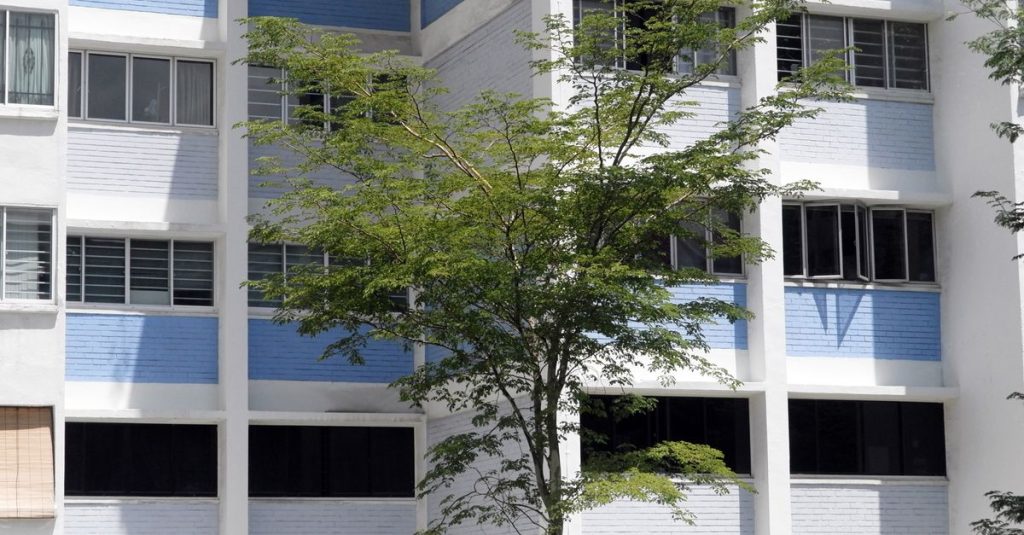
Public policy played an increasingly important role in planning and industrial development. Singapore’s housing history belongs to this transformation: improving accommodation addressed an urgent social need while strengthening the authority of the new institutions. The later choice between a condo or HDB home reflects the enduring importance of housing in Singapore.
Merger with Malaysia appeared to offer a possible response to the territory’s limitations. A larger market seemed favourable to industry, while a federal framework was expected to help address security and decolonisation.
The partners did not all expect the same things from this union, however. Economic interests, community balances and party strategies made it difficult to define a shared project.
The table distinguishes the changes in status, which are often confused in simplified accounts.
| Stage | What changed | Key distinction |
|---|---|---|
| Colonial administration | Power rested with the British authorities. | Commercial prosperity did not mean sovereignty. |
| Internal autonomy | A local government managed domestic affairs. | Some powers remained British. |
| Federal union | The territory became part of Malaysia. | It was not an internationally distinct state. |
| Separation | The republic became sovereign. | It had to assume its own national responsibilities. |
Independence in 1965 resulted from the failure of the federal union. Perspective Monde at the Université de Sherbrooke identifies this as the year sovereignty was proclaimed and notes that the new state remained within the Commonwealth.
Tensions pitted Singapore’s leaders against the federal government over the distribution of resources, economic policy and the place of communities within the nation. Electoral rivalries aggravated these disagreements, while intercommunal violence made the situation particularly dangerous.
Presenting the rupture as a simply chosen independence would be misleading. It was negotiated between leaders and then endorsed by Malaysian institutions, in circumstances that have led to it being described as an expulsion; the Singapore government had previously defended the union.
Lee Kuan Yew’s public emotion at the announcement reflected the break with the project he had pursued. Singapore now had to govern a separate country, without taking its economic viability and security for granted.
The new state had to develop diplomatic relations, organise its defence and create jobs. Dependence on external markets encouraged a strategy focused on investment and exports rather than retreating into a limited domestic market.
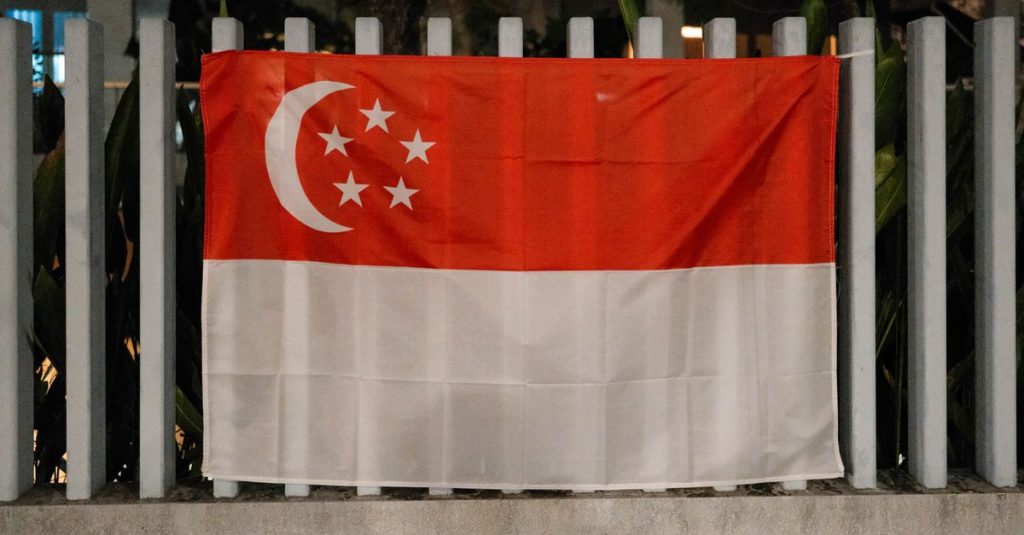
Nation-building also involved schools, housing and shared symbols. Understanding the colours and symbols of Singapore’s flag helps explain this search for a collective sense of belonging beyond community origins.
Institutional stability went hand in hand with the strong predominance of the PAP and restrictions on political life. Economic transformation and the construction of public authority were closely linked, without material success erasing debates about freedoms.
He played a central role in establishing the British trading post. The island nevertheless had an earlier history linked to the Malay world and regional trade: he did not found a city on uninhabited territory.
Trade created demand for handling, transport, finance and services. Commercial and community networks facilitated arrivals, but working conditions and opportunities for enrichment remained highly unequal.
Internal autonomy allows a local government to manage domestic affairs, while some powers remain in the hands of an external authority. Independence means that the country becomes a sovereign state, responsible in particular for its diplomacy and defence.
Economic, political and communal disagreements made the union untenable. The separation was negotiated and then endorsed by the federal institutions: it did not correspond to the original project of Singapore’s government, which had supported the merger.
Updated on 26/10/2026
Scroll to see more articles →