Singapore Laws: Chewing Gum, Fines and Banned Items
Discover the main Singapore laws on chewing gum, fines, vaping, drugs, medicines and daily rules to avoid penalties during your stay.
Singapore is a country in its own right: a sovereign city-state in Southeast Asia, at once a city, an island and a state. Its capital is Singapore itself: there is no separate capital with another name. Its official name is the Republic of Singapore.
This particularity explains the confusion between its territory, urban area and national institutions. Formerly a British colony, and later part of Malaysia before independence, this island country has its own government, currency and borders. Its cultural links with China and its proximity to the Malay Peninsula do not affect its sovereignty.
Both answers are correct. Singapore is an independent state whose territorial organisation corresponds to that of a city-state. One entity therefore combines the functions of a large city with those of a sovereign country.
An ordinary city depends on a state that conducts its diplomacy, organises its defence and sets its rules for entering the territory. The Republic of Singapore exercises these powers itself: it maintains diplomatic relations, issues passports and passes its own laws.
The term “city-state” therefore describes a political organisation, not simply extensive urbanisation. Skyscrapers or a business district are not enough to define this status: sovereignty is what makes the difference.
In everyday language, Singapore also refers to an island. The national territory nevertheless includes one main island and several outlying islands, some of which host industrial, tourism or conservation activities.
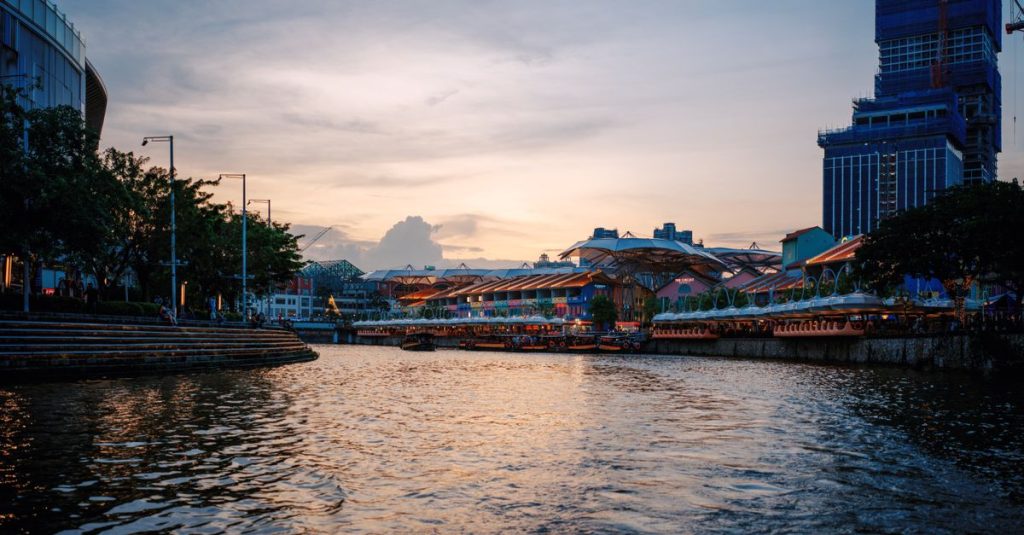
It is therefore not limited to Marina Bay. Residential neighbourhoods, wooded areas, reservoirs and port zones also make up the country; being a city-state does not mean that every part of it is built-up.
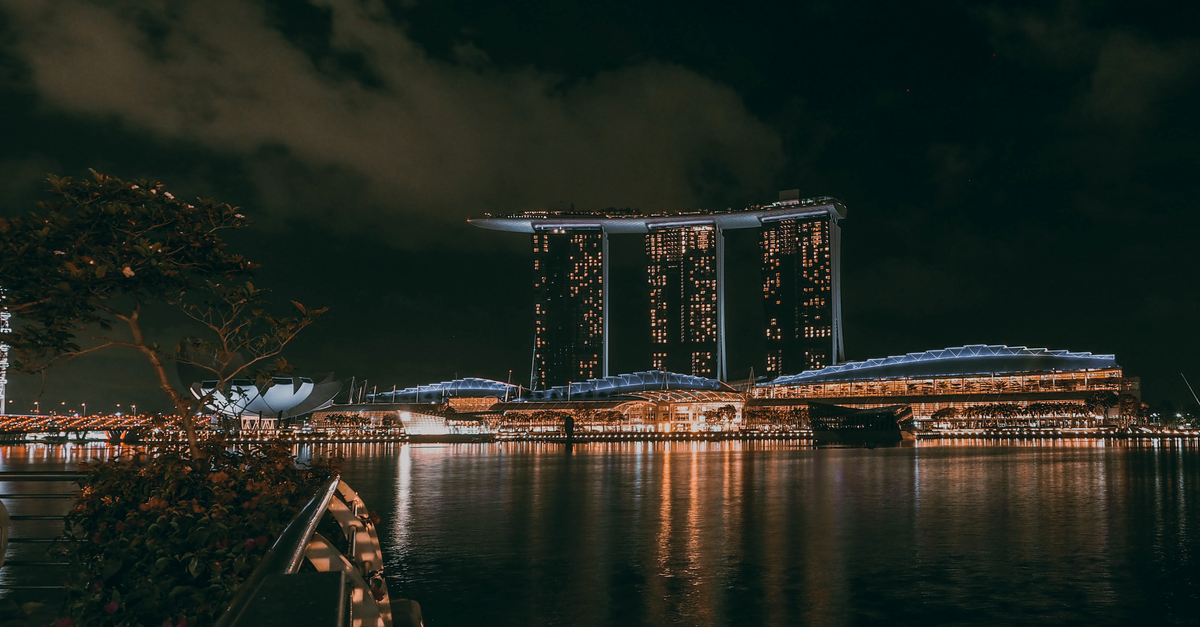
The capital of Singapore is Singapore. The country and its capital have the same name. There is no other city that separately performs the functions of the national capital.
This does not mean that all public buildings are in the same place. Parliament, ministries, courts and government departments occupy different sites throughout the urban territory.
Marina Bay is an iconic area, but its international profile does not give it a separate capital status. Similarly, Jurong and Paya Lebar are areas of Singapore, not autonomous countries or capitals.
This distinction is useful when reading an address or looking for accommodation. The choice concerns a neighbourhood, its transport links and its services, rather than an independent city within the country.
To compare residential areas, see our Singapore housing guide. The capital has the same name as the country; the neighbourhoods help you find your way around it.
Singapore was under British colonial administration, then became part of Malaysia before becoming independent. These stages explain some of its institutions, its use of English and its relations with neighbouring countries.
The British developed a trading post on the island that became a major port. Colonial administration had a lasting influence on law, trade and administrative organisation, even though today’s institutions later developed within their own national framework.
This period was interrupted by the Japanese occupation during the Second World War. After the British administration returned, political autonomy progressed and the territory then joined the Federation of Malaysia.
This union was partly driven by economic and security considerations. However, it encountered political, economic and community-based differences between the federal authorities and Singapore’s leaders.
Singapore became independent in 1965, after separating from Malaysia. The National Heritage Board, the public body responsible for Singapore’s heritage, recounts this event in its historical material on independence.
Since that separation, the country has been subject neither to London nor to Kuala Lumpur. Its membership of the Commonwealth represents cooperation between independent states, not the continuation of British rule.
Singapore is a parliamentary republic. The Constitution organises the public authorities and distinguishes between the head of state, the head of government and Parliament. The president and the prime minister therefore do not perform the same role.
The president represents the state and exercises constitutional functions. The president also has powers of oversight in certain areas, including past financial reserves and some public appointments, subject to the conditions set out in the Constitution.
The role is therefore not exclusively ceremonial. However, the president does not direct the day-to-day work of the ministries, which falls under the government.
The prime minister leads the government with the Cabinet. The position rests on the ability to command the confidence of a majority of MPs.
This logic distinguishes a parliamentary system from a presidential one. The head of state is not the head of government: day-to-day political leadership belongs to the prime minister and the government team.
Parliament is unicameral, meaning that it consists of a single chamber. It examines and votes on laws, debates the budget and enables MPs to question the government.
Political life has long been dominated by the People’s Action Party. This feature of the electoral landscape should be distinguished from the legal form of the system: a parliamentary republic.
Singapore is in Southeast Asia, at the southern tip of the Malay Peninsula, near the Equator. Its immediate neighbours are Malaysia to the north and Indonesia to the south, across the surrounding maritime areas.
The Johor Strait separates the main island from Malaysia. Roads cross it, but they do not remove the international border: travelling to Johor Bahru means leaving one country and entering another.
To the south, the Indonesian islands of Batam and Bintan are part of the nearby regional environment. A trip to these destinations is also international travel, unlike a visit to Sentosa, which is part of Singapore’s territory.
Before crossing a border, check the formalities with the Immigration & Checkpoints Authority and the authorities in the destination country. Our section on tourism and excursions around Singapore helps distinguish local outings from regional travel.
The country’s position, near the routes linking the Strait of Malacca with the South China Sea, supports its port and commercial activities. China does not share a border with Singapore, despite the importance of trade between the two countries.
The climate is equatorial, hot and humid, with rainfall and variations linked to the monsoons. To plan your journeys, see our information on Singapore’s climate and seasons.
English, Malay, Mandarin and Tamil are the official languages. Malay also has the status of national language. English plays a central role in administration, education and professional communication.
The other official languages are therefore not merely “secondary” languages. This multilingual framework reflects the history and diversity of society; the national anthem, sung in Malay, is one practical expression of it.
The national currency is the Singapore dollar, identified by the code SGD. It should not be confused with the US dollar, the Malaysian ringgit or the Chinese yuan.
Exchange rates and bank charges change. Check the terms with your bank and monetary information with the Monetary Authority of Singapore; our guide to banks and financial services outlines the useful procedures.
Singapore belongs to ASEAN, the United Nations and the Commonwealth. These memberships respectively represent regional cooperation, participation in the international system and a historic cooperation network.
None of these organisations replaces its national government. For a relocation plan, Singapore’s rules govern your stay and work: see the administrative procedures to prepare, then check the requirements with the relevant authorities.
These points distinguish the country’s political status from its geography and practical characteristics. Its area and population are not needed to determine its sovereignty.
| Key point | Essential information |
|---|---|
| Official name | Republic of Singapore |
| Status | Sovereign state organised as a city-state |
| Capital | Singapore |
| Political system | Parliamentary republic |
| Location | Southeast Asia |
| Immediate neighbours | Malaysia and Indonesia |
| Official languages | English, Malay, Mandarin and Tamil |
| Currency | Singapore dollar — SGD |
| International organisations | ASEAN, UN and Commonwealth |
No. Singapore is a sovereign state distinct from China. A large population of Chinese origin and the official status of Mandarin do not constitute political integration.
No. The territory belonged to the Federation of Malaysia before becoming independent. The two countries now have separate governments, currencies and entry rules.
The capital is Singapore itself. This city-state has no separate capital; Marina Bay, Jurong and Paya Lebar are areas of the territory, not separate capitals.
Singapore is in Asia, in the subregion of Southeast Asia. The country lies south of the Malay Peninsula, near Malaysia and Indonesia.
Updated on 22/10/2026
Scroll to see more articles →