Singapore Laws: Chewing Gum, Fines and Banned Items
Discover the main Singapore laws on chewing gum, fines, vaping, drugs, medicines and daily rules to avoid penalties during your stay.
Singapore’s four official languages are English, Mandarin, Malay and Tamil. For travelling, working or planning a move, English is generally the most useful language. It is used as a common means of communication in public administration, schools, businesses and many everyday interactions.
Malay has a distinct status: it is Singapore’s national language. This recognition reflects the island’s historical and cultural links with its regional surroundings. Mandarin and Tamil also help pass on family heritage, although they do not represent all the linguistic practices of Singapore’s Chinese and Indian communities.
The languages spoken on Singapore’s streets therefore extend well beyond the official framework. You may also hear Hokkien, Cantonese, other Asian languages and Singlish, a locally shaped informal variety of English. To understand this diversity, you need to distinguish between a language’s legal status, its role at school and its actual use with different people. The same resident may switch register or language between a meeting, a family conversation and ordering at a restaurant.
In brief
The Constitution recognises English, Mandarin, Malay and Tamil as official languages. This institutional recognition does not mean that every document is always available in all four languages, or that every resident speaks them. It incorporates several linguistic traditions into the country’s institutions and identity.
This distinction matters to visitors: a language may appear on a public sign without being the one that the person you are speaking to uses spontaneously. Conversely, languages without official status remain present in families, shops and conversations between friends and relatives.
| Language | Status | Typical uses |
|---|---|---|
| English | Official language | General education, administration, business and communication between communities |
| Mandarin | Official language | Language education, media and communication in some Chinese families |
| Malay | Official and national language | National anthem, cultural transmission and communication within the Malay community |
| Tamil | Official language | Language education, media and Tamil-language cultural practices |
English in Singapore serves a practical purpose: it allows residents from different backgrounds to communicate without imposing one local community’s language on the others. Its international role also facilitates business, academic and scientific exchanges.
This choice therefore combines an internal function with an outward-looking one. In a company, a team may work in English while using other languages with certain clients or suppliers; within a family, language habits may be different again.
To understand this arrangement, it helps to remember that Singapore is a city-state. The same institutions organise life in a large city and in a sovereign country, where language issues also affect education and national representation.
Malay’s national status should not be confused with the practical role of English. The former expresses a regional historical connection; the latter is widely used as the working language. These roles are different but not contradictory.
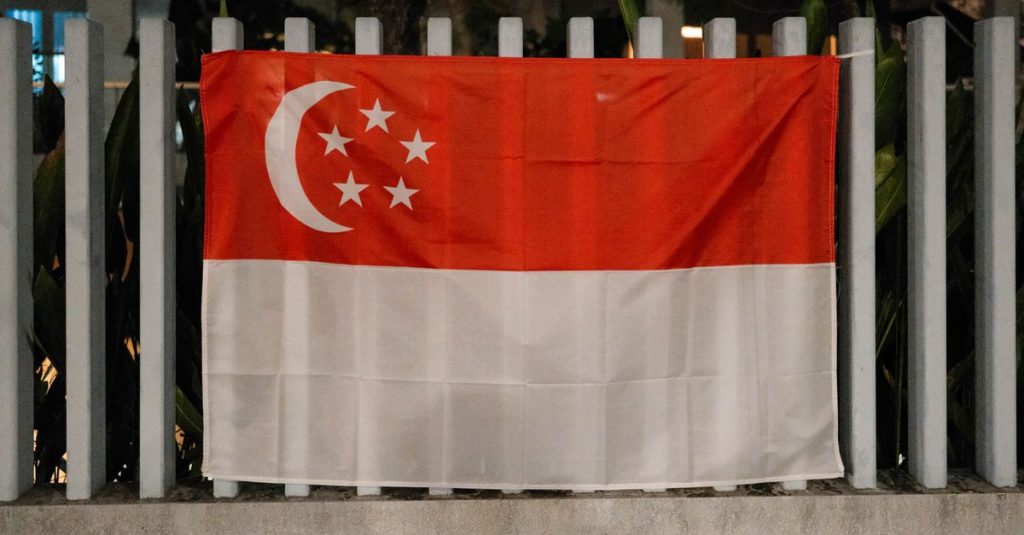
The national anthem, Majulah Singapura, is sung in Malay. Its title is usually translated into English as “Onward Singapore”, a reference also found in the country’s official representation.
Malay in Singapore is not merely a ceremonial language, however. It remains a family, cultural and media language, with active uses that extend beyond national events.
Singapore’s official languages form an institutional framework, not an exact map of individual language skills. Family background, schooling, age, professional environment and household habits all influence which languages people use.
It would therefore be misleading to claim that a resident of Chinese origin necessarily speaks Mandarin better than English, or that someone of Indian origin automatically speaks Tamil. Different life paths make such assumptions unreliable.
Likewise, a translation on a sign does not guarantee that an employee will be able to respond in that language. For a specific request, it is better to check directly with the relevant service what language support is available.
The useful distinction is between official recognition, national function and personal use. This explains why English is generally the best starting point for newcomers.

You can generally visit Singapore using only English. It is the language to use when asking for directions, speaking to accommodation staff, understanding instructions or making a purchase. Mandarin is not a prerequisite for a stay.
This convenience does not mean that every interaction will be effortless. An unfamiliar accent, a noisy environment, technical vocabulary or an individual’s speech habits can make communication harder, even when both people are using the same language.
At Changi and across the public transport network, English is widely used in information for travellers. Understanding terms such as “arrivals”, “departures”, “exit” and “interchange” helps you follow essential directions.
To prepare for your arrival, consult advice about Singapore’s transport. Station names and addresses saved on your phone are also useful reference points when pronunciation causes difficulties.
In a taxi, showing the complete address avoids confusion between a district, a street and a building entrance. For an appointment, also keep the name of the venue and the access instructions provided by the person you are meeting.
In a restaurant, simple sentences are more effective than sophisticated vocabulary. “Could you repeat that, please?” asks someone to repeat themselves; “Could you speak more slowly?” invites them to slow down without putting them in an awkward position.
To distinguish eating in from taking an order away, “dine in” and “takeaway” are useful expressions. Local names for dishes may remain in Malay, transliterated Chinese or another language: they describe a recipe, not necessarily the language you should use to order it.
An allergy requires more precision than a food preference. Clearly state the ingredient concerned and ask whether it may be present in sauces, toppings or the preparation; a photograph of the dish is not enough to establish its ingredients.
In many professional environments, English is used for meetings, emails and working documents. Language requirements nevertheless depend on the role, clients and markets involved: a regional activity may call for knowledge of other languages.
For accommodation or official paperwork, understanding everyday conversation does not guarantee that you will understand a contract. Terms concerning the deposit, termination or supporting documents deserve careful reading before you sign anything.
For important documents, translation services may provide assistance, subject to checking the requirements of the receiving organisation.
French is not a language of assistance that you can rely on systematically. If you want to improve your English, first focus on situations that are genuinely useful: explaining a request, understanding a reply and asking someone to clarify a commitment.
The level required mainly depends on what is at stake in the interaction. Basic English may be enough for finding your way, while a medical consultation, negotiation or contract requires much more precise understanding.
The languages spoken in Singapore are not confined to separate neighbourhoods. Residents travel, work together and adapt the way they speak to the people present. Historic districts offer cultural reference points, but they do not reveal which language every passer-by speaks.
Singapore’s linguistic diversity is best understood through families, media, places of worship and shops. These settings maintain language practices that coexist with English, sometimes within the same conversation.
Mandarin has an important role in language education and communication among Chinese speakers in Singapore. It provides a common language for families whose regional heritage may differ.
Hokkien, Teochew, Cantonese and Hakka are also part of the local linguistic landscape. Often grouped under the label “Chinese dialects”, they differ considerably: knowing Mandarin does not automatically mean understanding a conversation in Cantonese or Hokkien.
These varieties may be heard in family conversations and some traditional shops. Their presence depends on the people and circumstances involved; Chinatown should not be viewed as a place where everyone speaks in the same way.
If you want to learn Chinese, first clarify your objective. A Mandarin course may be suitable for reading, studying or communicating with Mandarin speakers, but it will not meet every need related to the Chinese languages found on the island.
Malay connects the country with a wider cultural area in Southeast Asia. It can be heard in family conversations, cultural productions and food-related vocabulary, beyond its institutional status.
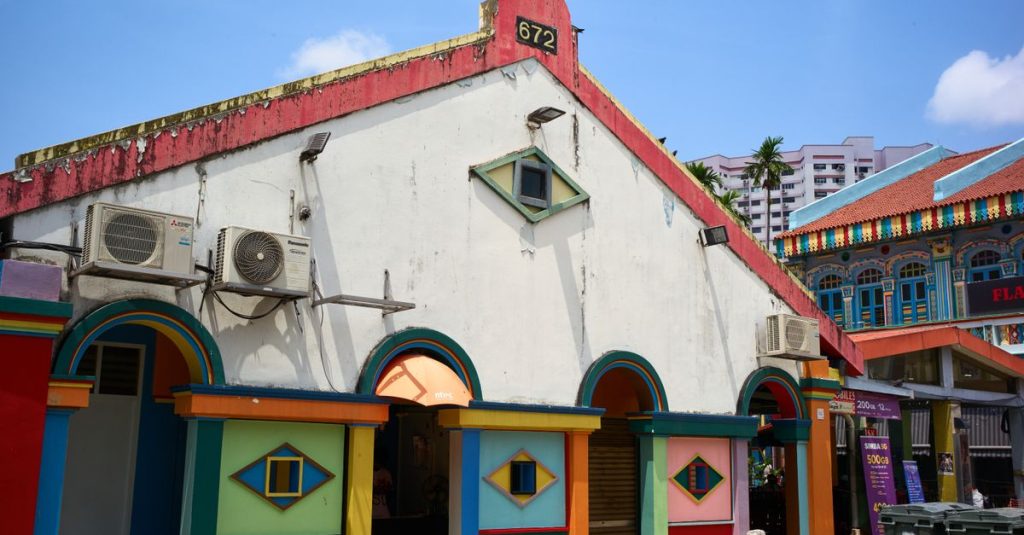
Kampong Glam offers an opportunity to explore part of this heritage, without reducing the neighbourhood to a single linguistic identity. Its commercial and religious history reflects movement between populations from different backgrounds.
An Arabic inscription in a religious setting does not mean that Arabic is the usual language of local residents. The language of worship, the family language and the working language may all be different, a particularly useful distinction when reading Singapore’s urban landscape.
Tamil has official recognition in Singapore and is present in education, the media and cultural life. In Little India, signs and community activities make this heritage especially visible.
People of Indian origin do not, however, form a linguistically uniform group. Other South Asian languages, including Hindi, Bengali and Malayalam, also contribute to local communication.
It is therefore better to ask someone which language they use rather than assume it from their appearance or name. This avoids confusing nationality, family ancestry, religion and language use.
Singapore’s festivals offer access to these traditions through songs, theatre, announcements and oral traditions. If you are planning a visit around an event, check its programme and the languages available with the organiser.
Singapore’s multilingualism is based as much on interaction between communities as on family transmission. Observing these practices helps you understand the city without placing its residents in fixed categories.
In the national school system, English is the main language of instruction. Pupils also study a language called “mother tongue” in local educational terminology. This approach combines a shared communication tool with the transmission of cultural heritage.
The general principle must nevertheless be distinguished from how it applies to each individual case. The language studied, possible arrangements and admission conditions depend on the child’s background and the rules of Singapore’s Ministry of Education, the MOE.
In everyday English, this expression often refers to the language acquired during early childhood. In Singapore’s school system, it also refers to a teaching category associated with a pupil’s cultural heritage.
Mandarin, Malay and Tamil are the main languages covered by this education policy. Their place in the curriculum therefore does not prove that they are the languages most commonly used at home.
A household may favour English while wishing to pass on another language through school and communication with relatives. This difference between home use and the school curriculum explains why starting levels can vary considerably.
Using a common language allows pupils to share the same educational resources and prepares them for further study in an international environment. Mathematics, science and other general subjects therefore require an understanding of English academic vocabulary.
This skill goes beyond being able to hold a conversation. Understanding an instruction, explaining reasoning and writing an argued answer require specific learning, even when a child seems very comfortable speaking.
For a French-speaking family, the issue is therefore not only confidence in everyday exchanges. You also need to consider reading, writing and understanding the wording used in class.
Start by distinguishing between a local school, an international school and a French-language curriculum. The teaching languages, subjects offered and support arrangements are not the same; the label “international” alone does not describe a language programme.
Ask the school which language is used for lessons, assessments and communication with parents. Also clarify what support is available when a pupil understands everyday English but still lacks academic vocabulary.
Maintaining French deserves separate consideration. Continuing to read and write in French may support future mobility, while learning a local language is best approached through a realistic and regular plan.
Arrangements exist for certain situations, but no exemption should be considered automatic. To find out which conditions apply, check directly with the MOE and the school concerned, particularly when the child has been educated abroad.
The country’s academic results cannot be explained by bilingualism alone. Teaching organisation, teacher training, assessment methods and the family environment also affect learning.
Before moving to Singapore, ask for a written presentation of the proposed educational pathway. The best language choice is the one that matches the child’s actual level and the continuity of their education.
Singlish is a local informal variety of English with no official language status. It developed through contact with the languages spoken in Singapore and has pronunciation, vocabulary and grammatical features that may surprise visitors.
Calling it incorrect English would be misleading. It serves social functions: signalling familiarity, expressing nuance or sharing a cultural reference. Many speakers adapt their register depending on their audience and the situation.
It is particularly common among friends, in family conversations and in informal interactions. It may also be used between colleagues: the workplace does not rule out familiar exchanges, even though standard English remains expected in many formal contexts.
You should also distinguish the Singaporean accent from Singlish. Someone may speak standard English with local pronunciation without using the structures or particles associated with informal Singlish.
This explains why difficulty understanding someone does not always come from vocabulary. Rhythm, intonation and information left implicit also play a part; asking for a rephrasing is often the simplest solution.
These words do not all work as simple English equivalents. Final particles in particular express nuances linked to the situation: adding “lah” to every sentence is not enough to reproduce natural usage.
In a hawker centre, objects left on a table may indicate that a seat is being kept. Before sitting down, ask whether it is free rather than moving someone’s belongings; this reflects Singaporean cultural customs as much as vocabulary.
Coffee orders illustrate everyday linguistic contact. The word “kopi” means coffee, while the terms used with it specify the preparation expected in traditional establishments.
Kopi usually means coffee with sweetened condensed milk. Kopi-O is coffee without milk, with sugar, while kopi-C generally indicates evaporated milk and sugar.
The term kosong is used to request a preparation without added sugar; “kopi-O kosong” therefore means coffee without milk or added sugar. If your request is linked to a dietary restriction, ask for the ingredients to be confirmed rather than relying solely on the name.
Recognising local expressions is useful; imitating them is never necessary to be understood.
No. English is generally the most useful language on public transport, in accommodation and at tourist attractions. Mandarin may make some interactions easier, but it is not essential for a visit.
English, Mandarin, Malay and Tamil have official status. Malay also has national-language status, reflecting the country’s regional historical roots. English remains widely used for the day-to-day running of institutions.
It is best not to rely on French for everyday communication. Basic English, written addresses and a translation tool can make your stay easier. For an important medical, legal or administrative matter, use appropriate language assistance.
No. Skills vary according to educational background, family environment and professional use. A language’s official status does not mean that every resident speaks it.
No. It coexists with standard English and is mainly used in informal exchanges. Speakers can change register depending on the situation, while administrative, academic and professional writing generally favours standard forms.
Updated on 15/10/2026
Scroll to see more articles →