Singapore Zoo and Night Safari: Tickets, Access and Tips
Plan your Singapore Zoo and Night Safari visit with practical advice on tickets, access, opening hours, transport and combining both parks.
Singapore Botanic Gardens is worth visiting for its orchids, rainforest and waterside walks. Access to the main areas is free, while the National Orchid Garden requires a separate ticket. Choose your entrance according to the places you want to see, rather than trying to cross the entire grounds.
This tropical garden combines botanical collections with landscapes enjoyed by local residents: lawns, mature trees, lakes and shaded paths. Its listing as UNESCO World Heritage, decided by the organisation in 2015, also recognises its scientific and historical importance, beyond its appeal as a place for a walk.
To plan your visit, choose a route connecting an entrance, the areas that interest you and a convenient exit. The Tanglin section is suitable for discovering Swan Lake, while flower enthusiasts can prioritise the orchid garden. In all cases, the humid heat makes it worth walking slowly and taking regular breaks.
In brief
The National Orchid Garden is the priority visit if floral collections are the main reason for your trip. Set on hilly ground, it displays plants in landscaped arrangements: colourful beds, tree-mounted supports and suspended installations accompany the climb.
The main paths reveal flowers at different heights. Some are grouped close to the ground, while others are attached to trees or placed in baskets whose flower stems hang above the paths.
Look up regularly: if you only look straight ahead, you will miss part of the displays. Also observe the exposed roots, characteristic of many epiphytic orchids, which use a support without taking their food from the tree.
The contrasts between foliage, ferns and flowers contribute as much to the setting as the colours themselves. Species and hybrids do not all flower at the same time, so the appearance of the collections changes: an old photograph does not guarantee that you will find exactly the same bed.
The Tropical Montane Orchidetum continues the experience with environments suited to tropical mountain plants. In the Sembcorp Cool House, cooled air and humidity make it possible to display vegetation that differs from that found outdoors.
This change of atmosphere is a reminder that tropical does not always mean hot: altitude alters growing conditions. Slipper orchids, elongated petals and the carnivorous plants in the collections deserve a close look, without touching the flowers or the pitchers of the nepenthes.
The labels provide another perspective: some hybrids are named after personalities whom Singapore has honoured. Take time to read them to discover the diplomatic dimension of these collections, without confusing these horticultural creations with wild species.
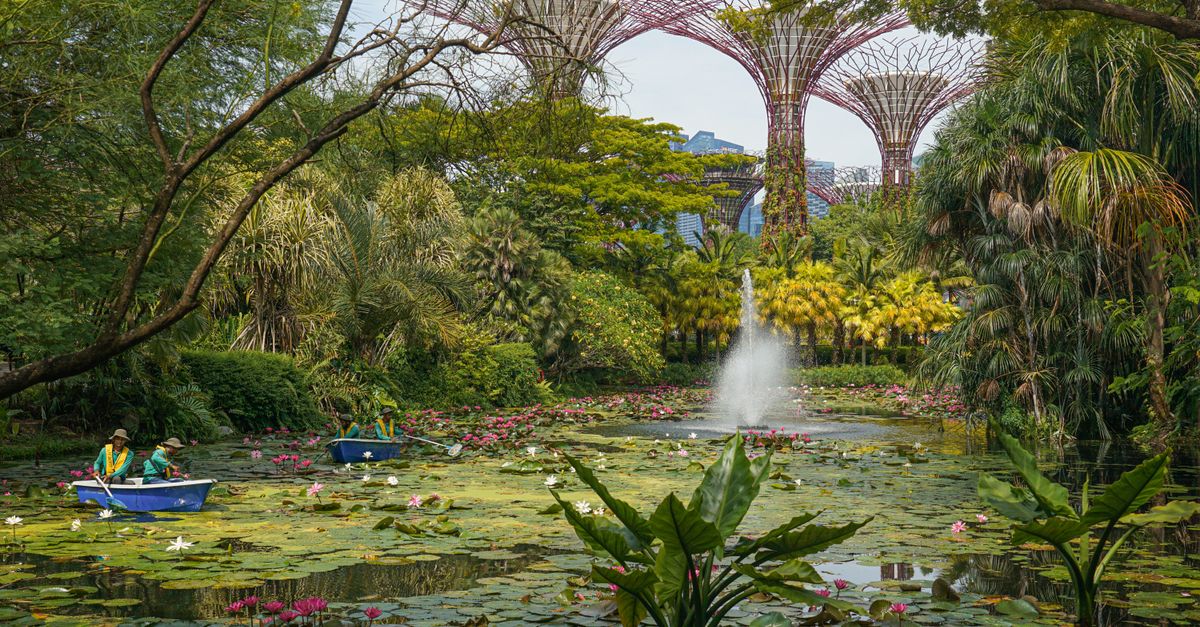
The main park is worth visiting even if you do not enter the paid area. It takes you from a landscaped setting, with lawns and open views, to denser vegetation where the focus shifts to trunks, roots and layers of foliage.
Swan Lake, in the Tanglin section, provides an easy-to-identify starting point. The paths beside the water let you observe reflections, birds and the swan sculpture without immediately beginning with the sloping sections.
Wild otters may visit the grounds’ waterways, but their presence is never guaranteed. Do not build your itinerary around seeing them: they move freely and are not an attraction shown at a fixed time.
If you spot them, keep your distance and leave their route clear, particularly towards the water. Do not feed them and avoid moving closer for a photograph; these precautions also apply to other animals seen in the garden.
The preserved forest area offers a different experience from the horticultural collections. Tall trees form a canopy, while understorey plants occupy less brightly lit levels. This organisation is easier to understand if you stop rather than hurry through.
The buttresses of some trunks illustrate how trees adapt to their environment. Stay on authorised paths to avoid trampling roots and young shoots, even when the ground appears clear.
The site’s UNESCO listing in 2015 highlights its role in botanical exchanges and the development of tropical crops, including rubber. This history gives meaning to the collections: it is also a place of research and education, not simply a decorative park.
To explore this natural side further, discover Singapore’s other green spaces. Here, the interest lies precisely in the proximity between a carefully designed landscape and a forest environment.
Access by MRT depends on the section you want to visit. Botanic Gardens station serves the Bukit Timah side, while Napier lets you approach the grounds through Tanglin. The station name alone therefore does not determine the best route.
Botanic Gardens is on the Circle and Downtown lines; Napier is on the Thomson-East Coast Line. Check information from the Land Transport Authority or the operator before setting off to confirm service conditions and usable exits.
| Your priority | Access to consider | Point to note |
|---|---|---|
| Swan Lake and the historic section | Napier station, then the Tanglin area | Identify the route to the gate |
| Arrival from the Bukit Timah side | Botanic Gardens station | Allow for an internal walk towards the central collections |
| National Orchid Garden as a priority | Compare access routes on the official map | Botanic Gardens station is not directly in front of the ticket office |
| Taxi drop-off | Authorised drop-off point near the chosen section | Give the driver a precise gate |
To combine the lake and flowers, start at Tanglin and Swan Lake, then make your way to the central collections. After the orchids, decide according to your energy whether to continue towards Bukit Timah or take a nearer exit shown on the map.
A route across the grounds avoids returning systematically to your starting point, but involves more walking. With young children or reduced mobility, a focused loop is often more comfortable than crossing the entire site.
Sloping areas and some stairs require particular care with a pushchair or wheelchair. Check accessible routes with NParks rather than assuming that every shortcut is suitable.
To coordinate this outing with your other journeys, see our guide to Singapore’s transport and mobility. The right access route is the one that limits unavoidable walking before the visit you have chosen.
The main park and the National Orchid Garden have different access conditions. The opening of the general paths does not mean that the ticket office, greenhouses or specialist areas are accessible at the same time.
Before travelling, check with NParks, the site manager, the park’s opening hours, those of the paid collections and the last admission time. Also check announcements about works, maintenance or temporary closures.
General access to the grounds is free, while National Orchid Garden entrance tickets have separate pricing. Check the applicable amount with NParks: visitor categories and the conditions for any discounts may change.
If a reduced rate applies to you, also check which proof is required. Avoid relying on an old euro conversion, since both the displayed price and the exchange rate may have changed.
The cost may not be limited to the ticket: transport, meals and drinks depend on how you organise your day. Our guide to budget and the cost of living helps put this outing among the other expenses of your stay.
A guided visit is particularly useful for understanding the history of the collections, the uses of plants and the characteristics of the forest. Check the programme offered, language, booking arrangements and access conditions with NParks.
Do not assume that a guided walk includes entry to the National Orchid Garden. A historical route, a forest discovery and a horticultural presentation do not cover the same areas, so choose the theme before booking.
When exploring independently, the signs and labels already provide plenty of information. Allowing time to read them is more rewarding than collecting stops without observing the collections.
Humid heat affects how comfortable your walk will be. Prefer the morning for exposed sections, while taking into account the opening hours of the areas you want to visit.
Singapore has showers throughout the year: no period guarantees a dry outing. Check forecasts and alerts from the Meteorological Service Singapore before leaving, then adapt your route to the actual conditions.
Bring a water bottle, light clothing, sun protection and shoes that grip on wet ground. Rain protection is useful for a shower, but does not replace suitable shelter during a thunderstorm.
In the event of thunder, leave the lawns and do not shelter under an isolated tree. Follow instructions displayed or given by staff, even if that means interrupting your walk.
People sensitive to temperature changes may want to bring a light layer for cooled spaces. To organise your outdoor activities more effectively, see our guide to Singapore’s climate and seasons.
With children, alternate observation and breaks instead of adding detours. Looking for aerial roots, comparing flower shapes or watching animals from a distance gives the walk a clear purpose.
For photographs, stay on the paths and keep routes clear. Diffused light often shows petals better than direct sunlight; moving a flower or crossing a border is never necessary.
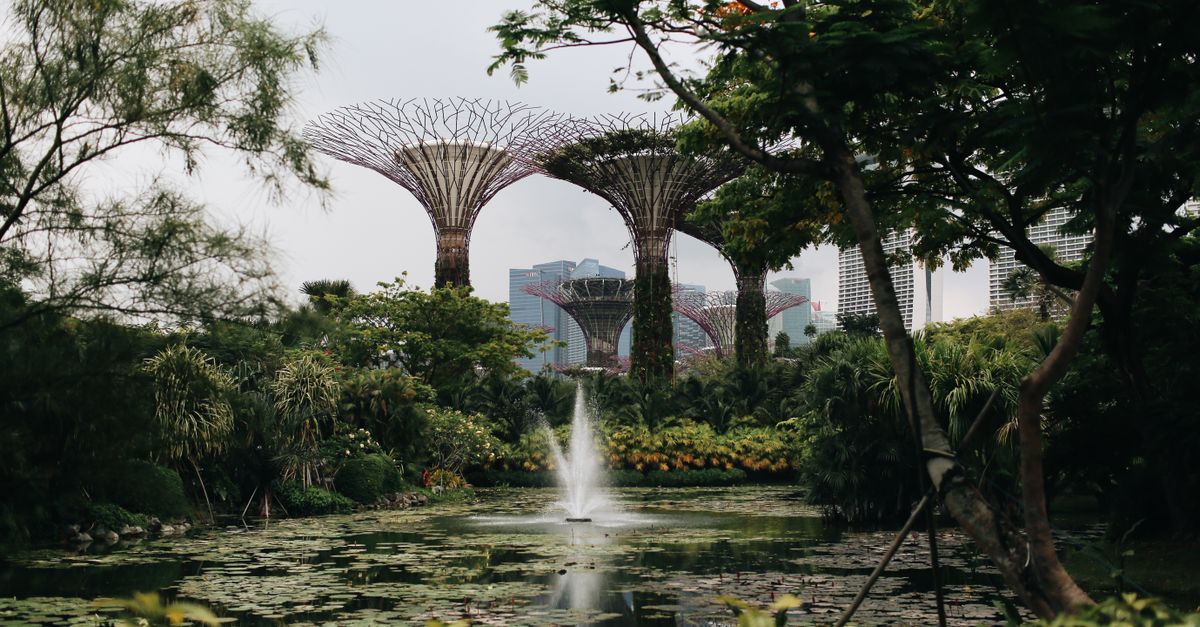
Gardens by the Bay offers a different experience, focused more on large landscape structures and conservatories. Compare the atmospheres with our guide to Gardens by the Bay and its Supertrees, rather than treating the two places as interchangeable.
Leave some flexibility in your schedule: a shower, a longer break or a particularly interesting collection can change the pace without compromising the outing.
The main areas are free to access. The National Orchid Garden requires a separate ticket; check prices and applicable conditions with NParks before your visit.
Botanic Gardens serves the Bukit Timah side on the Circle and Downtown lines. Napier, on the Thomson-East Coast Line, is suitable for the Tanglin section and Swan Lake. Choose according to your route through the grounds.
Flowers appear successively in the collections, but not all plants flower at the same time. The displays you see vary according to plant cycles and maintenance of the areas.
Conditions depend on the programme offered. Ask NParks about availability, language and booking; check separately whether entry to the National Orchid Garden is included.
Updated on 23/10/2026
Scroll to see more articles →