
Marina Bay Singapore: What to See by Day and Night
Discover Marina Bay Singapore: gardens, skyline views and light shows to explore around the bay, from daytime walks to evening Spectra.
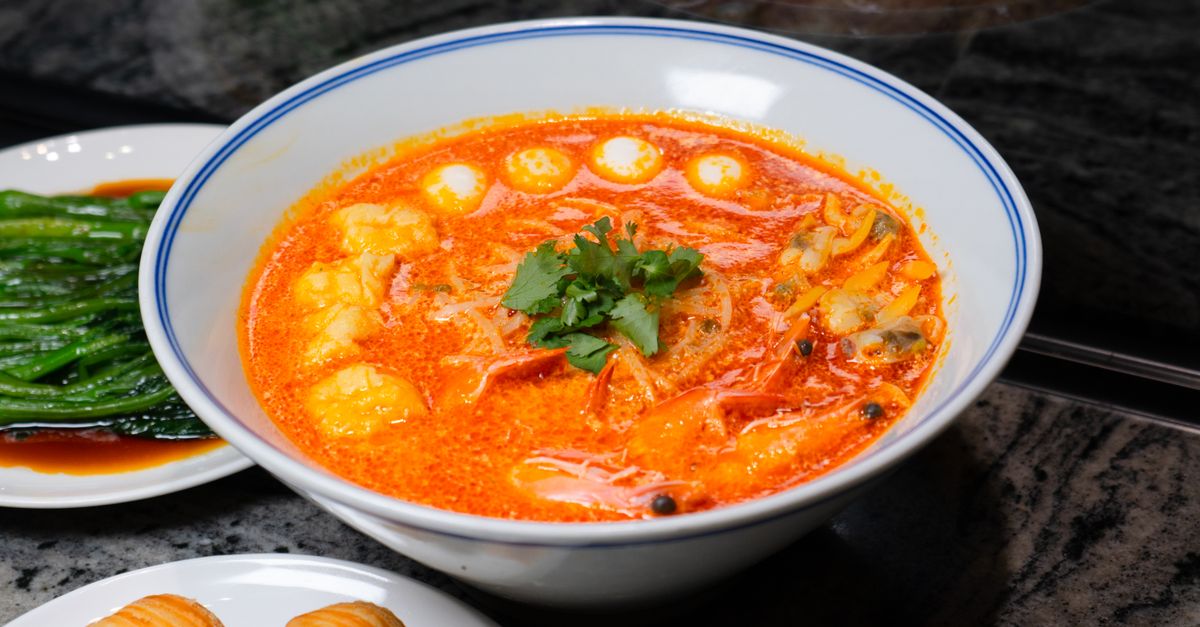
Singapore laksa is a spicy noodle soup usually made with coconut milk, an aromatic paste and toppings such as prawns, fried tofu or shellfish. Associated with Peranakan cuisine, it belongs to a family of dishes found in several Southeast Asian countries. Its Katong variation is notably distinguished by noodles cut into shorter pieces, making them easy to eat with a spoon.
To try it in Singapore, Katong is a good place to start, but specialist stalls and popular food courts also offer different interpretations. The right choice depends as much on the broth you are looking for as on the toppings: some versions focus on the richness of coconut, while others highlight seafood flavours or chilli. Understanding these differences helps you order a bowl suited to your tastes, without treating one particular recipe as a universal standard.
In brief
The origins of laksa are linked to the movement of people, ingredients and culinary practices throughout Southeast Asia. The dish cannot be attributed to one established inventor; its different forms instead reflect local adaptations, particularly in Singapore, Malaysia and Indonesia.
Peranakan cuisine, also called Nyonya cuisine in this context, is particularly important for understanding the Singapore version. It combines Chinese culinary influences with ingredients and techniques from the Malay world, rather than being a simple mixture of separate traditions.
The noodles reflect this Chinese heritage, while spice pastes, aromatics and coconut root the broth in the region. Together, they create a coherent dish: the starch absorbs the sauce, the toppings add texture and the condiments adjust the intensity.
Reducing this history to marriages between communities alone would be too simplistic. Family habits, trade and street-food culture have also helped pass on and transform the recipes. To place this speciality in its wider setting, discover Singapore’s history.
Katong laksa is associated with the Katong area in eastern Singapore, known for its Peranakan heritage. Its cut noodles allow you to take the broth and toppings in the same spoonful, without having to manage long strands.
Asam laksa, particularly associated with Penang, instead focuses on a sour fish broth flavoured with tamarind and generally without coconut milk. It is therefore not simply a less creamy variation: the balance of flavours changes significantly.
The names “curry laksa”, “laksa lemak” and “Nyonya laksa” may overlap depending on the location. The description of the broth is more useful than the name alone when you want to know what will be served.

The ingredients in laksa each serve a complementary purpose. The aromatic paste builds the flavour, the liquid determines the texture and the toppings turn the soup into a complete meal. A successful preparation depends on balance, not accumulation.
Laksa curry paste may contain chilli, shallot, lemongrass, galangal, turmeric and fermented prawn-based ingredients. Its composition varies between recipes and manufacturers: it cannot be swapped for just any curry paste.
Coconut milk gives the soup body and a smooth, enveloping texture. It rounds off the perception of spices, but does not automatically make the dish mild: a strongly chilli-based broth retains its character.
Seafood products may be present at several stages of the preparation. A bowl with no visible prawns may still contain crustacean paste, dried prawns or a seafood stock.
| Element | Role in the bowl | What to check |
|---|---|---|
| Rice noodles | Provide the starchy base and hold the broth | Thickness and cooking instructions |
| Aromatic paste | Develops spicy and fragrant notes | Chilli, salt and presence of crustaceans |
| Coconut milk | Provides creaminess | Plain product suitable for a savoury preparation |
| Prawns or shellfish | Strengthen the seafood flavours | Allergens and cooking |
| Fried tofu | Absorbs the liquid through its spongy texture | Ingredients and preparation conditions |
| Laksa leaf | Adds a characteristic herbal note | Availability and identification of the herb |
Thick rice noodles are common in Singapore versions. Prawns, slices of fish cake, cockles and bean sprouts may accompany them, but these ingredients are not always included together.
Fried tofu and hard-boiled egg are also suitable for some home preparations. Laksa leaf, also known as Vietnamese coriander, has a different aroma from common coriander.
A topping alone does not define the dish’s authenticity: the character of the broth and the overall balance matter more.
To cook this spicy noodle soup, a ready-made paste is a practical starting point. Read its ingredients before you begin: some preparations already contain a lot of salt, chilli or dried prawns.
Organise the ingredients before turning on the heat. Shell the crustaceans, prepare the toppings, wash the herbs and keep the noodles separate: this prevents unnecessary cooking time when serving.
Fry the aromatic mixture in a little oil over moderate heat, stirring regularly. This step softens the raw notes of the aromatics and develops their fragrance; a paste that sticks or turns black will instead add bitterness.
Next, add the coconut milk, followed by water or a stock compatible with your chosen toppings. Keep the broth at a gentle simmer and taste it before adding any salty seasoning.
The consistency should be thick enough to coat the noodles without turning the bowl into a dense sauce. If the mixture seems too heavy, loosen it gradually; if it lacks character, first check the aromatic balance rather than simply adding more chilli.
Prepare the vermicelli according to the manufacturer’s instructions, then drain it. Cooking the noodles separately makes it easier to control the texture and prevents them from absorbing all the liquid in the saucepan.
Add the prawns towards the end and cook them through without leaving them in the broth unnecessarily. Fried tofu can be reheated in the broth so that it absorbs the flavours; already-cooked eggs should be added when plating.
Divide the starchy base between the bowls, pour over the hot soup and add delicate ingredients at the last moment. Serve the sambal separately when diners prefer different levels of heat.
To prepare ahead, keep the liquid separate from the noodles and seafood. Cool any preparations being stored quickly and place them in suitable containers in the refrigerator; assembling the dish just before serving preserves the textures more effectively.
When deciding where to eat laksa in Singapore, start by choosing the style you want. Katong is particularly suitable for trying the local version with cut noodles, while specialist stalls allow you to compare different interpretations of the broth.
The search for the best laksa restaurants should not be limited to sit-down establishments. Places dedicated to this single dish may operate in coffee shops or communal food courts: a modest setting does not indicate anything about the quality.
Combining a tasting with a walk around Katong and Joo Chiat connects the meal with the history of the area. The shophouses and Peranakan heritage provide a tangible context for this speciality, without making every establishment a traditional address.
Janggut Laksa is an establishment associated with the Katong tradition. It is one option for trying this style, but check the exact outlet and its menu before planning your journey.
Sungei Road Laksa is another well-known name on the local scene. It allows you to extend your discovery beyond Katong and compare the texture of the liquid, the presence of seafood flavours and the role of chilli.
These names are useful reference points, not an absolute ranking. Check the establishments’ official information to confirm their opening hours, prices and current location: these details may change.
When you arrive, look at the menu and ask which toppings are included before ordering. A photograph may show a different combination from the standard bowl, particularly when extras are available.
To complement this discovery with other specialities, browse our guide to things to do in Singapore. Your own taste is the best guide, rather than a reputation considered in isolation.
Before choosing your bowl, specify what matters to you: the level of chilli, the presence of shellfish or the composition of the broth. These requests are not interchangeable and cannot always be accommodated when the base is prepared in advance.
Asking for the sambal separately allows you to control the condiment added when the dish is served. However, this does not remove the chilli already incorporated into the aromatic paste: less spicy does not mean chilli-free.
Taste the liquid before mixing in all the accompaniments. You will be able to distinguish the coconut, aromatic and seafood notes more clearly, then adjust the intensity gradually.
If you are allergic to crustaceans, removing visible prawns is not enough. Ask the establishment about the paste, stock, condiments and possible cross-contact during preparation; if the ingredients cannot be confirmed, choose another dish.
A vegetarian version also requires a suitable base, without prawn paste, fish stock or seafood toppings. At home, mushrooms and tofu can accompany an aromatic vegetable broth, but this is an adaptation and should be described clearly.
For takeaway, ask whether the noodles can be packed separately. Otherwise, they will continue absorbing the sauce during the journey, significantly changing the texture.
No. Its intensity varies according to the paste and condiments. Coconut milk rounds off the flavours without removing the heat. Ask whether the broth is already spicy and have the sambal served separately.
It is associated with the Katong area and is notably characterised by cut noodles, suited to eating with a spoon, in a spicy coconut-based broth. The toppings vary between establishments.
Yes. Fish, chicken or tofu may work, with cooking adjusted accordingly. To avoid crustaceans, also check the aromatic paste and broth: replacing the topping is not enough.
Asian grocery shops generally sell it in jars or sachets. Compare the ingredients, allergens and manufacturer’s instructions, as the concentration and level of chilli vary between products.
Updated on 28/10/2026
Scroll to see more articles →