Katong and Joo Chiat: Peranakan Houses and Great Food
Explore Katong and Joo Chiat in Singapore: colourful Peranakan houses, local heritage, laksa, kueh and neighbourhood food spots.
Kampong Glam is the neighbourhood where Singapore’s Malay-Muslim history can be read in its mosques, former shophouses and streets devoted to textiles, perfumes and food. Haji Lane draws attention with its colourful façades, murals and independent shops, but it does not represent the whole area: around Sultan Mosque, Arab Street, Bussorah Street and the neighbouring roads, older and still-lively aspects of the Malay quarter come to light.
The area is ideal for wandering. You can move from a textile shop to a café, from restored architecture to a lane decorated with street art, with the option of extending your walk towards Bugis or Little India. To understand Kampong Glam, it is better to take time to observe local customs and details rather than limit your visit to photographs of Haji Lane.

Kampong Glam is close to Bugis, north-east of Singapore’s historic centre. The area is compact enough to explore on foot, but its streets do not all tell the same story. Arab Street evokes the trade in fabrics and perfumes, Bussorah Street leads towards Sultan Mosque, while Haji Lane represents a more recent development focused on creativity and small businesses.
The neighbourhood’s name reflects its Malay history. Before Singapore became a British port, this region belonged to the Malay world and was home to members of the local elite. At the beginning of the 19th century, the city’s organisation distinguished areas associated with different communities. Kampong Glam was linked to the Malay and Muslim population as well as merchants from other regions, including Arab traders.
This history explains the diversity still visible in the street names and commercial activities. Arab Street, Baghdad Street and Muscat Street recall links with several parts of the Muslim world, without reducing the neighbourhood to a single origin. Malay culture remains present alongside Arab influences and other regional heritage: it appears in places of worship, shops and cuisines, but also in the way the neighbourhood fits into the modern city.
The area is not a static backdrop. Old façades stand alongside contemporary shops, restaurants and creative spaces. Some streets are busy with visitors, while others retain activity more closely connected to the needs of residents and professionals. This coexistence gives the walk its appeal: it shows how historical heritage remains integrated into urban life rather than being separated from everyday activity.
To plan your route, a map of neighbourhoods and MRT lines helps you locate Kampong Glam in relation to Bugis and other central areas. The neighbourhood is also a practical stop during a short stay: the itinerary suggested in this Singapore layover guide can help you organise your visits without spreading your journeys too widely.
The best thread to follow is to start from the mosque and gradually move towards the shops and quieter lanes. This approach highlights an essential point: Kampong Glam is not merely a collection of photogenic façades, but a neighbourhood shaped by communities and exchanges.
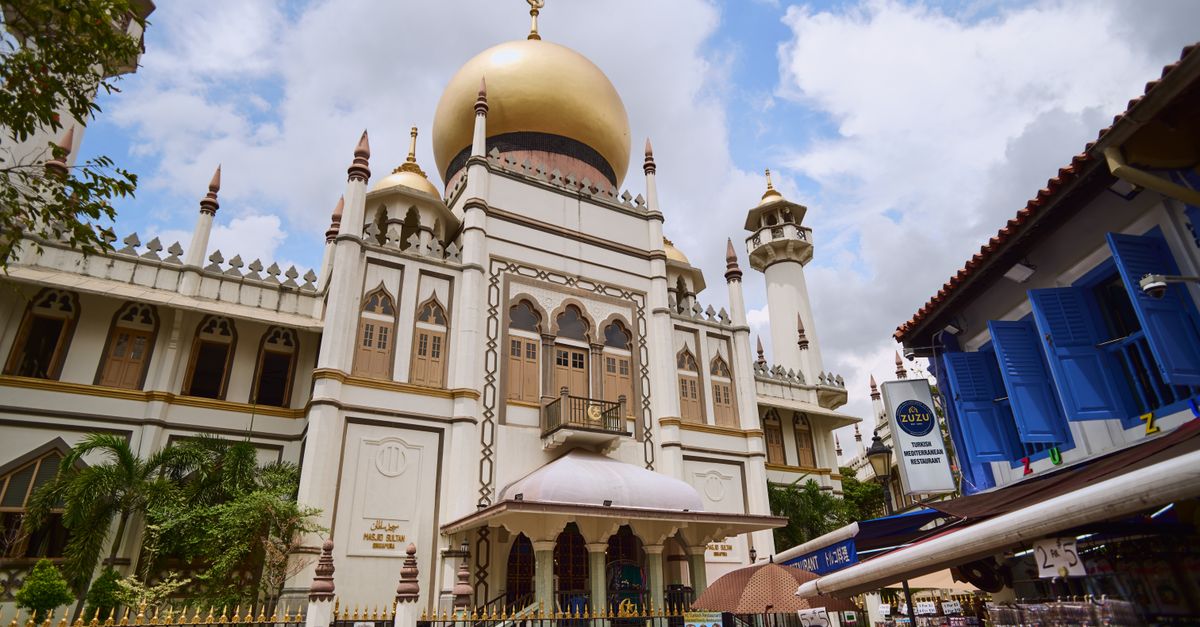
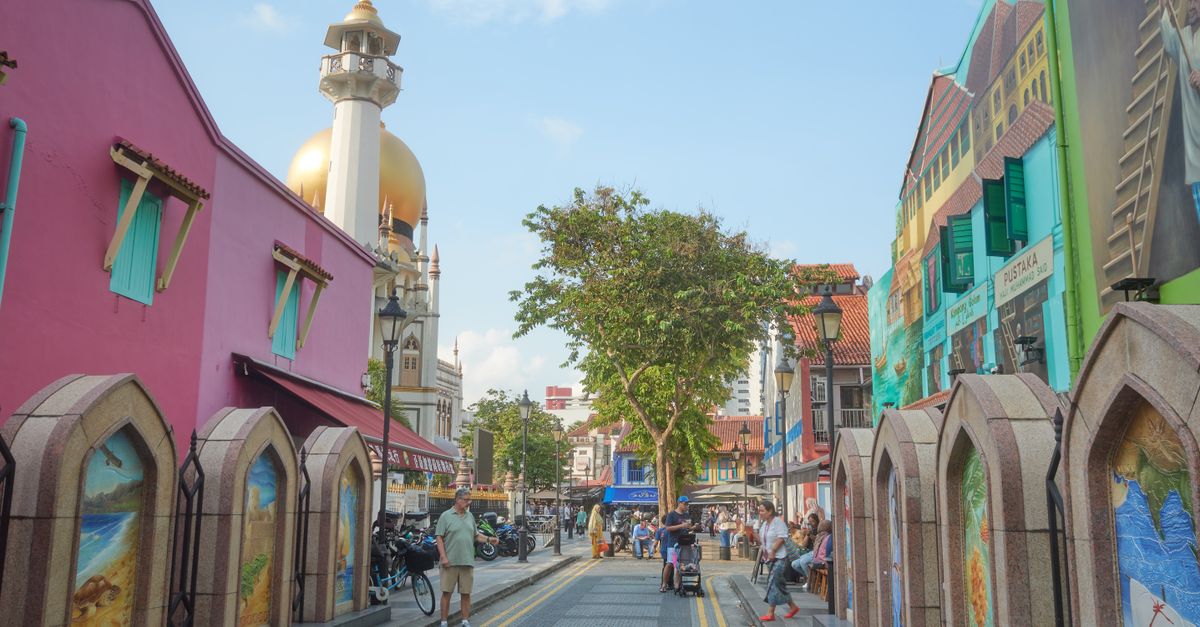
Sultan Mosque, or Sultan Mosque, is Kampong Glam’s main architectural landmark. Its golden dome rises above the rooftops and naturally attracts attention from several streets. The site is associated with the history of the sultanate of Johor and the early days of the port city. The present mosque, completed at the beginning of the 20th century, forms part of the area’s older history of Muslim worship.
It is useful to distinguish the history of the site from that of the building visible today. Historical accounts place an earlier mosque in the area in the 19th century, while the current building resulted from a later reconstruction. This development reflects the enduring place of the Muslim community in the city and Kampong Glam’s transformation over the generations. For visitors, the architecture is worth observing, but the building’s religious purpose should remain the priority.
Non-Muslim visitors may sometimes access certain parts of the mosque, depending on the rules and visiting periods set by the establishment. These arrangements, like the opening hours, may change. Check them directly with the mosque before travelling there. Wear respectful clothing; the instructions displayed on site take precedence. If indoor access is not possible, the exterior and surrounding streets already offer an opportunity to appreciate the building without disturbing worshippers.
Bussorah Street, which runs close to the mosque, offers a particularly pleasant view of the building. The pedestrianised street is lined with restaurants and cafés, in an atmosphere that changes depending on the time of day. You can stop there for a meal or drink, while bearing in mind that each business has its own opening hours. Visitor numbers and the atmosphere also vary according to the day of the week and religious periods.
Nearby, the site of the former Kampong Glam palace recalls the political role of the sultan’s family in local history. The Malay Heritage Centre is associated with this heritage and helps place the neighbourhood within the history of the Malay community. Its access, exhibitions and schedule may change: check the official information before planning an indoor visit. Even without visiting the museum, observing the building and its surroundings helps show that the area was also a centre of power, not simply a commercial district.
Visiting these sites calls for a simple approach: observe, respect local customs and avoid treating religious spaces as a backdrop. This makes the discovery more meaningful, linking architectural details with the living communities that continue to shape the neighbourhood’s identity.
Haji Lane is Kampong Glam’s best-known lane. Its narrow shophouses, often painted in vivid colours, house independent shops, cafés and creative venues. The murals change over time, giving the street a constantly renewed appearance. This visual quality explains its popularity, but it can also make the walk less enjoyable when many visitors gather there to take photographs.
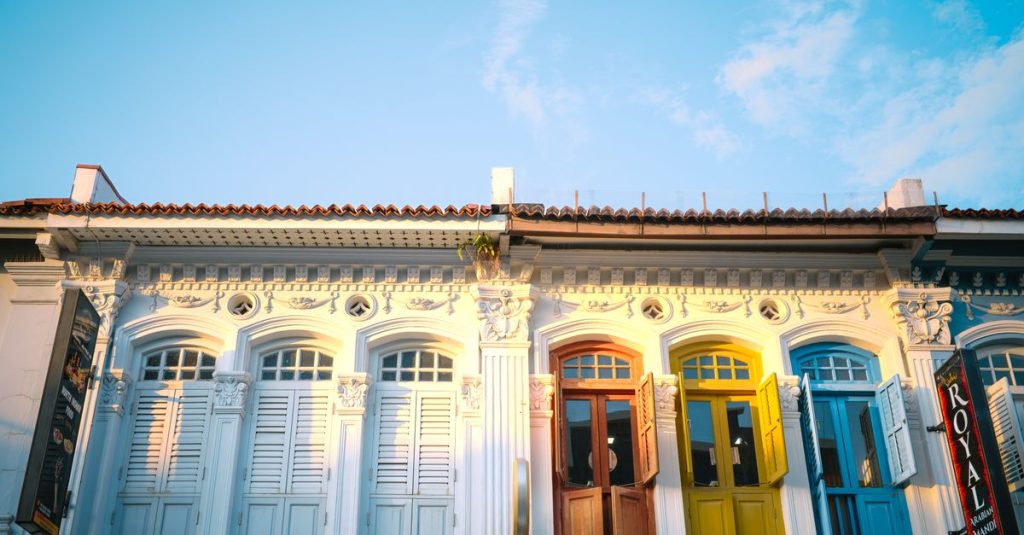
To enjoy the area, avoid reducing it to a quick photo stop. Take time to look at the façades, doors, signs and details of the shophouses. Some shops showcase local designers, clothing, accessories or objects not found in large shopping centres. Collections and retailers change, however, so it is better to regard the street as a living space than as a fixed list of addresses.
Arab Street offers a different perspective. Textile shops play an important role, selling fabrics, printed textiles, decorative items and products linked to Muslim cultural practices. Commercial activity here is older than the fashionable image associated with Haji Lane. For a significant purchase, discuss prices and terms directly with the retailer; comparing materials and asking for advice is more useful than choosing solely on appearance.
The neighbouring streets, particularly Baghdad Street and Bali Lane, complete the walk with perfume shops, cafés and places to eat. Traditional oil-based perfumes, often called attars, are an interesting speciality to discover. A seller can explain the differences between fragrances and suggest blends, but products and prices vary between shops: check the characteristics and cost before buying.
Street art contributes to the neighbourhood’s transformation without erasing its older architecture. The murals catch the eye and contrast with preserved façades, but they are not the only signs of creativity. Shop windows, signs and interior designs also show how businesses adapt buildings to new uses. This juxtaposition makes Kampong Glam visually rich, provided you look beyond the most photographed walls.
Visitors who want to continue shopping can head towards the nearby Bugis area. The guide to Bugis Street in Singapore presents a different, busier and more popular commercial atmosphere. The comparison is revealing: in Kampong Glam, wandering often involves specialist shops and small retailers, whereas in Bugis the experience is more concentrated in lively retail spaces.
Haji Lane offers a colourful gateway into the neighbourhood, but Arab Street better reveals the continuity of its commercial activities. The two streets complement each other and show how a popular destination can remain connected to older trades and customs.
To get online as soon as you land, a Singapore eSIM can be installed before you leave, with no need to look for a local SIM card.
Food is another way to discover Kampong Glam. The area’s restaurants reflect the diversity of its influences: Malay dishes, Middle Eastern specialities and recipes shaped by regional exchanges. Menus and service hours vary between establishments. Rather than looking for one iconic address, choose according to what you feel like eating: a sit-down meal, spicy food, filled bread or a simple café break.
Malay cuisine can be discovered through dishes served with rice, sauces and several preparations to share or choose from. Nasi padang, for example, consists of rice served with a selection of dishes whose ingredients and spice levels vary. This way of composing a meal lets you try several flavours, but you can always ask staff for details about the dishes and how spicy they are.
Restaurants around Bussorah Street also serve Middle Eastern specialities and dishes popular across the region. Some establishments have long been frequented by residents, while others cater more to visitors. A queue may indicate strong demand, but it does not define the whole experience: looking at the menu, atmosphere and style of service will help you choose what suits your meal.
For a lighter break, cafés offer hot or cold drinks and desserts. You can sit outside when the weather allows, but Singapore’s heat and frequent showers mean that it is best to remain flexible. The weather cannot be reduced to a perfectly dry season; checking the official forecast before the day begins remains the best way to plan.
The neighbourhood does not necessarily have the atmosphere of a large popular food centre. Sit-down dining options are more visible than large street-food areas. For an alternative, Bugis and the neighbouring districts offer other dining formats. In Kampong Glam, the appeal often lies in combining food with a walk: moving from a commercial street to a restaurant helps you understand the links between food traditions and the communities of the area.
A few practical pointers can make your meal more enjoyable:
The best discovery is not necessarily the most famous dish. It is often a meal chosen with curiosity, where you take time to ask what you are eating and recognise its influences.
Kampong Glam is easy to explore on foot, allowing you to move from one site to another without making numerous journeys. Bugis is a convenient public-transport access point, but the exact routes depend on the station and the exits available. To avoid an unnecessary walk, check your route on an up-to-date map or with the transport operator. Further information on getting around is available in the guide to transport and mobility in Singapore.
You can begin near Sultan Mosque, continue along Bussorah Street, then head towards Arab Street and Haji Lane. You can then explore Baghdad Street and Bali Lane before returning towards Bugis. This order takes you first through the historic centre, followed by the shopping streets and creative spaces. There is no need to follow a rigid route: the lanes and façades invite detours, provided you keep passageways clear and respect the shops.
The timing of your visit affects the experience. A quieter period makes it easier to observe the façades and take photographs, while busier hours are better for enjoying restaurants and bars. Shop opening hours are not uniform: some businesses open later than places of worship or restaurants. If you are interested in a particular establishment, check its official information on the day rather than relying on an old listing.
| Stop | What you will discover | Things to bear in mind |
|---|---|---|
| Sultan Mosque | A major religious and architectural landmark | Respect the instructions and check visiting arrangements |
| Bussorah Street | Restaurants, cafés and views of the mosque | The atmosphere varies depending on the time and local calendar |
| Arab Street | Textile shops and specialist products | Compare items and ask about how they were made |
| Haji Lane | Murals, cafés and independent shops | It can be very busy, especially at popular times |
You can then continue towards Little India or remain around Bugis. For a shorter stay, the two-day Singapore itinerary helps you fit this neighbourhood into a wider programme. The choice depends on your pace: visiting several neighbourhoods gives you an overview, while a slower walk reveals more architectural details and shops.
Kampong Glam is a busy, lively urban area, but ordinary precautions remain useful, as everywhere. Avoid photographing people without their permission, particularly in religious spaces, and do not block shop entrances to take a photograph. The quality of your visit depends as much on what you observe as on how you share the space with the people who live and work there.
To place Kampong Glam within Singapore as a whole, here is a video presenting the different neighbourhoods and their atmospheres.
Is Haji Lane enough to discover Kampong Glam? No. The lane is photogenic and lively, but Sultan Mosque, Bussorah Street, Arab Street and the textile shops provide a broader historical and cultural context. Allow time for the neighbouring streets.
Can non-Muslim visitors enter Sultan Mosque? Access depends on the visiting rules in force and the areas open to the public. Check the arrangements directly with the mosque before travelling there and follow the clothing instructions displayed on site.
Can Kampong Glam be combined with Bugis? Yes. The areas are close and complement each other well: Kampong Glam highlights its heritage, specialist streets and independent shops, while Bugis offers a different shopping experience. An up-to-date map will help you choose the most convenient route.
What should you try in the neighbourhood? Malay cuisine and Middle Eastern specialities are good places to start. Menus and recipes vary between restaurants; ask about ingredients and spice levels if necessary.
Are opening hours and prices fixed? No. Shop opening hours, access arrangements for heritage sites and any prices may change. Always check this information with the establishment concerned before your visit.
To book tours and activities in Singapore ahead, see the options on Klook.
Updated on 14/11/2026
Scroll to see more articles →