Sentosa Singapore: Beaches, Attractions and Getting There
Discover Sentosa Singapore: beaches, attractions, activities and practical advice for reaching this must-see island south of Singapore.
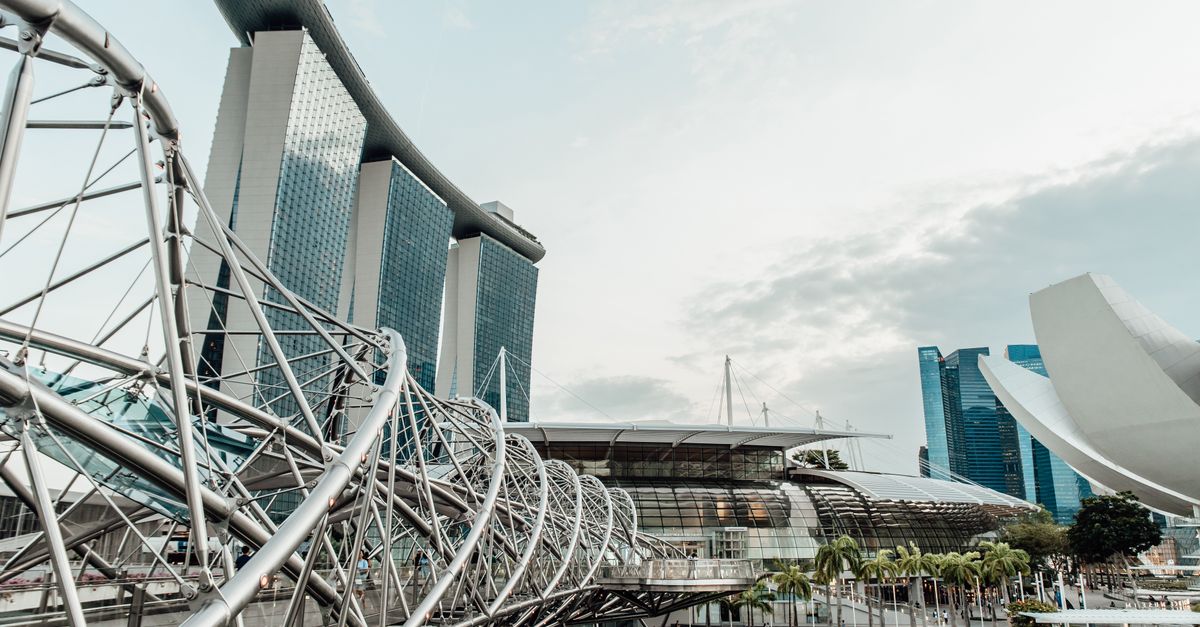
Helix Bridge is a pedestrian bridge in Marina Bay, Singapore, recognisable by its double-helix structure inspired by DNA. It connects Marina Centre with the Marina South area, near Marina Bay Sands, combining architectural interest, bay views and a waterside walk.
Its appeal is not limited to its futuristic design: the route offers changing perspectives of the surrounding buildings, while the metal curves frame the landscape. To make the most of it, include it in a walk between the Esplanade area and Bayfront, bearing in mind the heat, showers and crowds.
In brief
Helix Bridge’s distinctive feature is its visible, expressive metal structure. Rather than being limited to a deck and railings, the bridge surrounds the walkway with curved lines that cross around visitors.
The reference to DNA can be seen in this interweaving. It gives the footbridge an immediately recognisable identity, and you do not need to know any engineering terminology to appreciate its design.
Before crossing, look at the whole structure from the waterfront. This position lets you make out its overall silhouette, whereas once you are on the bridge, your attention focuses more on the joints and elements passing above your head.
The contrast between the curves of the metal and the line of the walkway explains part of the visual effect. The route remains easy to follow, while the structure creates an impression of movement that becomes more pronounced as you walk.
This is therefore not simply a sculpture placed over a walkway. The architecture also shapes the visitor experience: it frames certain views, creates a succession of perspectives and invites you to look alternately at the structure and its surroundings.
Close to large built-up complexes, Helix Bridge can be experienced at a more accessible scale. The connections, changes in curvature and repetition of the elements become noticeable as you walk.
To understand this design, compare a side view with one taken along the route. The first reveals the bridge’s profile; the second turns the spirals into a succession of frames, almost like an open gallery overlooking the city.
Observing the bridge from outside and then walking across it allows you to distinguish its role in the landscape from its function as a public space.
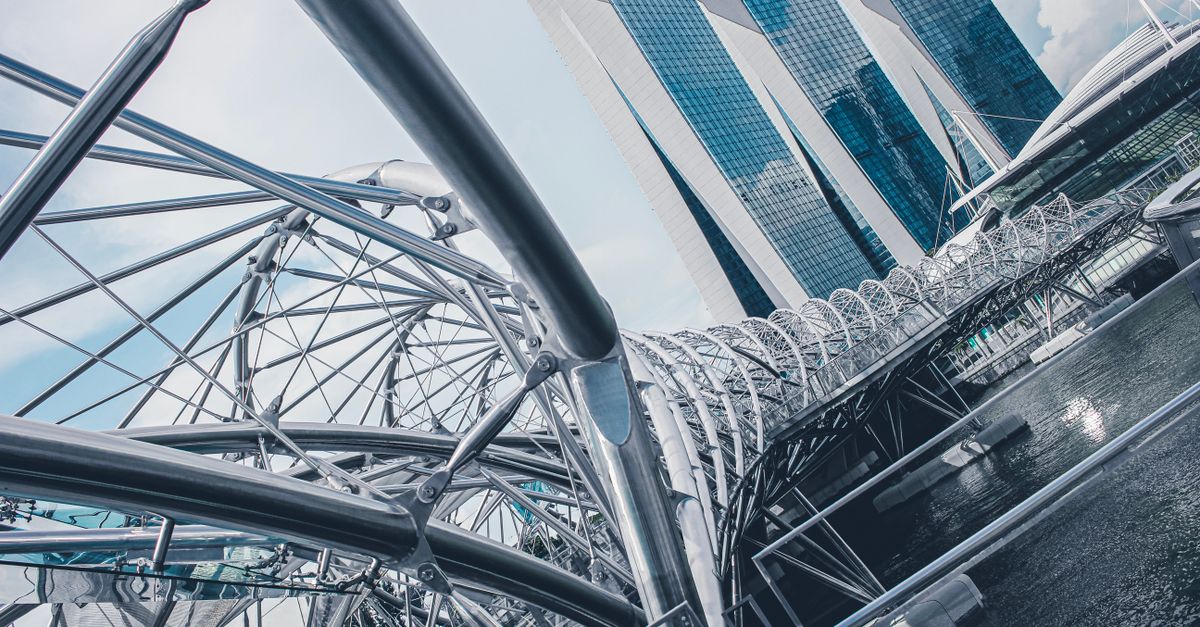
The crossing offers several ways of seeing Marina Bay rather than one single panorama. As you change position, you alter the relationship between the curves in the foreground, the water and the buildings forming the skyline.
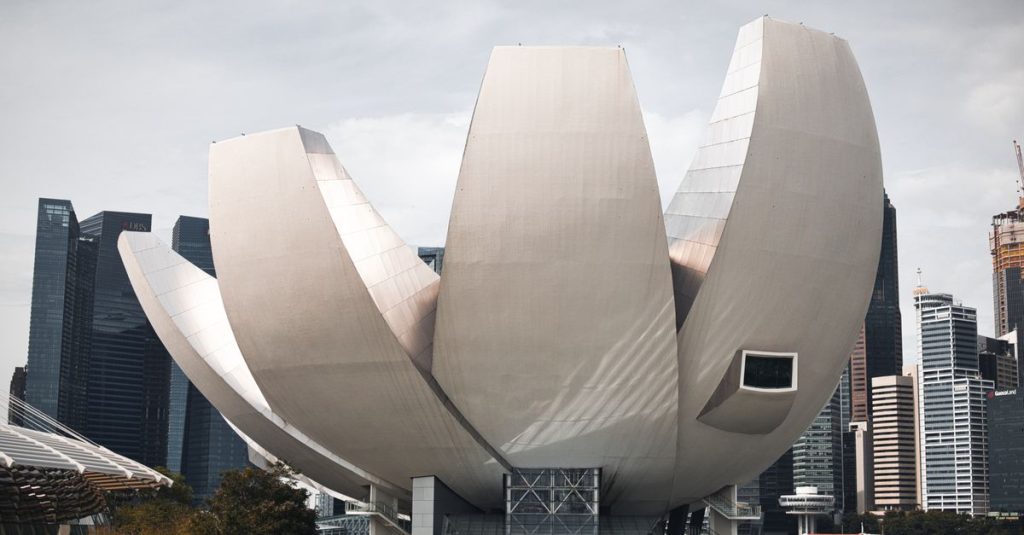
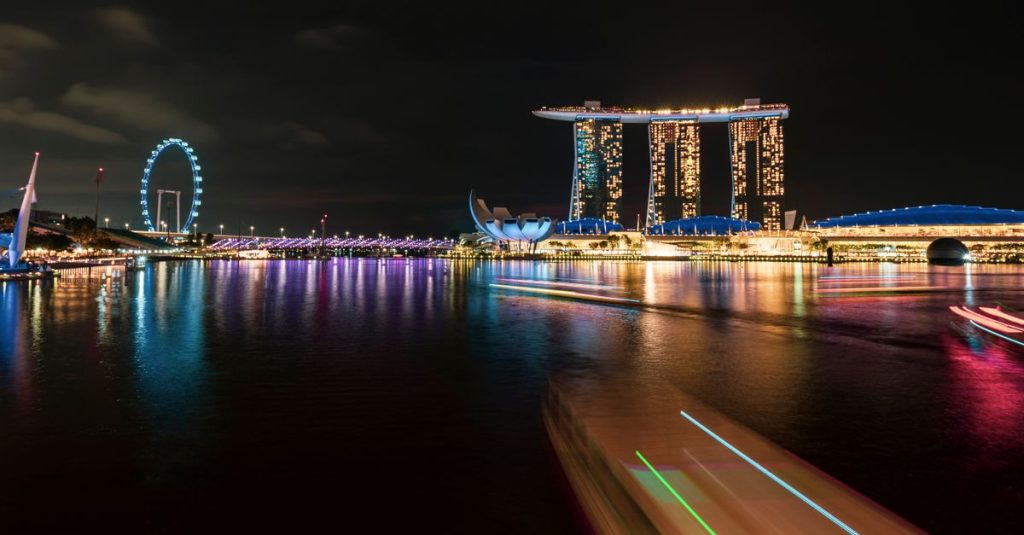
Marina Bay Sands is an obvious landmark on the Marina South side. The ArtScience Museum, recognisable by its flower-like silhouette, adds a very different shape to the nearby landscape.
Set-back viewing areas are useful places to stop without blocking the route. They also allow you to move away from the metal elements, which can either enhance a composition or hide part of the scenery.
Do you mainly want to show the bay? Look for an unobstructed opening rather than always placing a spiral in the centre of the image. To tell the story of the architecture, bring the curves into the frame instead, showing their relationship with the buildings.
| Position | What it allows you to observe | Practical tip |
|---|---|---|
| On the waterfront, before crossing | The silhouette of the bridge in its surroundings | Move far enough back not to cut off the main curves. |
| Along the route | The repetition of the double-helix elements | Take photos without stopping the flow of pedestrians. |
| From a viewing area | Perspectives over the water and buildings | Choose an opening suited to the subject you are looking for. |
| From the opposite shore | The bridge’s profile from another angle | Turn around after crossing to complete your view of it. |
Visibility also depends on the weather: overcast skies soften contrasts, while humid conditions can reduce the clarity of distant details. You do not need to wait for a perfectly blue sky to appreciate the volumes, but the result will be different.
The best viewpoint depends on what you want to show: the landscape, the structure or the dialogue between the two. This distinction also helps you choose which direction to walk.
The most coherent route is to use Helix Bridge as a link between the districts around the bay. This avoids making it a simple out-and-back trip and lets you enjoy the changing atmosphere between the waterfront, cultural venues and commercial areas.
Promenade station can serve as a starting point for reaching Marina Centre and then the waterfront. It does not lead directly to the bridge: consult the neighbourhood map and signs to choose a suitable pedestrian route.
If you are coming from the Esplanade, continue your walk along the bay towards Helix Bridge. This approach lets you see its silhouette gradually appear rather than discovering only its entrance.
Keep the route flexible, however. Detours to look at the buildings or stop by the water naturally lengthen the outing, especially when the heat encourages you to slow down.
After crossing, you reach the area around the ArtScience Museum and Marina Bay Sands. You can continue along the waterfront or look for an indoor break in the shopping complex.
Bayfront is then a possible return point by MRT. You can also extend the walk towards Gardens by the Bay, but this adds another stretch on foot: it is better to choose it according to your energy and the weather rather than include it automatically.
To organise your travel before and after this walk, consult our Singapore transport guide. Other visits can be grouped using our selection of walks and excursions, helping to limit unnecessary journeys.
Choose your arrival point first: this determines a useful crossing direction and avoids retracing your steps.
Daylight highlights the materials and joints; at night, the lighting mainly changes how the lines are perceived. These atmospheres suit different aims, and neither completely replaces the other.
For a coherent series, alternate a general view, a shot along the route and a construction detail. This shows both the monument’s place in the city and what you notice while walking across it.
In bright light, the metal can create strong reflections, while some parts of the walkway remain darker. On a phone, touching the brightest area of the screen often helps prevent a completely white sky, even if this leaves stronger shadows.
A very wide shot conveys the scale of the structure, but it can distort lines near the edges. If the result looks artificial, switch to a narrower field of view and simplify the composition rather than trying to include everything.
When the lights come on, the curves stand out more clearly and reflections on the water become part of the image. The transition between day and night can offer an interesting balance between a still-visible sky and buildings that are already illuminated.
Avoid using flash to photograph the landscape: it cannot illuminate distant buildings and is more likely to create an unwanted reflection on a nearby element. Instead, steady your device and check the focus before continuing.
A tripod can obstruct a pedestrian area; follow the signs and any instructions displayed on site. For all photography, stay behind the railings and keep access to the viewing areas clear.
A simple composition and a steady position matter more than adding numerous effects. They also allow you to take photos without turning a passageway into a private studio.
Prepare for this visit as an outdoor outing, even though it takes place in the heart of Singapore. Heat, humidity and showers have a greater effect on walking comfort than the difficulty of the route itself.
Bring water and protect yourself from the sun. The covered sections along parts of the route should not be considered continuous shelter from wind-driven rain.
In the event of a storm, go into an enclosed building rather than staying on the bridge to watch the sky. After a shower, walk carefully: wet surfaces and heavy footfall can make moving around less comfortable.
Our Singapore climate guide helps you prepare for a day alternating outdoor activities with indoor breaks. This approach remains useful even when the morning begins under clear skies.
Construction work, an event or crowd-management measures may temporarily change pedestrian routes. Before a visit connected with a particular occasion, check notices from the relevant local authorities; for the MRT, consult information from the Land Transport Authority and the operator concerned.
With a pushchair or wheelchair, check the entire route, particularly station exits and connections between levels. The crossing is only one part of the journey, and a detour beforehand can significantly affect the comfort of the outing.
For a break, the Marina Centre and Marina Bay Sands areas offer various dining options. Consult our guide to Singapore restaurants and cuisines to choose according to your preferences, and check opening times and prices directly with the establishments.
Comfort mainly depends on access, the weather and the breaks planned around the crossing.
Helix Bridge is in the Marina Bay area. This pedestrian link connects Marina Centre with Marina South, near Marina Bay Sands and the ArtScience Museum.
Promenade and Bayfront are possible access points depending on your itinerary. Choose the station according to the direction of your walk and check the exits and routes on the local map.
Daytime is suitable for observing the architectural details. Evening allows you to appreciate the lighting and reflections on the bay; also choose according to the weather and your comfort in the heat.
Protection from the weather is partial. Wind-driven rain can reach the walkway; in the event of a storm, go into an enclosed building.
Updated on 30/10/2026
Scroll to see more articles →