Lau Pa Sat: Singapore’s Historic Hawker Centre
Discover Lau Pa Sat, Singapore’s historic hawker centre: local food, iconic architecture and lively Satay Street in the heart of the city.
To visit Singapore’s ArtScience Museum, first choose your exhibition, then book the corresponding ticket and plan your arrival at Marina Bay Sands. The museum’s name on an offer does not guarantee access to every gallery. Future World, created with the teamLab collective, is a major attraction for digital-art enthusiasts, while temporary exhibitions offer other perspectives on the relationship between creativity, science and technology.
The key is to match the ticket contents to the time you actually have available. An interactive experience cannot be visited like a gallery of paintings: some works require observation, participation or waiting your turn. Before buying, check the museum’s prices, opening hours and access conditions with the ArtScience Museum at Marina Bay Sands. For a stopover, allow time for the return journey and your carrier’s requirements.
In brief
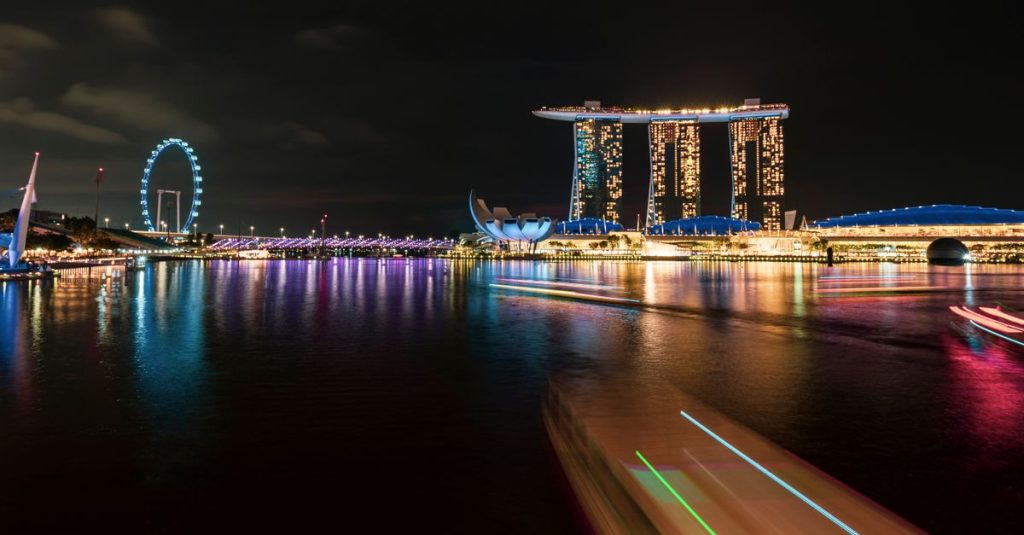
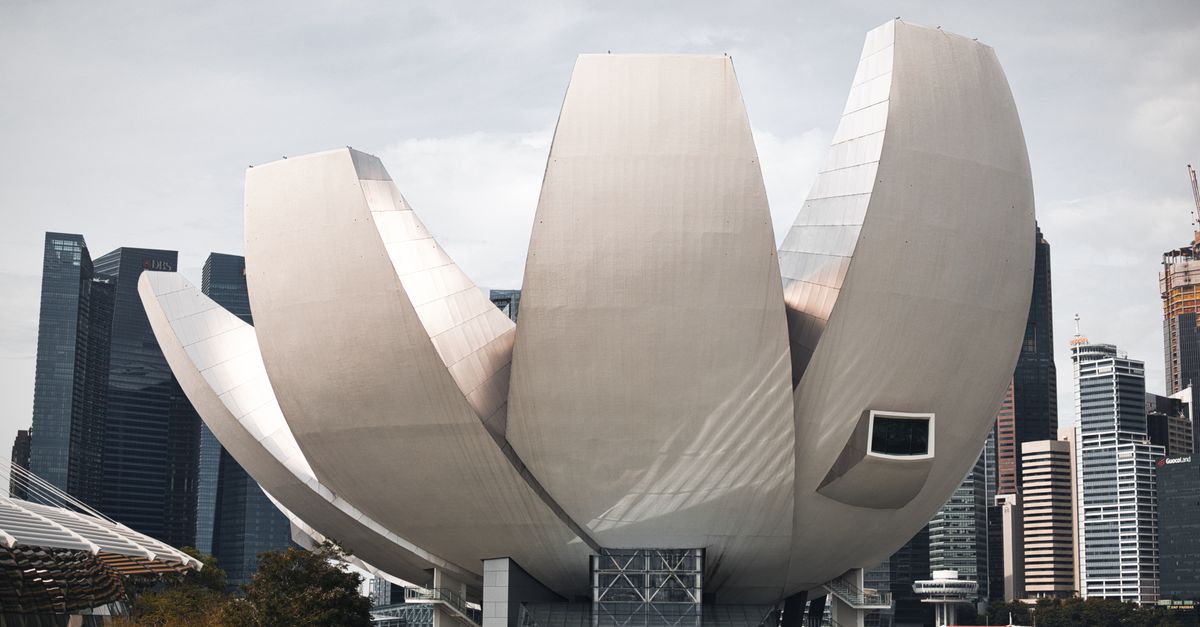
The ArtScience Museum brings art, science and technology together in a building recognisable by its flower-like shape. Its appeal is not limited to the architecture: the displays encourage visitors to see how a technical device can become a visual, sound-based or participatory experience.
You need to distinguish the venue’s identity from its programme. Widely shared photographs often show spectacular digital installations, but they do not necessarily represent every experience available on the date of your visit. An old image is therefore not enough to choose your ticket.
Future World is associated with the teamLab artistic collective and is based on interactive digital environments. Depending on the installations on display, light, sound and visitors’ movements help transform the perception of the space or the appearance of the works.
This approach changes the way you look at art. In a traditional gallery, you can walk past an object without altering its presentation; here, interaction may be part of the artistic experience. Watching other visitors can sometimes help you understand how something works before taking part yourself.
Immersive exhibitions appeal both to contemporary-art enthusiasts and to visitors curious about the artistic uses of digital technology. They do not automatically constitute an educational journey through science, however: visual emotion and exploration may take priority over technical explanation.
To make the most of the experience, begin by watching an installation evolve rather than immediately looking for the perfect photograph. An animated work reveals itself over time, and a change in lighting or reaction can make the experience very different from the image that inspired your visit.
Temporary exhibitions are another reason to visit, particularly if you have already seen Future World. Their subject, dates and access arrangements should be confirmed with the venue for your chosen date.
Pay particular attention to the type of experience: displays of objects, projections, participatory installations and documentary content require different types of attention. A subject you are passionate about may deserve more time than a heavily photographed attraction, even if the latter features prominently in tourist publicity.
The language of the texts, any age recommendations and the presence of sensitive content may also affect your choice. For a family outing, these details are more useful than a simple promise of a spectacular experience: they help you assess what each person will genuinely enjoy.
An advertised workshop or special session should not be assumed to be included. Check its registration requirements, participation conditions and compatibility with your main ticket, as an additional activity may require a separate appointment during the visit.
To place this outing within a broader discovery of the city, explore the cultural and leisure options available in Singapore. This can help balance digital experiences with historical collections, performances or heritage walks.
The best choice is the exhibition whose content genuinely interests you, not the one promising the largest number of spaces. This is the basis for buying a suitable ticket without paying for options you will not have time to use.
Compare tickets exhibition by exhibition. An offer bearing the name ArtScience Museum Singapore may cover one specific experience rather than the whole programme. The commercial title never replaces reading what is actually included.
Booking online makes it easier to choose a date and, where applicable, a time slot. It does not remove the need to follow arrival procedures, present any requested documents or comply with the instructions in your confirmation.
Museum prices should be checked with the ArtScience Museum’s official ticket office at Marina Bay Sands. The relevant amount is the one corresponding to your date, visitor category and chosen spaces, not a price seen in an old publication.
If a discount is available, check the exact criteria and required proof. For example, a category intended for residents should not automatically be treated as available to anyone staying temporarily in Singapore.
Compare the total payable rather than an advertised starting price. Depending on the seller and product, currency-conversion terms, selected options or possible fees may affect the comparison; only the final payment step confirms the amount requested.
| Ticket option | Main benefit | What to check |
|---|---|---|
| Admission to one exhibition | Focus the visit on your main interest | Exact name of the included experience |
| Offer combining several spaces | Discover complementary experiences | Shared validity and any separate time slots |
| Ticket sold by an intermediary | Compare commercial terms | Direct access or prior voucher exchange |
| Additional activity or workshop | Explore a practice or theme in greater depth | Separate registration and participation conditions |
Before paying, reread the date, time if applicable and number of participants. Also check whether the different parts of a package must be used on the same day: a combined ticket does not necessarily mean that each visit can be spread freely throughout your stay.
Cancellation deserves particular attention during a stopover. A cheaper ticket may be less suitable than an amendable option if your disembarkation depends on a programme that could change; this flexibility must be clearly stated in the sales conditions.
Never assume that a delay entitles you to another time slot. Check the applicable procedure and the contact to use if there is a problem. A vague commercial claim about “flexibility” is not the same as a precise amendment condition.
After buying, keep the ticket and its instructions in a format accessible without an internet connection. If an intermediary issues a voucher, identify the additional step required: arriving in the area does not mean that you are ready to enter the exhibition.
To include this expense in your trip budget, our guide to the cost of living in Singapore can help you consider outings, meals and transport together. A combination is worthwhile only if you actually want the visits included, not simply because a discount is displayed.
A suitable ticket clearly describes what you will see and the conditions under which you can enter. Once these details are established, planning your day becomes much easier.
Check the opening hours for your date with the ArtScience Museum. The building’s closing time, the last admission to an exhibition and the time slot on your booking are different pieces of information. Do not infer one from another.
This distinction matters particularly if you arrive late. A venue that is still open does not guarantee that admission is available or that you will have enough time to enjoy the chosen experience calmly; any announced extension should also be checked for the spaces you want to visit.
The time you need depends less on the building than on how you visit. Reading texts, watching animations, taking part in interactive displays and exploring a temporary exhibition are different activities that cannot simply be replaced by walking faster.
In an interactive environment, an occasional wait may be part of the experience. Some visitors want to repeat an action or remain in front of a visual sequence, so avoid scheduling a connection immediately after the time at which you expect to finish.
Your pace also depends on the purpose of the outing. A photography-focused visit requires different stops from a family visit with young children or a route centred on explanatory texts. Defining this priority prevents you from trying to do everything at once.
Plan practical needs before entering: toilets, storage for belongings and the venue’s rules. This limits interruptions, especially if leaving the exhibition area may be subject to readmission conditions that should be checked with staff.
For a stopover, start with the time by which you must be back at the terminal, airport or meeting point. Then deduct formalities, travel time and a buffer for unexpected delays: the remainder is your genuinely available cultural time.
With an air connection, distinguish the time between flights from the time actually available in the city. A guide to Singapore can help you plan your stopover, while boarding requirements should be confirmed with the airline.
For a maritime stopover, identify the exact terminal and the carrier’s instructions. Marina Bay Sands, a marina and a cruise terminal are not interchangeable destinations; an approximate name can complicate your return journey.
Allow time for a meal as well. Consistently postponing it until after all the galleries can make the end of the visit less enjoyable, while booking a restaurant too close to your admission time creates another unnecessary constraint.
A walk around the bay is easier to adjust than another timed attraction. The options in our guide to Marina Bay Singapore make it possible to choose a nearby stop without turning the day into a succession of appointments.
Your safety buffer should remain separate from the sightseeing programme. It is there to absorb delays, not to add another gallery at the last minute; this is particularly useful when your next form of transport cannot wait.
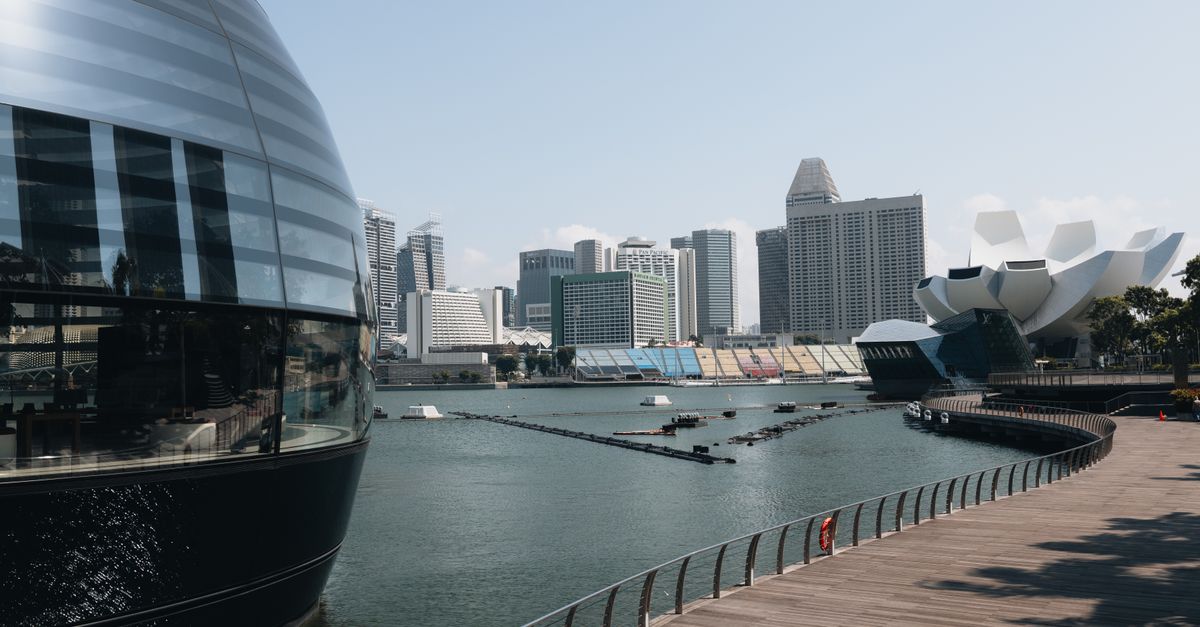
The ArtScience Museum is part of the Marina Bay Sands complex, beside the bay. When planning your route, distinguish the journey to the area from the final walk to the building. Arriving at the complex does not mean that you are immediately at the entrance you need.
Bayfront MRT is a convenient public-transport option. However, check the route from your actual starting point: the best connection depends on your accommodation, terminal or preceding activity, not just the destination name.
The MRT is useful if you want to avoid relying entirely on road traffic. Nevertheless, allow for walking inside stations, any connections and the final walk, particularly with children or people who move slowly.
On arrival, follow the signs to the museum and check your position before continuing through the shopping areas. Navigation based only on “Marina Bay Sands” may take you to another part of the complex and create an unnecessary detour.
For fares, payment methods and service hours, consult the official information from the Land Transport Authority and the relevant operators. These details change, so check them when travelling rather than relying on a previously memorised amount.
Our Singapore MRT guide helps you compare the available options from your starting point. The right choice combines a clear route, comfort and flexibility rather than focusing only on the mode advertised as the fastest.
A taxi or private car can simplify the journey when you are carrying belongings or want to limit connections. Specify the ArtScience Museum precisely and check the proposed drop-off point, as vehicles may not stop beside the pedestrian entrance you have identified.
For the return, identify the pick-up point before ordering. In a large complex, the point shown in an app may be some distance from your exit; this becomes inconvenient in heavy rain or when a driver is already waiting.
Walking is pleasant for discovering the waterfront, but consider the weather and your energy levels. Heat, humidity and showers can affect the comfort of an otherwise simple route; check the typical Singapore weather before adding several outdoor stops.
Do not assume that the whole route will be sheltered. Check the final approach and carry light rain protection, without bringing bulky items that would become awkward in the exhibition spaces.
If you use a wheelchair or need a step-free route, ask the venue for accessibility information. An adapted entrance to the building does not, by itself, indicate the conditions for taking part in every indoor installation.
A successful journey takes you to the right door and then to the right return point. This reduces stress more effectively than an optimistic estimate based only on the distance between the museum and your accommodation.
A successful family outing depends on matching the installations to children’s needs. Interactivity does not mean that every activity suits every age, height or sensitivity. Check the participation conditions before making promises.
Digital spaces may combine darkness, sounds, moving images and the presence of other visitors. Some children enjoy this stimulation, while others need to observe from a distance before joining in; allowing time to adjust prevents the experience from becoming an obligation.
For a physical installation such as Aerial Climbing, if it is part of the programme during your visit, ask about height requirements and permitted footwear. Closed shoes are a practical choice, but they do not replace checking all the applicable rules.
The museum’s pushchair policy should also be confirmed, particularly for Future World. Ask whether pushchairs may enter, where they can be left otherwise and how to move a child who cannot yet walk independently.
If you plan to use a baby carrier, check that it is compatible with the spaces and activities selected. Equipment that is useful for moving around does not automatically provide access to physical installations, which may have specific restrictions to protect participants.
Keep bags light and ask about storage before relying on it. Carrying shopping, a folded pushchair and extra clothing can make movement difficult; it is generally more comfortable to leave shopping until after the visit.
In the galleries, let children understand one interaction before moving to the next. Repeating an action may be their way of exploring the link between a gesture and its effect, even if an adult feels that they have already seen the essential point.
Explain the difference between a participatory artwork and an area where visitors should simply look. A digital exhibition does not mean that every surface can be touched, and staff instructions remain the priority in shared spaces.
Plan breaks in advance. Ask staff about places to rest and the rules for leaving and re-entering before exiting an exhibition; an improvised break should not leave you uncertain about how to continue the visit.
Bring a light layer for comfort in air-conditioned spaces and organise drinks in permitted areas. Rules on food and beverages must be followed, even when the outdoor heat makes you want to keep a bottle immediately accessible.
For photographs, check the signs regarding flash, accessories and photography. Above all, avoid blocking an interaction to get a picture: other visitors should be able to experience the work without waiting for a personal photo session to end.
Our guide to activities for children and teenagers in Singapore can help you plan an alternative if the chosen exhibition does not suit everyone. A calm outdoor activity or a break can complement the day without adding another immersive experience.
The right pace allows everyone to participate without pressure, observe without rushing and stop before becoming tired. This gives each person room to enjoy the experience, even when interests differ.
Practical questions about the ArtScience Museum
Booking is advisable if you want a particular exhibition and time slot, especially for Future World. Check availability with the official ticket office and do not rely on being able to buy immediate admission on site.
Not necessarily. Access depends on the option purchased: check the names of the included exhibitions, any additional activities and the validity conditions before paying.
Check with the ArtScience Museum at Marina Bay Sands for your visit date. Separately verify the price of your chosen option, your time slot, last admission and the closing time of the relevant spaces.
Bayfront MRT provides access to the Marina Bay Sands area. Allow time to walk to the building and follow signs to the ArtScience Museum rather than navigating only towards a general destination within the complex.
Ask about pushchair rules, conditions for physical installations and available places to take a break. Also check any required footwear, height restrictions and readmission arrangements after leaving.
Updated on 29/10/2026
Scroll to see more articles →