Tiong Bahru: Cafés, Market and Art Deco Architecture
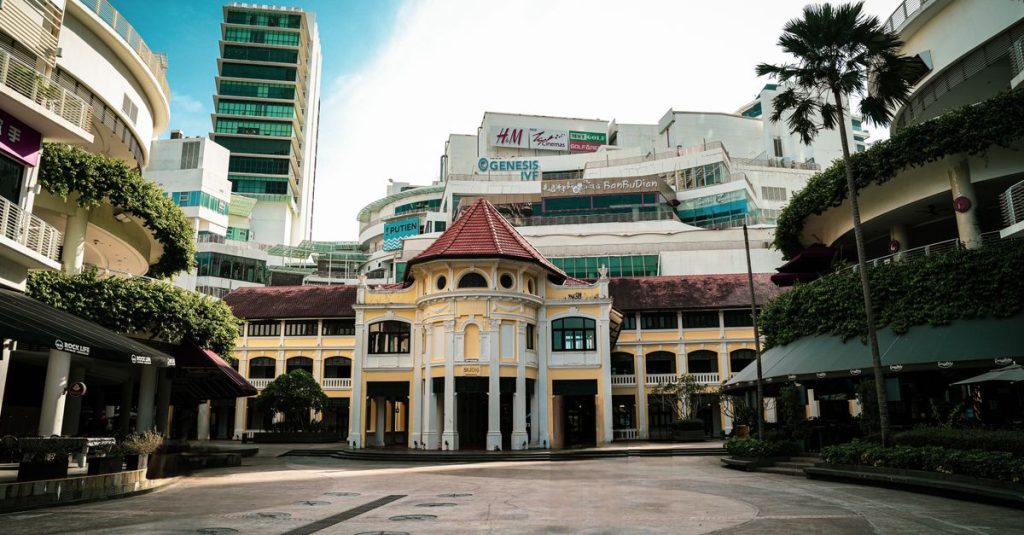
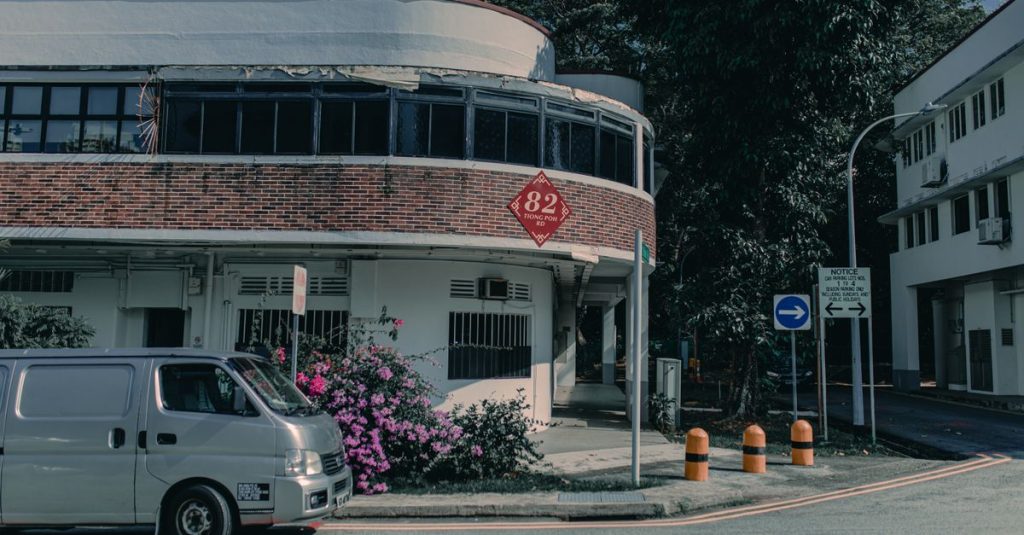
Explore Tiong Bahru in Singapore: discover its local market, trendy cafés and Art Deco architecture on a walk through this historic neighbourhood.
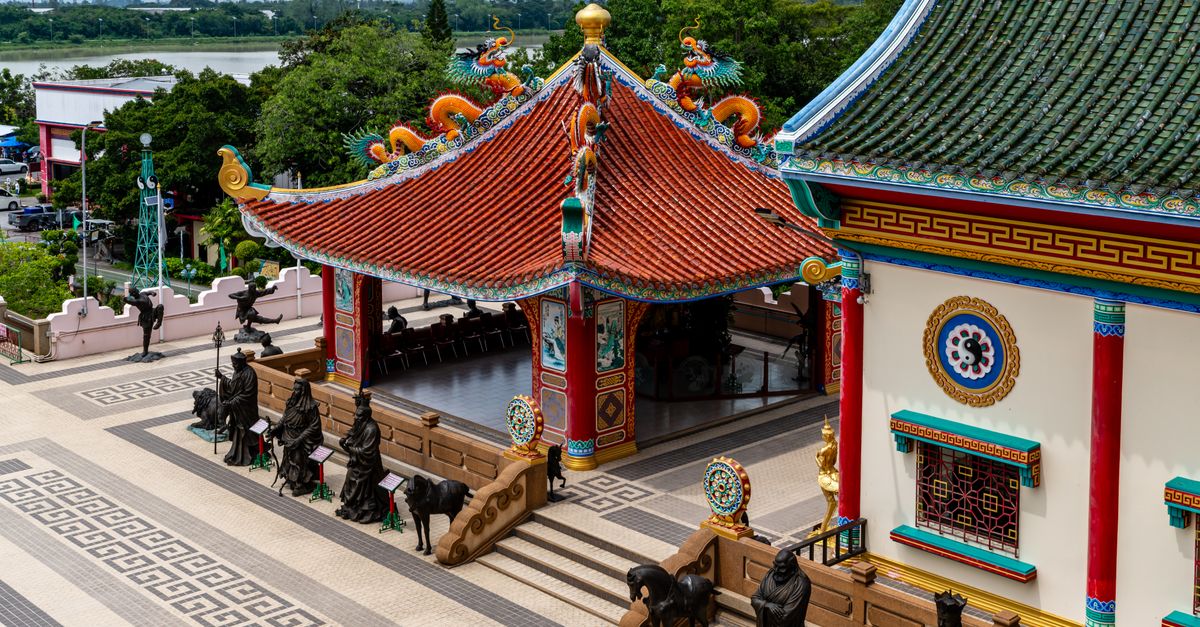
Haw Par Villa is an unusual Singapore attraction where monumental statues and sculpted tableaux tell stories of legends, family values and ideas about the afterlife in Chinese culture. Located in Pasir Panjang, in the west of the city, this theme park is better experienced as a garden of stories than as a thrill-seeking entertainment venue. Visitors come to observe, interpret and sometimes feel unsettled.
Behind its bright colours lies the story of the Aw family, connected with the development of Tiger Balm. The route brings together mythical animals, religious figures, everyday scenes and moral warnings. Its most striking section, the Ten Courts of Hell, depicts punishments explicitly: something to be aware of before planning a visit with children.
In brief
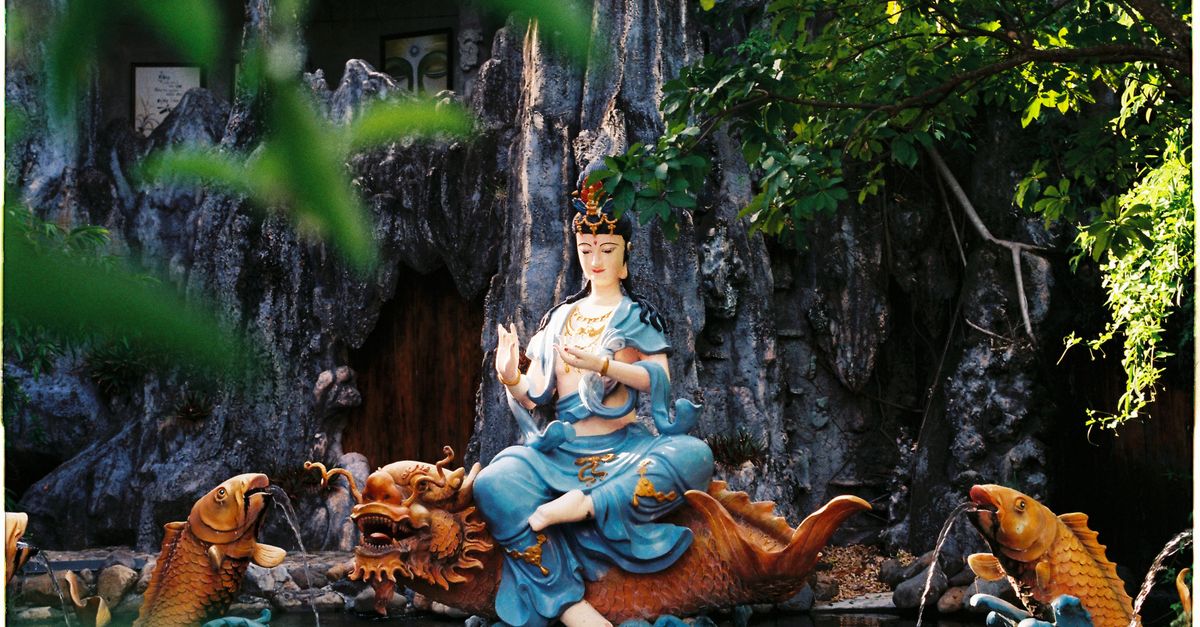
The term “theme park” can be misleading. At Haw Par Villa, the interest lies in the sculptures, their arrangement and the stories they represent, rather than in mechanical rides or scheduled shows.
The terrain contributes to the discovery: paths lead from one sculpted group to another, with changes in scale and perspective. A striking figure catches your eye, while a small nearby scene calls for closer observation.
Exaggerated expressions, emphatic gestures and contrasting colours make the situations immediately visible. These devices serve a teaching purpose: showing a virtue, condemning behaviour or making a legendary episode memorable.
To understand a tableau, start by identifying the action. Who is asking for help, who is judging, who is protecting someone and who is suffering a consequence? This approach remains useful even when the characters’ names are unfamiliar.
The description “strange” mainly reflects the difference from a visitor’s usual expectations. The images belong to specific narrative traditions; reducing them to kitsch scenery means missing much of their interest.
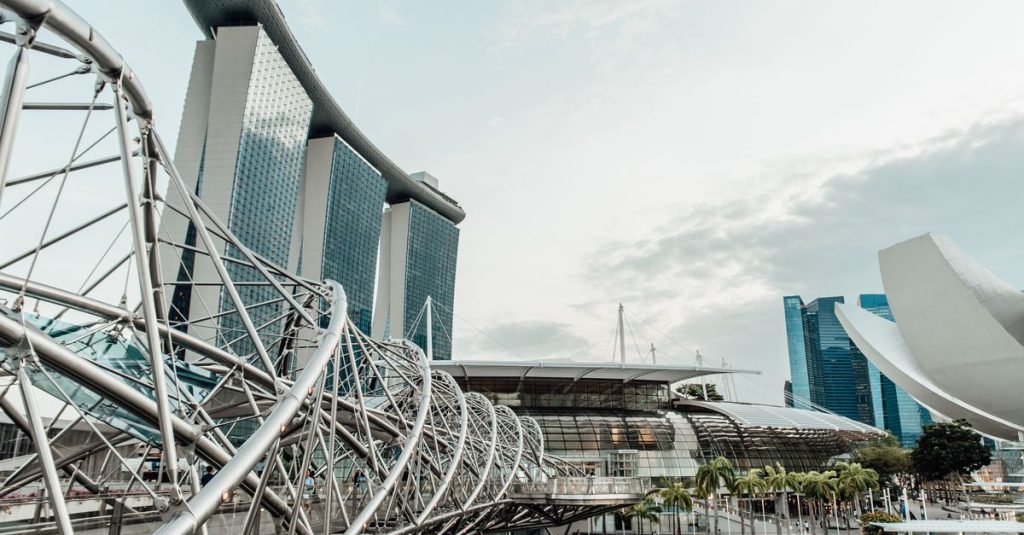
This place contrasts with Marina Bay’s glass façades and carefully composed landscapes. It provides access to a form of popular visual culture in which religious, family-oriented and spectacular elements coexist without clear separation.
Wide-angle photographs show the abundance of the site, but the details explain its message more clearly. An object held in a hand, a respectful posture or a character’s position in relation to an authority figure can change the meaning of a scene.
The best approach is therefore to view these installations as stories told through images, not merely as photogenic curiosities.
Haw Par Villa is inseparable from Aw Boon Haw and Aw Boon Par, the entrepreneurs who built Tiger Balm’s commercial reputation. The name of the estate combines their names, while the name “Tiger Balm Gardens” recalls the connection with the brand.
Their father, Aw Chu Kin, worked in traditional medicinal preparations in Rangoon, now Yangon. This origin places the site within a regional history of migration, trade and family transmission, rather than solely within Singapore’s tourist landscape.
Aw Boon Haw had a residence and its gardens laid out in Pasir Panjang for his brother. The project combined a symbol of success, family attachment and the desire to give visible form to Chinese cultural references.
The word “villa” therefore refers to the site’s residential origins. This does not mean that visitors should expect a conventional tour of a preserved house with furnished rooms: today, the experience is mainly based on the sculpted landscape and its interpretation spaces.
This history helps explain the presence of themes such as gratitude, duties towards relatives and transmission between generations. In the garden, they extend the values that the estate sought to highlight.
The product’s fame connects a familiar object with a much less expected creation. Behind a small commercial container lie economic networks and an ambition to achieve public representation.
It is nevertheless important to distinguish this entrepreneurial history from the therapeutic claims associated with the brand. Discovering the estate is not a medical demonstration, and the commercial success of an ointment is not enough to establish its effectiveness for a particular use.
The connection with the Aw family changes the way you experience the walk: this garden is as much about transmission and success as it is about fantastical creatures.
The route brings together references to Buddhism, Taoism, Confucian values and popular literature. Presenting the entire site as a purely “Confucian” garden would therefore be reductive: these traditions overlap in the beliefs and practices represented.
The phrase “Asian folklore” gives an idea of the visual world, but remains very broad. Here, the main cultural foundation is Chinese, with stories whose versions and interpretations may vary between communities.
Filial piety is an important key to understanding the scenes. It refers in particular to respect for parents and duties towards previous generations, made visible in the tableaux through gestures of care, devotion or sacrifice.
Some examples may surprise a contemporary viewer. It is more enlightening to ask which obligation they seek to make memorable than to treat them as descriptions of the current behaviour of all Singapore residents.
Figures associated with happiness, prosperity and longevity offer another register. They express positive aspirations, contrasting with scenes in which wrongdoing leads to punishment.
The Legend of the White Snake illustrates the richness of these stories. Depending on the version, it involves love, transformation, transgression and religious authority; reducing it to a simple moral battle would erase its ambiguities.
The following comparisons can help guide your observation, without replacing the identification of each scene.
| Observed element | Interpretive key | Detail to examine |
|---|---|---|
| Family scene | Duty, gratitude or filial piety | Gestures of assistance and relationships between generations |
| Protective figure | Kindness or a positive aspiration | Attributes, posture and symbolic objects |
| Fantastic creature | Transformation or a legendary episode | Relationship with the human characters |
| Court of the afterlife | Moral judgement and the consequence of an act | How the scene is organised around the judge |
These representations shed light on a cultural heritage; they neither sum up all Chinese beliefs nor represent Singapore’s religious diversity.
The Ten Courts of Hell are the most disturbing part of the route. They depict a vision of the afterlife in which actions committed during life are judged and then punished in graphic ways.
The intention is not simply to frighten visitors. The violence of the tableaux serves a moral lesson: making the consequences of behaviour impossible to ignore by presenting them in striking images.
These depictions belong to Chinese traditions of the afterlife that combine different religious and popular influences. They should not be directly equated with the Christian hell, even if the idea of punishment after death offers a point of comparison.
Wounded bodies and scenes of torture can cause genuine discomfort. You do not need to examine every depiction in detail to understand the principle behind the display, nor do you need to walk through every scene to appreciate the rest of the estate.
Hell’s Museum provides an interpretive setting focused on death and ideas about the afterlife. Check with its operator what route is accessible, the entry conditions and the recommendations in force at the time of your visit.
The visitor’s sensitivity matters more than the general appeal of a colourful garden. The animals and fantastical characters visible outdoors do not indicate how intense the hell scenes will be.
Before a family visit, check the official recommendations and explain clearly what the images depict. If these themes could frighten a child, choose suitable outdoor areas rather than turning the visit into a test of courage.
The same precaution applies to adults who are sensitive to depictions of violence. Skipping this section takes nothing away from the historical and artistic interest of the walk.
The cultural significance of these tableaux deserves explanation; nobody is obliged to endure their visual violence.
The estate is in Pasir Panjang, near Haw Par Villa MRT station on the Circle Line. This location makes it possible to include the site in an itinerary in western Singapore without confusing it with a stop in the Orchard Road shopping district.
To plan your connections, consult our guide to transport and getting around Singapore. Timetables and any disruptions should be checked with the network operator.
Much of the visit takes place outdoors on sloping ground. Comfortable shoes, water and protection from the rain will make the route more pleasant than accessories chosen purely for photographs.
Hot, humid weather can make uphill sections tiring. Adjust your pace and check the Meteorological Service Singapore forecast before setting off, particularly when thunderstorms are possible.
If you are using a pushchair or wheelchair, ask the operator which routes are practicable. Being close to the MRT does not guarantee that every part of the garden has the same accessibility conditions.
Distinguish the access arrangements for the garden from those for Hell’s Museum. Contact the operator directly for current prices, opening hours, temporary closures and any restrictions, rather than relying on an old travel account.
To anticipate transport, dining and sightseeing expenses, our page on Singapore’s budget and cost of living provides additional reference points. You do not need to buy any Tiger Balm product to understand the site’s history.
You can continue your day in a different setting with Tiong Bahru’s market and Art Deco architecture, allowing time to travel between the neighbourhoods. This combination showcases distinct expressions of local heritage without presenting the two places as neighbours.
Above all, keep your schedule flexible: the terrain, weather and time spent studying the scenes will determine the actual pace of your visit.
Haw Par Villa is in Pasir Panjang, in western Singapore, near the MRT station of the same name on the Circle Line. The park is not in Orchard Road.
The outdoor areas may appeal to families, but the Ten Courts of Hell contain explicit scenes of violence. Check the operator’s recommendations and consider each child’s sensitivity.
Access arrangements for the garden and Hell’s Museum should be distinguished. Check current prices and arrangements directly with the operator before travelling.
No. Gestures, relationships between characters and symbolic objects already make it possible to interpret many scenes. Some background on filial piety, popular legends and depictions of the afterlife can nevertheless enrich the experience.
Updated on 31/10/2026
Scroll to see more articles →