Sentosa Singapore: Beaches, Attractions and Getting There
Discover Sentosa Singapore: beaches, attractions, activities and practical advice for reaching this must-see island south of Singapore.
Tiong Bahru is worth visiting for its market, Art Deco architecture and cafés, best discovered on foot rather than by rushing from one address to the next. In this historic Singapore neighbourhood, buildings with rounded corners still contain homes, while their ground floors are occupied by shops and contemporary cafés. The food market remains a focal point of daily life: people buy fresh produce, have breakfast and share tables in the food centre.
The best approach is to start at Tiong Bahru Market, then walk through the residential streets before stopping for coffee around Eng Hoon Street or Yong Siak Street. The area’s appeal lies in this continuity between popular meals, architectural heritage and new commercial uses. However, do not imagine a frozen-in-time village or a visitor-free enclave: trendy cafés are part of its current identity, with the changes this brings for local businesses. To appreciate the local culture, look at the stalls and façades as much as the shop windows. Do not build your itinerary around an old business without checking that it is still open to the public.
In brief
Start at the market rather than with brunch. Tiong Bahru Market and Food Centre on Seng Poh Road immediately shows the importance of food in the neighbourhood. The ground floor combines fresh-produce stalls with a hawker centre upstairs, where several vendors cook around a shared seating area.
These spaces serve different purposes. Downstairs, residents do their shopping; upstairs, they order prepared food. Visiting only the dining area would mean missing this link between household shopping and everyday cooking.
Chwee kueh is a good choice for discovering a savoury Singaporean breakfast. These small steamed rice cakes are topped with preserved radish, with chilli served on the side. Their appeal lies in the contrast between the soft, mild base and the much stronger topping.
Chai tow kway, often translated as “carrot cake”, is not a carrot pastry. It is made from white radish and rice flour, cut into pieces and fried, usually with eggs. The black version contains a sweet dark soy sauce, while the white version allows the flavours of the cooking to come through more clearly.
Braised duck offers another option: flavourful meat served with rice, depending on the vendor’s set meal. For noodles, check the displayed ingredients rather than choosing solely from a photograph. Broth, vinegar sauce, chilli and toppings create very different results.
Do not order every speciality immediately. Starting with one dish lets you assess your appetite and leave room for another preparation. If you are sharing, ask for suitable utensils and avoid occupying a large table with purchases that are still wrapped.
Find an available seat before ordering, especially when the dining area is filling up. A packet of tissues or an object left on a table may indicate that it has been reserved according to the custom of chope. This does not justify leaving a phone or wallet unattended.
Drinks are often ordered from a different vendor from the one serving the food. Have a backup payment method: the electronic options offered may not be compatible with those available to a foreign visitor. Check accepted payment methods directly before ordering.
A queue may indicate a popular stall, but it does not guarantee that you will prefer it or that it is better than the neighbouring one. Look at the dishes being served, the advertised ingredients and the pace of preparation. If you have an allergy, ask the vendor: a dish that looks vegetarian does not reveal the composition of a sauce or seasoning.
Morning is generally the best time to combine shopping with breakfast. Opening times vary from stall to stall, and some may finish service once their preparations have sold out. Check with the operators and, for food-centre closures, with the National Environment Agency; our guide to Singapore food and restaurants can help you continue exploring.
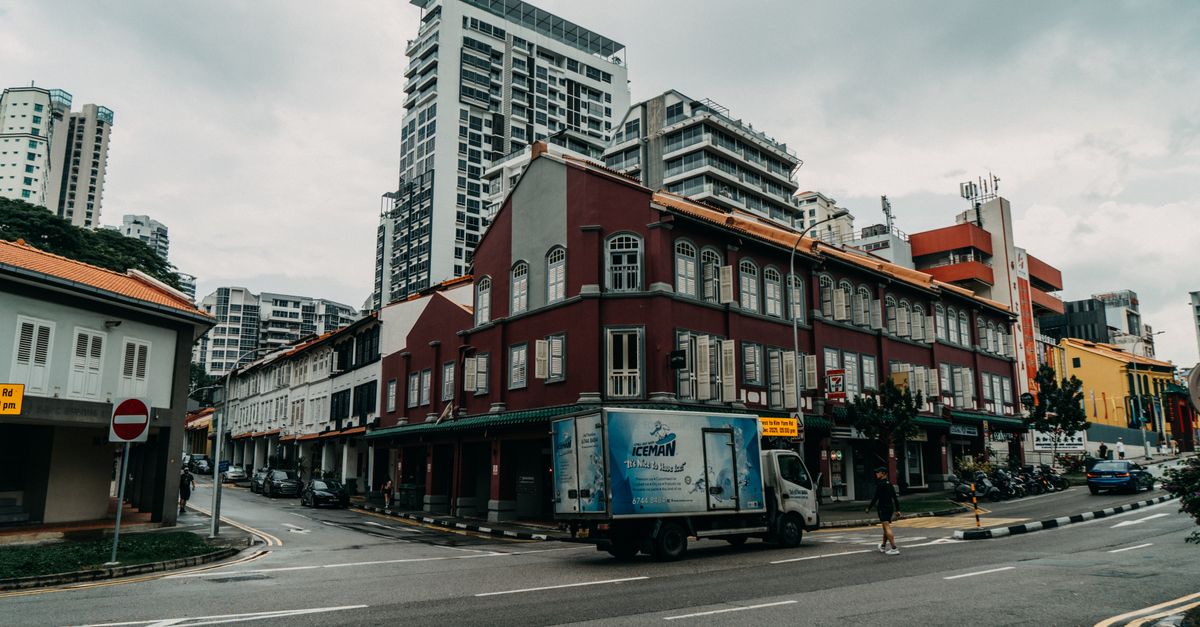
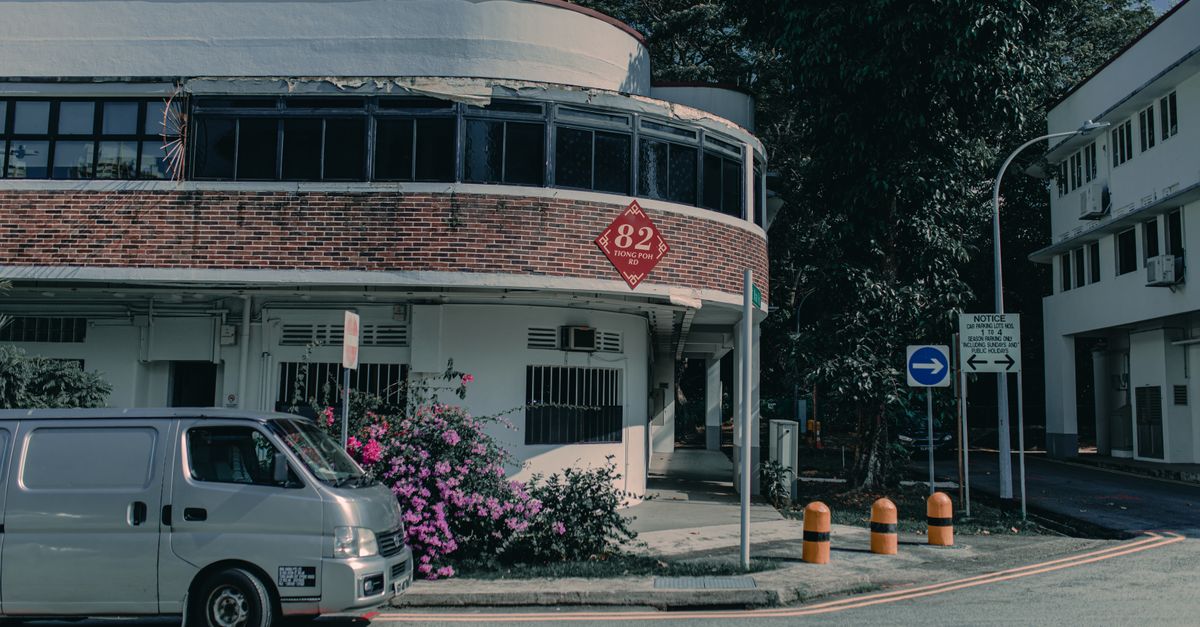
Tiong Bahru’s architectural appeal lies in a group of streets, not a single monument. The buildings associated with the Singapore Improvement Trust show a different way of living in Singapore from that offered by today’s high-rise towers. Their modest height, curved forms and repeated openings give the walk visual coherence.
The term Art Deco architecture is commonly used to present the area. Streamline Moderne more precisely describes some of its forms: rounded corners, horizontal lines and visual references to ocean liners. However, not every building has the same details or composition.
Guan Chuan Street is a good starting point for viewing the buildings from public areas. Step back at the junctions: a façade seen from an angle reveals more clearly how a curved corner connects the sides of the building. You can then take in the whole structure rather than a succession of windows.
The round openings sometimes suggest portholes, while the horizontal bands emphasise the length of the façades. Also look at the balconies and sun protection. These features contribute to the buildings’ appearance, but also respond to the needs of housing in a tropical environment.
Around Eng Hoon Street, the relationship between homes and businesses is particularly visible. A contemporary shopfront can occupy a ground floor without obscuring the façade above. This contrast explains part of the neighbourhood’s visual identity, although not every business is itself a heritage feature.
Lim Liak Street allows you to continue observing the buildings in a residential setting. Compare the shapes of the balconies, the setbacks and the arrangement of the openings with the previous streets. This avoids reducing all of Tiong Bahru to one uniform style or a few heavily photographed façades.
The area includes a group of buildings protected under urban conservation rules. This does not mean that every building in the wider neighbourhood has the same status, or that all change is impossible. For a property project or renovation work, check the applicable requirements with the Urban Redevelopment Authority.
For a simple visit, the essential distinction is between public and residential space. An open stairwell is not automatically a passage intended for visitors. Do not go upstairs looking for a view from a corridor, and do not photograph inside flats.
The clearest photographs are often taken from the opposite pavement, provided you cross at designated places. Including a tree, shop or unidentifiable passer-by gives a sense of the real scale. Above all, avoid blocking an entrance to obtain a people-free image.
The murals visible along the streets offer another way of interpreting the past, through scenes and objects from everyday life. Treat them as artistic representations, not as a complete account of local history. They complement the buildings without replacing attention to their forms.
An independent walk is enough to appreciate these features. A guided tour can provide more social context, provided you choose a programme focused on housing history and conservation. The true appeal of this architectural heritage is that it remains a living environment, not a backdrop reserved for visitors.
Cafés are a pleasant extension of the visit, but should not become its only purpose. Around Yong Siak Street and Eng Hoon Street, they sit alongside homes and shops. The neighbourhood attracts people as much for a pastry or espresso as for the chance to sit in a distinctive architectural setting.
The difference from the market concerns the whole experience. At a speciality coffee shop, you may choose a bean origin, brewing method or table-served brunch. At the hawker centre, ordering and eating follow a more direct organisation around specialised vendors.
Tiong Bahru Bakery on Eng Hoon Street is known for its pastries. A croissant, pain au chocolat or kouign-amann makes for a different kind of breakfast from a local meal. The business has several locations, so its name does not refer solely to one small independent neighbourhood shop.
Choose this stop because the products appeal to you, rather than simply to tick off a well-known address. After eating at the market, one pastry may be enough; ordering a full brunch will not necessarily add more to the experience. Check the business’s current opening times, menu and prices.
At other cafés, look at the menu before sitting down. A place focused on filter coffee serves a different purpose from a brunch restaurant, and a small room may be less suitable for a long break. Savoury options, outdoor seating and noise levels are more useful criteria than photogenic décor.
The names BooksActually and Forty Hands remain associated with Tiong Bahru’s cultural and commercial image. They should not, however, be treated as current physical stops without checking first. BooksActually has left its neighbourhood shop, and the former Forty Hands address on Yong Siak Street has closed.
This change has practical consequences when planning a walk. A business that helped build a street’s reputation is not necessarily still open. For a bookshop, independent designer shop or specific café, confirm the address and visitor arrangements directly with the business.
Shopping is also best guided by a genuine interest. If you are looking for an item designed in Singapore, ask where it was designed and made rather than inferring its origin from the shop’s décor. For clothing, check the materials, sizes and exchange conditions before paying.
The coexistence of popular tables and trendy cafés does not mean that spending is comparable. A meal with table service, several drinks and a pastry can represent a significant part of an outing budget. Our page on the cost of living in Singapore helps put these choices into the context of your stay.
This commercial transformation also explains the contrasting opinions about the neighbourhood. Some people appreciate the new offerings, while others regret the replacement of ordinary shops by businesses more focused on leisure. Residents do not share identical preferences, and the word “authentic” is not enough to describe this reality.
You can observe this change without automatically opposing old and new: eating at the market and then buying a coffee is already an experience of the uses that coexist here. The right address is the one that matches what you want at the time, not the one whose name survives on an old list.
The MRT followed by a walk is a simple way to reach the historic heart of the neighbourhood. Tiong Bahru station is on the East-West Line. It does not open directly onto the most distinctive façades: you then need to make your way towards Seng Poh Road and the neighbouring residential streets.
When you leave the station, locate the market on your map rather than searching only for the neighbourhood name, which refers to a wider area. Station signs help you choose the exit suited to your route. For works, opening times and disruptions, consult official SMRT and Land Transport Authority information before travelling.
The most practical order is to eat at the market, explore the façades afterwards and then settle in at a café. This means the beginning of the visit coincides with the activity of the food businesses, without depending on every shop being open. You also avoid crossing the same streets several times just to follow a list of addresses.
| Stop | What to prioritise | Point to bear in mind |
|---|---|---|
| Tiong Bahru Market | Fresh produce and a local breakfast | Each vendor follows its own service times |
| Guan Chuan Street | Curved corners and façade composition | Remain in public areas |
| Eng Hoon Street and Lim Liak Street | The contrast between shops and homes | Do not block residential entrances |
| Yong Siak Street and surroundings | Coffee break and open shops | Confirm the businesses you want to visit |
This route does not require you to see everything. If your interest is food, spend more time reading menus and comparing dishes. If you have come for the architecture, move away from the shop windows and look at the buildings from several angles.
Heat and humidity matter more than any supposed perfect season. Singapore experiences showers throughout the year, and no choice of month guarantees a dry walk. Check the Meteorological Service Singapore forecast on the day of your visit and adapt the order of your stops.
Bring water, sun protection and a compact umbrella. Shoes with good grip are useful around wet areas of the market and after rain. Our guide to Singapore’s climate and seasons explains the conditions to expect.
The market and cafés provide places to take a break, but the outdoor route is not fully sheltered. A residential corridor should not become a shortcut for avoiding a shower. During a storm, stop walking and wait in a suitable place rather than under an isolated tree.
With a pushchair or reduced mobility, do not assume that a business is accessible simply because it is on the ground floor. A threshold, narrow passage or table layout may make access difficult. Check facilities with the businesses and favour the clearest public routes.
A taxi can make arriving with luggage easier, but offers little benefit for exploring the streets in the heritage heart of the neighbourhood. Compare the amount shown when booking rather than relying on an old fare. The guide to transport and getting around Singapore can help you choose according to your starting point; once there, a flexible itinerary is better than a tightly timed schedule.
Tiong Bahru is best suited to travellers who enjoy observing a city through its everyday activities. People come here to eat, walk and see how older buildings continue to accommodate contemporary life. Those looking for a succession of major attractions or a lively evening should plan other stops as well.
Calling it a “secret” neighbourhood would be misleading. Its reputation attracts visitors, particularly around well-known businesses, and some periods can be busy. Its residential character has not disappeared, but you must distinguish commercial activity from the quiet expected near homes.
Chinatown is a logical continuation if you want to compare different forms of urban heritage. After the buildings with horizontal lines, you will discover another streetscape of shops, places of worship and food outlets. This combination shows that Singapore’s older housing is not limited to shophouses.
The Singapore Botanic Gardens offer a green contrast rather than an architectural continuation. You need to plan a specific journey rather than treat them as the next street. Choose this option if you still want to walk outdoors and the weather conditions are suitable.
After a busy visit to Marina Bay, Tiong Bahru can also provide a change of scale. Distances are experienced at street level, shops occupy more modest spaces and attention shifts to details. You can plan these combinations using our selection of tours and excursions in Singapore.
Katong and Joo Chiat are particularly suitable for exploring shophouses, Peranakan heritage and the culinary traditions of the east. Tiong Bahru focuses more on its modernist residential buildings, market and cafés. Neither completely replaces the other.
To choose, ask yourself what genuinely interests you. Curved balconies, façades and cafés point towards Tiong Bahru; shophouses and Peranakan culture suggest Katong. Food alone does not settle the question, as both areas offer interesting but different experiences.
Also avoid judging their interest by the number of foreign visitors. A business frequented by tourists may continue serving its regular customers, while a quiet street does not by itself explain local culture. Observable practices, meals and forms of housing are what make the comparison useful.
An enjoyable morning is not enough to decide whether you want to move there. The cafés and market provide information about local services, but not about the comfort of a flat. Light, ventilation, maintenance and noise must be assessed property by property.
In an older building, check access, the condition of the facilities and any conservation-related constraints. The actual distance to the transport you use every day matters more than a general reference to being near the MRT. Our guide to housing in Singapore can help you organise these checks.
Return at different times before choosing a residential address. Deliveries, queues outside restaurants or morning activity can change your impression of a street. Our information on daily life in Singapore helps place this atmosphere in the context of settling in.
For visitors and prospective residents alike, the principle is straightforward: assess Tiong Bahru as a lived-in neighbourhood, with its services and constraints, rather than as a collection of attractive façades.
Yes. The market and façades are easy to explore on foot from public streets. A guided tour mainly adds context about social history, housing and culinary traditions.
Morning generally allows you to enjoy the fresh-produce stalls and breakfast vendors. Opening times vary by stall, so check directly with the operators if you are looking for a particular speciality.
The former BooksActually shop in the neighbourhood should no longer be treated as a sightseeing stop. If you are looking for a bookshop or activity connected with the business, confirm its current arrangements directly.
The market and cafés allow you to keep part of the outing, but journeys between the streets are not fully covered. Heavy rain or a storm is a reason to postpone the architectural walk.
Updated on 31/10/2026
Scroll to see more articles →