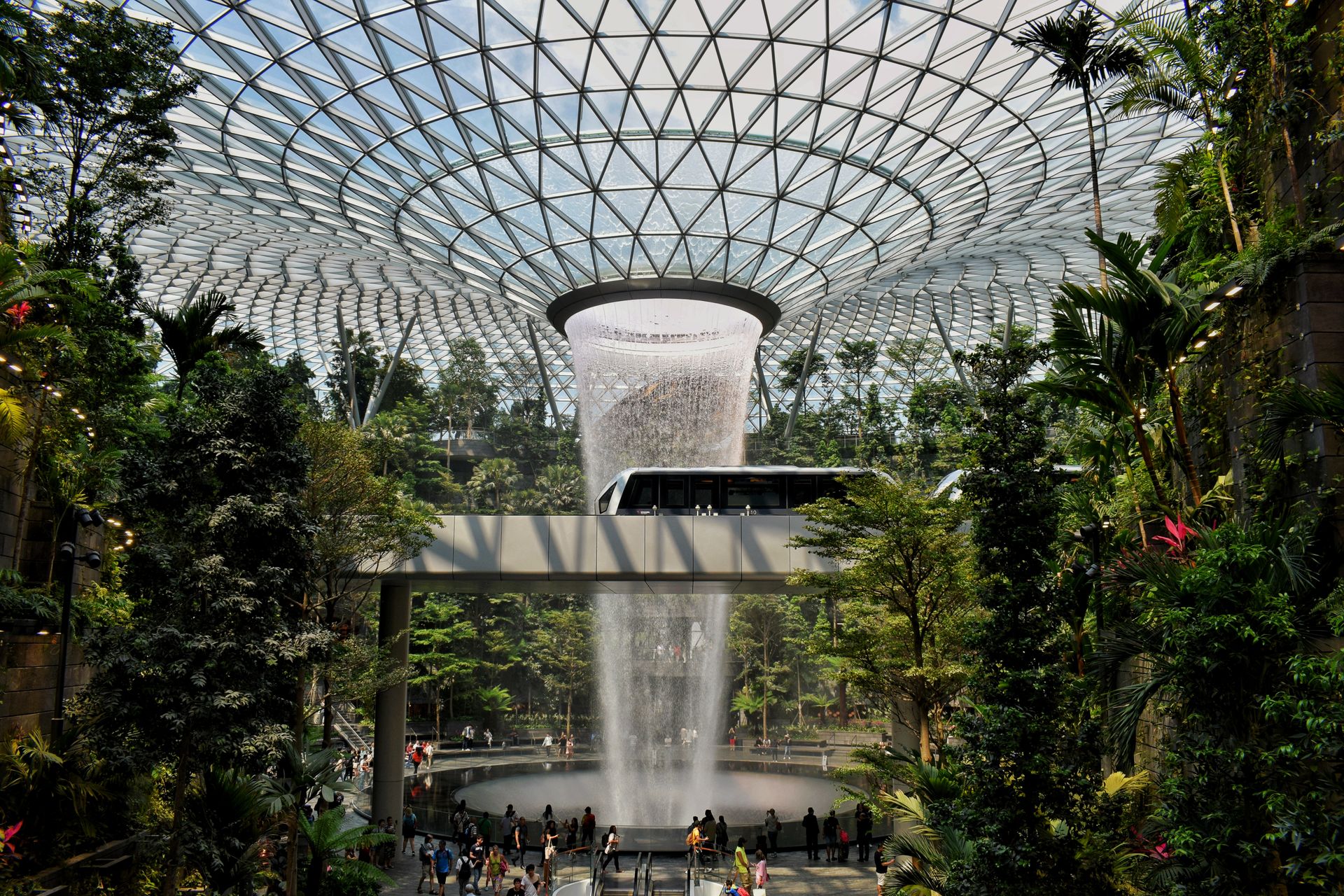
Climate and Seasons in Singapore
Mastering the art of living on the equator: a complete guide to weather, humidity and adapting for French-speaking expats in 2026.
Location
Just 137 km from the Equator
This geographical proximity defines everything: a constant 12 hours of daylight, persistent heat and no winter seasons as we know them in Europe.

Average annual temperature
Average relative humidity
Record rainfall
With more than 2,300 mm of rain per year, Singapore is one of the wettest cities in the world. However, rain here is a blessing that cools the urban atmosphere.
Monthly rainfall (average)
UV index: Extreme
Even in cloudy weather, radiation passes through the clouds. Sun protection is a daily necessity for all expats.
Understanding the Two Monsoons
Forget spring and autumn. In Singapore, the weather calendar is dictated by monsoon winds blowing from the North-East or South-West.
North-East Monsoon (Nov - March)
This is the wettest period of the year. It is divided into two phases:
The wet phase (Nov-Jan): Continuous moderate to heavy rain, especially in the afternoon and evening. This is when you will appreciate the underground transport networks.
The dry phase (Feb-March): The weather becomes beautiful, showers become less frequent and the wind brings welcome freshness. This is often considered the best time to visit or organise outdoor activities.
South-West Monsoon (June - Sept)
This period is marked by short but extremely violent thunderstorms, often called "Sumatra Squalls". These squalls generally occur before dawn or in the early morning.
A crucial point for expats: it is during this season that the "Haze" phenomenon (dry haze) may occur. Forest fires in the Sumatra region can worsen air quality, making it necessary to monitor the PSI readings in the local news.
The heat feels heavier because there is less wind than at the start of the year.
Climate Adaptation Simulator
Plan your comfort according to the time of year and your activities.
Adapting to the Climate: A Practical Guide for Expats
Living in Singapore in 2026 requires a certain amount of discipline to avoid being exhausted by the heat. The city was designed as a "City in a Garden", maximising green spaces to reduce the urban heat island effect. However, it still feels intensely hot.
1. Managing Air Conditioning
This is the Singapore paradox. Outside, it is 32°C. In the MRT or at the office, the thermostat is often set to 19°C. This temperature shock is the main cause of expat colds. Expert tip: Always carry a light scarf or an "office cardigan" with you. For your home, prioritise using ceiling fans, which are much healthier and more economical at night.
2. The Strategic Wardrobe
Forget polyester. Opt for cotton, linen and breathable technical fabrics. For men, "Smart Casual" in Singapore often means you can do without a tie, except in the highly formal sectors of legal services or finance.
Did you know?
Tropical showers are so heavy that a standard umbrella is sometimes not enough. Invest in a windproof model or, better still, learn to use the covered walkways that connect almost all buildings to MRT stations.
3. Hydration and Health
Humidity prevents sweat from evaporating effectively, making it harder for the body to regulate its temperature. Drink at least 3 litres of water a day if you walk a lot. See our guide to the healthcare system to find out how to treat heatstroke or humidity-related skin rashes.
The Ideal Suitcase
- Linen and organic cotton clothing
- High-protection sunglasses
- Insulated water bottle (essential)
- A light jumper for cinemas and malls
- Water-resistant shoes
Monthly Climate Data (2026 Averages)
| Month | Min/Max temp. | Rainfall (mm) | Rainy days | Sunshine (hours/day) |
|---|---|---|---|---|
| January | 23 / 30°C | 230 | 18 | 5.5 |
| February | 24 / 31°C | 110 | 12 | 7.1 |
| March | 24 / 32°C | 170 | 17 | 6.2 |
| April | 25 / 33°C | 160 | 18 | 5.8 |
| May | 25 / 33°C | 170 | 17 | 5.7 |
| June | 25 / 32°C | 150 | 13 | 5.9 |
| July | 25 / 31°C | 150 | 14 | 6.0 |
| August | 25 / 31°C | 150 | 14 | 5.8 |
| September | 24 / 31°C | 160 | 14 | 5.2 |
| October | 24 / 32°C | 190 | 18 | 5.0 |
| November | 24 / 31°C | 250 | 21 | 4.3 |
| December | 23 / 30°C | 280 | 21 | 4.2 |
Source: National Environment Agency (NEA) Singapore. Data updated for 2026.
For visiting Singapore, choose February and March: this period generally offers a good balance between sunny spells and showers, without guaranteeing a dry stay. June to September is also suitable for tourism, provided you are prepared for tropical showers and keep an eye on air quality in some years. December and January are usually wetter, but remain suitable for a trip combining walks, museums and indoor attractions.
The choice depends mainly on your plans: discovering historic neighbourhoods, travelling with children, attending the Grand Prix or preparing to move here all involve different considerations. Heat and humidity persist all year round; the differences between months are more about the frequency of rain, the wind and how you organise your days than what clothes to pack. For events, the calendar matters just as much as the weather: Chinese New Year celebrations and the motor race can significantly affect visitor numbers and hotel availability.
When to visit Singapore depending on your travel plans?
Choose February–March for a first general-purpose trip, then adjust your dates according to your activities and major local events. No month allows you to rule out rain completely, and a statistically drier period may still experience several disrupted days.
Best time in Singapore to visit neighbourhoods and gardens
February is generally one of the driest months, while March remains appealing before the often heavier inter-monsoon conditions. This period makes it easier to explore Chinatown, Little India and the Kampong Glam neighbourhood on foot, without removing the need for breaks in the shade.
For the Botanic Gardens, the outdoor areas of Gardens by the Bay and walks around Marina Bay, the time of day is often more important than the month. Setting off early allows you to enjoy these places before the heat becomes more uncomfortable.
June, July, August and September are another perfectly viable option. However, you should remain flexible: a trip to Sentosa will depend on the conditions that day, particularly if you plan to stay on the beach or take part in a water activity.
Travelling to Singapore with your family without being overwhelmed by the tropical climate
With children, opt for a light schedule rather than trying to find perfect weather. French school holidays can work well, including in summer, but long walks and uncovered queues quickly become tiring.
Alternate an outdoor activity in the morning with an indoor visit in the afternoon, followed by a possible outing in the early evening. The range of activities for children and teenagers in Singapore makes it possible to prepare several options without relying entirely on the weather.
Your accommodation choice also matters: staying close to the MRT limits exposed journeys and makes it easier to return and rest. A swimming pool can be pleasant, but it does not replace a backup plan when a storm forces you to leave the pool area.
Budget, Chinese New Year and the Singapore Grand Prix
To manage your budget, compare dates around events rather than counting on a genuine low season. Demand linked to trade shows, regional holidays and festivals can keep prices high even during a wet period.
Chinese New Year notably transforms Chinatown with its decorations and activities. In 2026, it begins on 17 February; public holidays may result in temporary closures at some independent shops and restaurants, while major tourist attractions follow their own opening hours.
The Grand Prix attracts strong demand around Marina Bay and comes with traffic restrictions. To attend, book transport and accommodation after checking the dates and conditions on the official websites; to explore at a quieter time, avoid race weekend and also consider the surrounding days.
December is more suitable for travellers drawn to retail illuminations and the end-of-year atmosphere than for those seeking long days outdoors. The decorations on Orchard Road and indoor attractions remain accessible, but getting around requires more flexibility during spells of rain.
The right time is the one that matches your priorities, with enough flexibility to move an outdoor activity.
Singapore’s climate: equatorial heat, monsoons and haze
Singapore has a hot, humid and rainy equatorial climate all year round, with no true dry season. Its proximity to the equator explains the limited annual variation in temperatures and the absence of seasons comparable to the European spring, summer, autumn and winter.
Why it feels hot all year round in Singapore
Humidity reduces the effectiveness of sweat evaporation, making walking and physical exertion more demanding. Cloudy skies therefore do not necessarily mean that conditions become comfortable, especially when there is little wind.
The difference between an exposed street, a shaded walkway and an air-conditioned space is often more noticeable than the change from one month to the next. Paved surfaces, traffic and a lack of shade increase discomfort in some urban areas.
It is therefore misleading to look for a ‘mild winter’ in which to discover the city-state. Even during the relatively cooler months, light clothing and plans adapted to tropical conditions are still necessary.
Northeast monsoon: a wetter period in December and January
The northeast monsoon lasts approximately from December to early March. Its first phase is generally the wettest, with spells that can last longer than the usual convectional showers.
December and January may bring persistently cloudy skies, repeated rain and windy spells. This makes it particularly important to prepare carefully for excursions that rely entirely on outdoor spaces.
The second part of this monsoon is often less humid, which explains why February appeals to visitors. The calendar boundaries nevertheless remain approximate: the shift from one regime to another does not take place on a fixed date.
Southwest monsoon and inter-monsoon thunderstorms
The southwest monsoon generally runs from June to September and is not equivalent to a dry season. Showers continue to occur, as do squall lines sometimes accompanied by gusts, known regionally as Sumatra squalls.
These disturbances can reach the island overnight or in the early morning. It would therefore be inaccurate to assume that all rainy spells systematically arrive at the end of the day.
The inter-monsoon periods mainly occur in April–May and October–November. With often lighter winds, the atmosphere becomes oppressive and favours thunderstorms in the afternoon or early evening.
These cells are sometimes highly localised: one neighbourhood may receive a heavy shower while another remains temporarily unaffected. For an outing in the near future, radar observations and alerts from the local meteorological service are more useful than a simple daily icon.
Haze in Singapore: a risk that varies from year to year
Haze, or pollution haze, is neither permanent nor systematic. It can result from smoke from regional fires carried by the winds, particularly when dry conditions affect neighbouring territories.
The risk deserves particular attention during certain periods of the southwest monsoon and around its transition. Its presence depends on the fires, their intensity and atmospheric circulation, not just on the month chosen.
Check the National Environment Agency’s official air quality readings, particularly if you have asthma, are pregnant or are travelling with young children. A climate calendar helps you choose your dates; local alerts determine the day’s precautions.
Singapore weather month by month: rain, how it feels and events
The monthly table describes climate trends, not a forecast for your travel dates. Year-to-year variations and differences between weather stations make overly precise rankings of little use when planning a few days there.
Religious events sometimes follow a lunar calendar, so their month may change from year to year. The information below takes the 2026 context into account when an event is mentioned, but timings, programmes and access arrangements should be checked with the organisers.
| Month | Rainfall trend | Typical feel | Events and points to note |
|---|---|---|---|
| January | Often very wet, with prolonged spells possible. | Humid, sometimes windy, and less scorching under cloud. | New Year; plan covered options for sightseeing. |
| February | Often less rainy, but showers do not disappear. | Hot, sometimes breezier. | Chinese New Year in February in 2026; crowds and special opening hours. |
| March | Variable conditions at the end of the northeast monsoon. | The heat feels more intense when the wind drops. | Local school holidays; check the calendar before visiting family attractions. |
| April | Inter-monsoon thunderstorms, often in the afternoon. | Oppressive atmosphere and a strong sensation of heat. | Easter weekend; visitor numbers at tourist sites vary. |
| May | Thundery showers that can be intense and localised. | Hot and muggy, particularly away from ventilated spaces. | Labour Day and Vesak in May in 2026. |
| June | Usual start of the southwest monsoon; showers possible. | Hot, humid, sometimes breezier. | Local school holidays; family demand at attractions. |
| July | A mix of sunny spells, showers and possible squalls. | Persistent heat, with comfort depending on the wind. | International summer holidays; monitor air quality advice. |
| August | Southwest monsoon conditions, with no guarantee of dry weather. | Humid tropical atmosphere. | National Day on 9 August; access altered around the celebrations. |
| September | Showers still possible; conditions vary from year to year. | Hot, with a risk of haze in some years. | Mid-Autumn Festival in September in 2026. |
| October | Transition towards more convective thunderstorms. | Often oppressive when the winds drop. | Grand Prix scheduled for October in 2026; book ahead. |
| November | Frequent rain and marked thunderstorm activity. | Very humid, with frequently overcast skies. | Deepavali in November in 2026; events in Little India. |
| December | One of the months that is generally wettest. | Muggy, with less hot spells during rainy periods. | Christmas, lights and end-of-year celebrations; high demand possible. |
How to interpret Singapore’s monthly weather
A less rainy month can still include many showers. The total amount of rain, the duration of the spells and how they are distributed throughout the day describe different realities: a short, intense shower does not have the same consequences as a whole day under rainy skies.
Statistics based on short series can also give excessive importance to a few exceptional spells. When preparing a trip, it is better to focus on the main seasonal patterns than to try to distinguish between two months based on a tourism score.
A storm icon displayed every day does not mean that all visits will be impossible. It often indicates the possibility of brief weather events, which should be clarified with local forecasts as the outing approaches.
Adapting your sightseeing to the day’s actual conditions
Keep scenic walks for favourable time slots and schedule cultural visits during the most unsettled periods. The National Gallery Singapore and the Asian Civilisations Museum offer practical alternatives, without forcing you to spend an entire day in shopping centres.
For views, wait for an improvement in visibility if possible: low cloud, curtains of rain or air pollution can reduce the appeal of a high viewpoint. The table helps you choose a period; the immediate weather helps you plan the order of your days.
What to wear in Singapore and how to sightsee despite the heat?
Pack lightweight, breathable clothing, protection from showers and a thin layer for air-conditioned spaces. The main challenge is less the lack of seasonal change than the repeated transitions between a muggy street, a cool train carriage and a heavily air-conditioned building.
Clothing and footwear suited to Singapore’s climate
Loose-fitting clothes encourage air circulation and make getting around more comfortable. Linen, lightweight cotton or technical fabrics may be suitable depending on the activity; for long walks, the ability to dry quickly becomes particularly useful.
Thick or very tight-fitting clothing retains more moisture and can cause chafing. Also pack a light, covering outfit for places of worship, checking their access rules rather than assuming that the same clothing is suitable everywhere.
Shoes should provide good grip on wet paving. Suitable sandals can be practical, but comfortable walking shoes are still preferable when your plans involve long distances.
- A compact umbrella for short journeys and uncovered stretches.
- Lightweight waterproof protection to keep your hands free, bearing in mind the lack of ventilation.
- A thin layer for the MRT, museums, offices and performance venues.
- Sun protection and a hat, as overcast skies do not eliminate exposure to ultraviolet rays.
- A water bottle and a waterproof pouch to have water with you and protect your phone, documents and small belongings.
Planning journeys between rain and air conditioning
Choose shaded or covered routes, even when they appear slightly longer. Sheltered walkways, MRT stations and connections between buildings can reduce your exposure, but they do not form a continuous network throughout the city.
Before setting off, find out which station exit is closest to your destination. Choosing the wrong exit can add an unnecessary walk around a large junction, precisely when a shower starts.
The guide to transport and getting around Singapore helps you combine the MRT, buses and journeys on foot. Taxis and private-hire cars are another option, but their availability may deteriorate when many travellers are simultaneously looking for shelter.
In air-conditioned interiors, a slightly warmer top can prevent discomfort after you have been sweating. Temperature differences do not in themselves cause an infection, but staying in damp clothing for a long time can be unpleasant.
Heat and thunderstorms in Singapore: essential precautions
Reduce exertion during the most challenging hours and drink regularly. During your first few days, avoid combining a long flight, several hours of walking and an intense sports session without time to recover.
Dizziness, nausea, a headache or unusual tiredness should prompt you to stop the activity and go somewhere cool. Confusion, significant discomfort or rapid deterioration require urgent medical assistance.
When a thunderstorm is approaching, leave open areas, bodies of water and swimming pools. A lone tree or a simple umbrella will not protect you from lightning; seek an enclosed building and follow staff instructions at leisure sites.
Comfort depends on taking breaks in advance and identifying shelter, not on your ability to endure discomfort.
Living in Singapore: adapting to the climate as an expat
For an expat, adapting mainly involves your accommodation, schedules and sustainable habits for managing humidity. Once you have settled in, it is no longer simply about avoiding a shower during a visit, but about making work commutes, household chores and regular activities manageable.
Choosing accommodation suited to heat and humidity
During a property viewing, observe the sun exposure, air circulation and condition of the cooling equipment. A bright flat can become uncomfortable if large windows receive direct sunlight without suitable protection.
Also examine cupboards, room corners and areas near bathrooms. A persistent smell, dark marks or deteriorating paint may indicate a humidity problem that should be checked before signing the tenancy agreement.
Ask how air-conditioner maintenance and repairs are organised. Clogged filters, a blocked drain or a poorly maintained system can reduce comfort and encourage condensation problems.
Air conditioning in Singapore: seeking comfort without excess
Moderate cooling combined with good air circulation is often more pleasant than an icy room. Fans improve how the temperature feels, while air conditioning also removes humidity when it is operating appropriately.
Avoid leaving the windows open for long periods while it is running: outdoor air continuously brings in heat and water vapour. Air the room at the appropriate time and use the extraction systems available in damp areas.
A dehumidifier can be useful in a particularly humid space, but it will not fix a leak or a waterproofing defect. If mould returns after cleaning, look for the cause with the landlord or a professional rather than covering up the marks.
Monitor your first bills to understand the effect of your settings and length of use. Consumption depends on the property, its exposure, the equipment and your habits: a standard amount would not be representative.
Work, sport and domestic life in an equatorial climate
Move physical activities to the least strenuous times and increase the effort gradually. Acclimatisation improves tolerance, but it does not remove the need for hydration or the risks associated with intense exercise.
For work, a change of clothes can be useful when your journey includes walking or cycling. Allowing a few minutes to recover before a meeting is often more effective than trying to stay perfectly fresh throughout the journey.
At home, do not put shoes, towels or clothes that are still damp in a closed cupboard. Laundry needs sufficient air circulation to dry properly, and sensitive items such as cameras may require suitable storage.
For sporting activities, check both storm alerts and air pollution readings. During a haze episode, adjust the intensity and duration of outdoor activities according to official recommendations and your medical situation.
School journeys, shopping and appointments become easier when you know several routes, including a sheltered option. In the long term, the climate is easier to manage with a flexible routine than through repeated exposure to its demands.
Your questions about Singapore’s climate
What is the best month to visit Singapore?
February is generally a good choice, as it is often less rainy. March is also suitable for a first visit, but no period guarantees clear skies and the humid heat is present all year round.
Is there a dry season in Singapore?
No. Singapore has an equatorial climate, with possible rainfall all year round. The north-east monsoon generally brings more rain in December and January, while February is often drier.
Can you visit Singapore in December?
Yes, by planning more indoor visits and keeping your itinerary flexible. December is generally one of the wettest months, but the lights, museums and indoor attractions still allow you to enjoy your stay.
Does haze occur every summer in Singapore?
No. This pollution haze varies from year to year, depending on regional fires and winds. Check official air-quality readings before exercising and follow the recommendations for sensitive people.
Do you need to bring warm clothing to Singapore?
A winter wardrobe is unnecessary, but a light layer is useful in air-conditioned places. Choose breathable clothing, non-slip shoes and compact protection from showers.
Frequently Asked Questions
Does it rain all day in Singapore?
Rarely. Even during the wettest monsoon, rain often falls in intense showers lasting 1 to 2 hours, followed by sunny spells. Completely grey days are rare.
What is the best time to move in?
February or March are ideal. The weather is drier and slightly cooler, making it easier to manage the property search and the physical process of settling in without suffering excessively from the heat.
Can you swim all year round?
Yes! Sea temperatures range between 28°C and 30°C all year round. Condominium swimming pools are also heated naturally by the sun.
Is there a risk of typhoons?
No. Singapore is too close to the equator (with insufficient Coriolis force) for cyclones to form. The only notable event was Typhoon Vamei in 2001, an extremely rare occurrence.
How can you follow the weather in real time?
The NEA’s “myENV” mobile app is essential. It provides rain alerts accurate to within 5 minutes by neighbourhood, as well as pollution indices (Haze).
Does humidity damage belongings?
Yes, leather and paper can become mouldy quickly. It is advisable to use dehumidifiers in cupboards or leave the air conditioning on “Dry” mode if you are away for a long time.
Is it possible to exercise outdoors?
Absolutely, but choose the 6:00–8:00am slot or after 7:00pm. See our Wellness and Sports guide for the best shaded spots.
How does the weather affect transport?
During heavy rain, taxi prices (Grab, Gojek) soar and roads can slow down. The MRT remains the most reliable option.
Is the sun more dangerous than in Europe?
Yes, the sun’s position overhead at the equator means that its rays pass through less atmosphere. The risk of sunburn is real in less than 15 minutes at midday.
How should you manage “Haze” if you have children?
When the PSI exceeds 100, it is recommended that outdoor activities be limited. International schools have very strict protocols on this matter.
Ready to experience the Singaporean adventure?
Join our community to exchange everyday tips and never be caught out by a tropical shower.