Haw Par Villa: Singapore’s Strangest Statue Park
Explore Haw Par Villa, Singapore’s strangest park, with mythological statues, unusual scenes and fascinating Chinese legends in Pasir Panjang.
MacRitchie Reservoir is ideal for hiking in Singapore, combining waterside paths, rainforest and a walk through the canopy on the TreeTop Walk. The suspension bridge can only be reached on foot: it is not an attraction accessible directly from an MRT station or car park. To plan your outing, first choose between a walk beside the water and a forest route that includes the bridge.
Located in the Central Catchment Nature Reserve, the site requires more preparation than an urban park. Roots, humidity, showers and the presence of wildlife are all part of the experience. Access to the bridge also depends on its opening conditions: check the NParks information before setting off, particularly for trail closures and temporary restrictions.
In brief
The reservoir and the TreeTop Walk belong to the same natural area, but they do not represent the same outing. The park surroundings allow you to discover the waterside landscape without immediately committing to a long forest crossing; reaching the bridge means continuing along the hiking trails.
This distinction matters when searching for your destination in a transport app. Arriving at MacRitchie Reservoir Park places you near the reservoir, not at the entrance to the bridge. You therefore need to include the walk in your schedule, even if you reach the park by taxi.
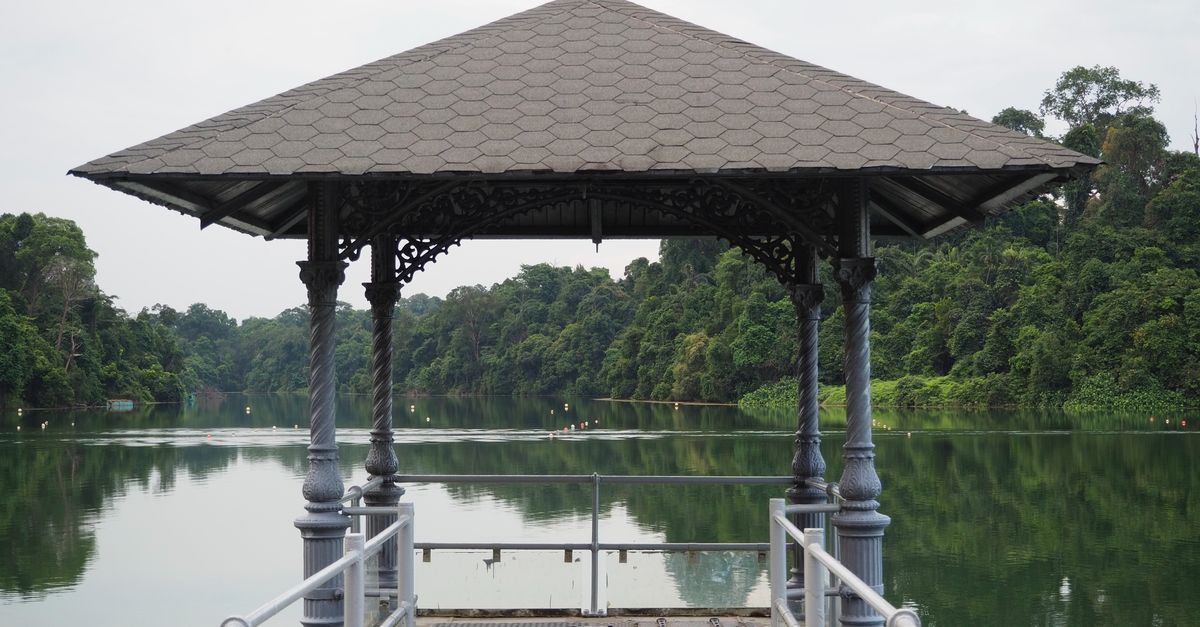
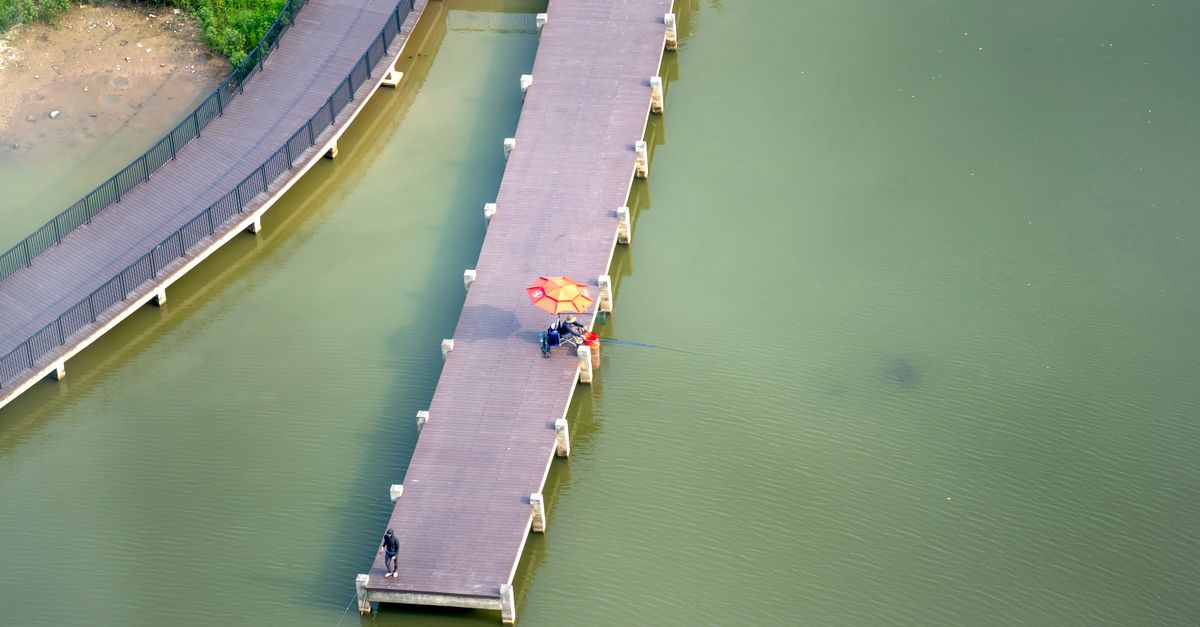
The paths near the water offer a gradual introduction to the site. Depending on the route currently open, the walk alternates between views of the reservoir, riverside vegetation and developed sections, creating a different atmosphere from the forest-covered portions.
This option suits you if your priority is getting some fresh air rather than reaching a specific attraction. It also makes it easier to decide when to turn back if the heat becomes tiring, the sky darkens or someone in the group starts to struggle.
However, do not assume that the shoreline is uniformly easy or accessible. A developed path on one section does not guarantee continuity suitable for pushchairs or people with reduced mobility; consult NParks’ accessibility map for the area you plan to visit.
To reach the canopy, walking becomes a central part of the visit. The terrain includes uneven ground, roots and changes in gradient. The effort comes as much from these repeated footholds as from the humidity, which makes recovery less comfortable.
The right criterion is therefore not simply how comfortable you are on a pavement. Ask yourself whether you enjoy walking for a long time on natural ground, carrying a bag and wearing damp clothes, without being able to stop immediately and reach public transport.
| Route considered | Main attraction | Point to watch |
|---|---|---|
| Walk beside the reservoir | Reservoir scenery and a flexible outing | Accessibility varies between sections |
| Route including the TreeTop Walk | Forest immersion and views of the tree canopy | Approach, bridge opening and return journey must be anticipated |
| Start towards Venus Drive | Alternative approach via Windsor Nature Park | Connections should be checked on the NParks map |
Avoid relying on a distance found for a “MacRitchie loop” without examining its route. This name can refer to different starting points, detours and destinations; it is not enough to determine the actual effort required for your day.
Instead, identify your entrance, the main junctions, access to the bridge and your planned exit. An offline route makes preparation easier, but the signs on site remain the priority whenever a closure changes the route.
To discover other environments before choosing, our guide to Singapore’s green spaces and nature reserves helps distinguish landscaped gardens, forest and wetlands. MacRitchie is particularly suitable if you want walking to be part of the experience rather than simply a link between viewpoints.
Choose your route as a whole, not just for the photograph of the bridge. This decision will determine the best access point and how you organise your return.
The TreeTop Walk mainly changes your viewpoint. From the paths, you see trunks, roots and undergrowth; on the bridge, you move closer to the branches and upper foliage, where part of the forest’s life unfolds discreetly.
This change in height is what gives the suspension bridge its appeal. This is not an urban lookout with an unobstructed panorama: vegetation remains the main subject, with its volumes, textures and movements that can be difficult to spot in the treetops.
Do not confuse access to the trails with the opening of the bridge. A walking route may remain usable while the bridge is closed; conversely, work on an approach section may change how you reach it.
Before travelling, check with NParks for opening hours, access arrangements, possible closures and information about the last admission. This information can change: an old tourist information sheet or a shared route should not be treated as confirmation.
Also allow some leeway between your estimated arrival and the announced closing time. A break, a slippery section or a slower pace than expected can delay your progress; speeding over wet roots to reach an entrance is not a good solution.
Local directions may impose a one-way system and a different exit from the approach route. Include this arrangement in your journey rather than assuming you can cross, turn around and return through exactly the same passage.
Move calmly across the structure and follow the displayed instructions. To take a photograph, wait for a free space without blocking the flow, and keep a firm hold of your phone: looking for a better angle is not a reason to lean beyond the protective barriers.
If you are uncomfortable with heights, think about the crossing before setting off. The height, the view between the structural elements and the sensation of being on a suspension bridge can be uncomfortable, even for someone used to walking long distances.
With children, explain the rules before you arrive: stay close to the adult, do not run and do not try to touch an animal. This preparation avoids having to give all the instructions when excitement and traffic make it harder to concentrate.
When observing the vegetation, look sideways as well as down. Branches carry leaves with different appearances, plants growing on trees and sometimes motionless animals; careful observation reveals more than a crossing devoted exclusively to photographs.
A video can help you understand the atmosphere of the crossing and assess your reaction to heights. It cannot, however, tell you about the current condition of the site: the weather, visitor numbers and access conditions on your visit may be different.
If the bridge is inaccessible, the shoreline and authorised paths still offer natural interest. Decide before setting off whether this alternative suits you, especially when the bridge is your main motivation; this will prevent you from continuing along an inadequately prepared route out of disappointment.
The TreeTop Walk enhances a forest hike, but it does not replace either the preparation or the pleasure of the walk.
Your choice of starting point has a strong influence on the outing. MacRitchie Reservoir Park is a logical access point for exploring the shoreline, while the Venus Drive area, via Windsor Nature Park, is another approach to consider when the bridge is your main objective.
These entrances are not interchangeable. They lead to different paths and do not leave walkers in the same place at the end of the route, so check your destination before starting an itinerary or booking a vehicle.
Caldecott is one of the MRT stations to consider for reaching the park. You will still need to travel from the station to the entrance you have chosen: check the pedestrian route or bus connection in the latest information from the Land Transport Authority and the operators.
Avoid choosing solely on the basis of apparent proximity on a map. Major roads, permitted crossings and the position of the entrances can make a connection less direct than it appears; a detailed walking route is more useful than a straight line.
To understand connections and choose between the MRT, bus and a private-hire car, see our page on transport and getting around Singapore. Services and timetables should then be confirmed with the operators for the day planned.
A taxi can make arrival easier, particularly if you want to save your energy for the forest paths. Give the driver a precise drop-off point accessible to vehicles and check the name shown: asking only for “TreeTop Walk” does not mean that a car can drop you at the foot of the structure.
The approach from Venus Drive allows you to join the trail network through Windsor Nature Park. It is worth comparing with the reservoir starting point, but should not be understood as an immediate or effortless route to the canopy.
Consult the NParks map to check which connections are open and which junctions are required. A hiking app may retain an old route, particularly when a section has been temporarily closed; barriers and signs on site always take priority over a digital recording.
Also decide whether you want to return to your entrance or finish elsewhere. A different exit can be convenient, provided you have identified its road access and transport options before you are tired, have a low battery or are caught in a shower.
If you are travelling by car, check the parking conditions with the operator. Do not transfer the arrangements of one car park to another: availability, payment and access may differ by area and change over time.
Save the name of your exit and keep a map available offline. Keep enough battery for calls and the return journey instead of relying entirely on a phone used continuously for filming and tracking your progress.
Check the signs at every important junction. A sign indicating the reservoir does not necessarily point towards the most suitable route back to your starting point; compare the stated direction with your chosen route and your actual position.
After the walk, the Thomson area offers places to eat, depending on where you exit. Our guide to Singapore restaurants and specialities helps you recognise the different types of venue, from kopitiams to food courts.
A successful outing includes the journey there, the route itself and a clearly identified exit. This continuity prevents the end of the walk from becoming an improvised search for transport.
At MacRitchie, the difficulty is not limited to the terrain. Humidity limits the evaporation of sweat, clothes remain damp and the effort can feel more intense than on a comparable route in a temperate climate, even when the trees provide shade.
Set a pace that allows you to talk without becoming excessively breathless. Breaks should genuinely help you recover, not merely provide time for photographs; if fatigue increases instead of stabilising, reconsider your route before moving further away.
Bring your water from the start and adjust the amount to your effort, the weather and your personal needs. Check the location and availability of refill points with NParks, without assuming that a facility will be present at every stage.
Choose shoes that hold your foot securely and have a grippy sole. Roots, wet leaves and wet developed surfaces require precise footing; unstable shoes increase fatigue and the risk of slipping.
Lightweight, breathable clothes that allow you to move freely are preferable to an outfit chosen only for photographs. Also protect anything that must stay dry, such as your documents, and leave room in your bag to take all your rubbish home.
A shower quickly changes the grip of the ground and can reduce visibility. Slow down before changes in surface, avoid crossing an obviously dangerous section and respect every closure, even if other visitors continue.
During a thunderstorm, do not try to reach an exposed bridge at all costs. Follow local instructions and go to a suitable shelter when it can be reached safely; an isolated tree is not suitable protection against lightning.
Check the forecasts and alerts from the Meteorological Service Singapore before setting off. If an air-pollution episode is reported, also check the recommendations of the National Environment Agency, particularly if you have respiratory sensitivity or plan strenuous exercise.
Our guide to Singapore’s climate and seasons provides general context. When deciding whether to go ahead, the conditions on the day are more useful than a reputation for a “dry” period: no season guarantees a rain-free trail.
With children, base your decision on their actual walking experience rather than their age alone. A young child used to trails may manage the terrain better than an older walker experiencing humid heat for the first time; the ability to follow instructions also matters.
In a group, the pace should remain compatible with the person finding it most difficult. It is better to change your objective than to split participants at junctions, especially when some do not have the map or do not know the name of the exit.
To prepare for regular activity rather than a one-off outing, see our advice on sport and wellness in Singapore. The right equipment makes walking easier; knowing when to slow down or turn back is even more protective.
Wildlife observation gives this nature reserve an added dimension, but no sighting is guaranteed. Animals move freely and their visibility depends on factors including their activity, the vegetation cover and the weather; not seeing an animal does not mean there is no wildlife present.
Biodiversity can also be discovered in small details: movements in the foliage, insects on a branch, calls that are difficult to locate or signs of activity in the undergrowth. Walking quietly and listening often reveals what a fast walk accompanied by loud conversation completely conceals.
Long-tailed macaques may be encountered on the paths and near busy areas. Their apparent familiarity with visitors does not make them domestic animals: do not feed them or try to provoke a reaction for a photograph.
Keep food and packaging in a closed bag. Avoid handling snacks near a group; packaging and bags associated with food may attract their attention, even when you have no intention of sharing.
If an animal approaches, remain calm and give it space. Avoid sudden movements, prolonged eye contact and any attempt at contact; move away slowly if possible, without trapping it between you and other walkers.
Do not try to pull away an object it has taken. A confrontation may cause a bite or scratch; if you are injured, clean the wound promptly and seek medical advice, even if the mark appears minor.
Monitor lizards may frequent the waterside. Their appearance can be intimidating, but the right approach is to let them pass: do not follow closely, touch them or block their access to the vegetation or shoreline.
In the trees, look for birds without expecting to see them immediately. Movement among the leaves or a call may reveal their presence; binoculars allow you to observe more closely without leaving the path or approaching the trunk.
Hornbills, squirrels and other forest inhabitants are possible sightings, not a guaranteed programme. Colugos, discreet and difficult to distinguish when motionless, illustrate this limitation well: their presence in an environment does not mean that visitors will spot them.
An animal seen near the path should not become the centre of a tightly packed crowd. Leave it an escape route and continue if it appears uncomfortable; a brief observation from a distance is better than getting close by preventing it from leaving.
Stay on authorised routes, even when an opening in the vegetation looks like a shortcut. Leaving the path can damage young plants, disturb resting animals and encourage erosion, particularly when the ground is saturated.
Take organic waste home too. A piece of fruit peel is not neutral food in this environment: it can attract animals towards busy areas and alter their habits, just like leftover snacks abandoned near a bench.
The reservoir forms part of Singapore’s water-collection system, and its shores are not a swimming beach. For any water-based activity, consult PUB’s rules and the applicable authorisations rather than assuming that access is permitted because other people are taking part.
Successful wildlife observation allows the animal to continue its activity without interacting with you. This distance protects both visitors and the wild character of the site.
Yes. The shoreline and authorised paths allow you to discover the reservoir and forest without reaching the bridge. Choose a route suited to your mobility and check closures with NParks.
Check the current arrangements with NParks before travelling, particularly if you are organising a group visit. Also check whether the bridge and approach paths are open.
This mainly depends on their stamina, comfort with heights and ability to follow instructions. The difficulty includes the approach and return walk; the shoreline offers a more flexible alternative.
Even light rain can make some surfaces slippery. In a thunderstorm, weather alert or closure, postpone or stop the outing according to local instructions; do not continue solely to reach the bridge.
Compare MacRitchie Reservoir Park with the approach via Windsor Nature Park, towards Venus Drive, using the current NParks map. The best choice depends on the route you want, the connections that are open and where you plan to finish.
Updated on 01/11/2026
Scroll to see more articles →