MacRitchie Reservoir: Hiking and the TreeTop Walk
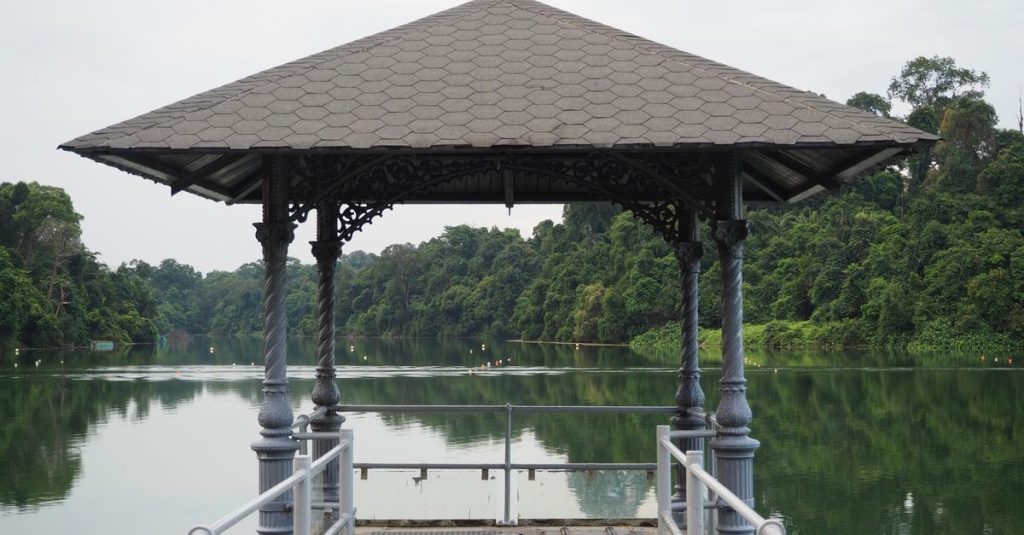
Explore MacRitchie Reservoir in Singapore with hiking trails, rainforest and the famous TreeTop Walk across the forest canopy.
At the National Museum of Singapore, prioritise Singapore Odyssea, the temporary exhibition available on the day of your visit and the building’s historic spaces. The museum helps visitors understand how maritime exchanges, migration and political change shaped the city-state. However, renovation work is changing the route through the museum: older recommendations about must-see galleries may no longer match the spaces that are open.
In information published by the National Museum of Singapore for September 2026, Once Upon a Tide complements the digital experience with an approach centred on the sea and urban development. The Singapore History Gallery remains subject to a provisional reopening schedule. The best approach is to ask Visitor Services for the day’s floor plan, rather than following an old itinerary.
In brief
Singapore Odyssea: A Journey Through Time offers a sensory introduction to Singapore’s history. Lights, animations and maritime landscapes create a narrative in which references to local myths accompany the island’s transformations.
According to the National Museum of Singapore’s 2026 presentation, this installation is on level 2 and uses an RFID wristband to trigger interactions. The device involves visitors in the route: this is not simply a matter of watching a succession of screens.
Among the immersive exhibitions, this one stands out for its maritime thread. To understand its logic, follow the experience through to the end rather than moving from one visual effect to another.
The landscapes and animations provide reference points, but they do not replace the observation of historical objects. Keep this distinction in mind: an artistic evocation makes a story tangible, while a document or object allows you to examine a material trace of it.
According to the arrangements announced by the museum since September 2025, Singapore Odyssea no longer requires a reserved time slot with a General Admission ticket. Entry remains subject to capacity and the space being open; confirm these conditions with the institution before your visit.
If you are sensitive to stimulation, ask staff what adaptations are available. A bright, interactive experience does not meet the same needs as a traditional gallery, particularly when visiting with children.
To plan a wider family outing, also see these activities for children and teenagers in Singapore. Here, the main interest lies in connecting what you see to a simple question: how does an island develop through its exchanges?
To place Singapore’s past in a broader context, you can also explore our guide to the history of Singapore.
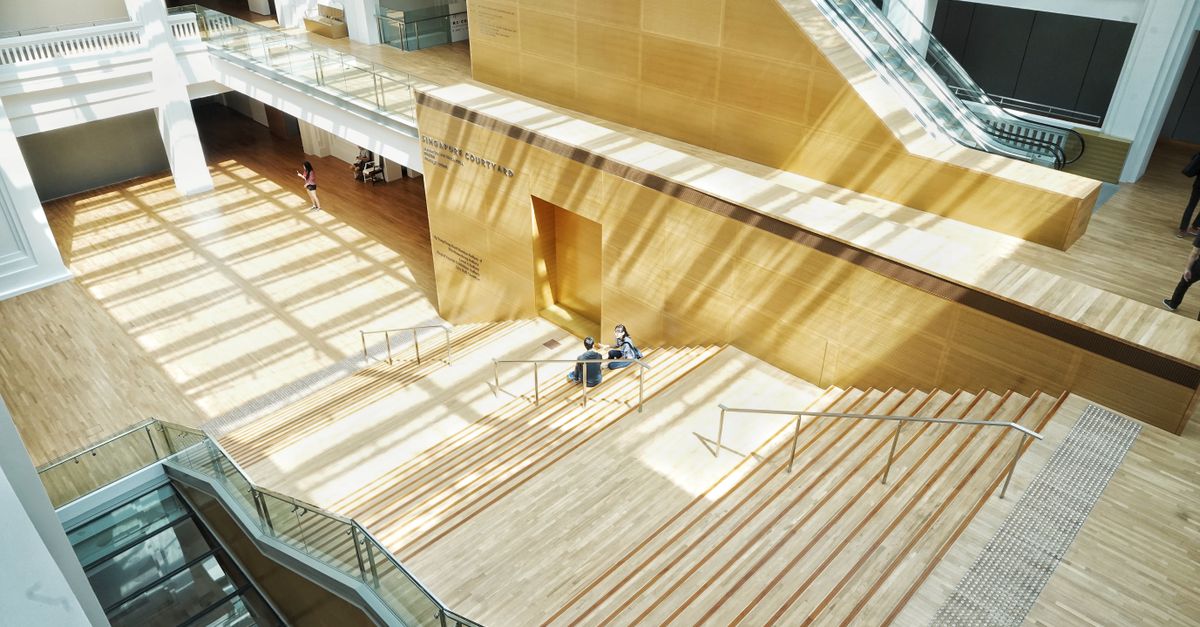
The renovation means that the usual collections must be distinguished from what is actually open. In its provisional schedule published for 2026, the National Museum of Singapore announces the reopening of the Singapore History Gallery in October 2026 and the level 2 galleries at the beginning of 2027.
These dates do not confirm access. The presence of Odyssea on this floor does not mean that all the neighbouring rooms are available either: ask Visitor Services which parts of the route are accessible.
In its presentation dated 20 September 2026, the museum announces Once Upon a Tide: Singapore’s Journey from Settlement to Global City until 9 October 2026. The exhibition explores the relationship between the sea, the port and the city’s transformation.
It usefully complements Odyssea: after an audiovisual approach, the objects and stories bring you back to the concrete dimensions of exchange. Observe how maritime activity is connected to urban life, rather than treating the port as a simple backdrop.
After this date, check directly with the institution which temporary exhibition is scheduled. Do not assume that it will immediately be replaced by an equivalent experience or that it will have the same admission conditions.
To understand Singapore’s history, several themes deserve to be connected: migration, British colonisation, social change and Singapore’s independence. However, how fully they are represented in the route depends on which historical galleries are actually open.
The permanent exhibitions should therefore not be presented as fully accessible during the construction work. As for Story of the Forest, the National Museum of Singapore states that this installation ended on 13 October 2024: its photographs no longer describe the current offer.
To extend this discovery of cultural heritage with a visit more focused on visual arts, explore the National Gallery Singapore. The two institutions offer complementary approaches, but they are not interchangeable.
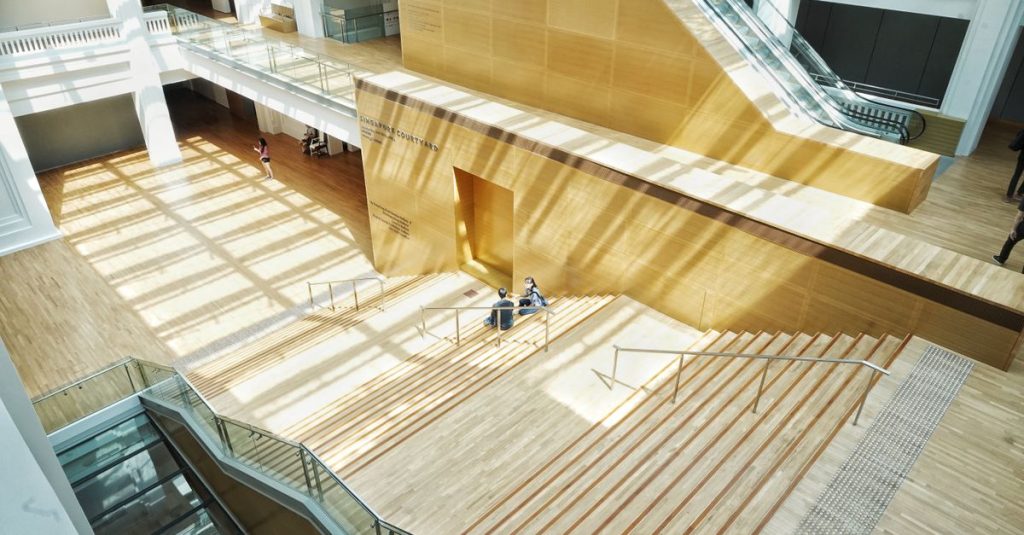
The museum’s architecture deserves attention separate from the exhibitions. In its institutional presentation for 2026, the National Museum of Singapore dates its history back to 1887 and describes itself as the country’s oldest museum.
The complex combines a historic building, the Glass Passage and the Shaw Foundation Glass Rotunda. Part of the interest of the visit lies in this meeting between an old building and contemporary volumes designed to accommodate different uses.
When access is possible, the Glass Passage helps you understand the relationship between the different parts of the complex. Look at how transparency, perspectives and changes in volume accompany the move from one space to another.
This observation offers another perspective on cultural heritage: preserving a building does not necessarily mean freezing all its uses. A museum devoted to history must also accommodate digital installations, events and visitors with varied needs.
The Gallery Theatre is also architecturally interesting, with walls combining red brick and acoustic materials. Whether you can see it depends on its accessibility; do not assume that a programming room is always open for free visits.
An old image of the Glass Rotunda tells you about its volume, not about the installation currently on display. During the renovation, some spaces may be closed, reassigned or accessible via a different route.
So avoid building your visit around a single photographic viewpoint. The best architectural reading takes place in the spaces authorised on the day, by observing how they relate to one another rather than looking for a vanished setting.
This dimension complements the collections: the building also shows how Singapore preserves traces of its past while transforming its cultural facilities.
The price must be checked for the exact date of your visit. The National Museum of Singapore’s admission information dated 20 September 2026 announces a price change in October; an amount found in an older guide may therefore be out of date.
| Category | Until 12 October 2026 | From 13 October 2026 |
|---|---|---|
| General Admission, visitors and foreign residents | S$20 | S$18 announced |
| Concession, proof required | S$15 | S$13 announced |
These are the amounts announced by the museum in its September 2026 admission information. Confirm them with the institution before buying, particularly if your visit coincides with a change to the route.
Under these same conditions, the Concession rate applies to people aged 60 and over, students and beneficiaries of the Special Access category. The required proof must be presented to Visitor Services.
Singapore citizens and permanent residents receive free admission to the permanent galleries with their pink or blue NRIC. The museum also announces free admission for children aged 6 and under; a foreign resident does not automatically have permanent resident status.
The institution states that it has not accepted cash since 14 September 2026. Plan to use a cashless payment method for an on-site purchase, and confirm the accepted methods before travelling.
General Admission includes Singapore Odyssea, but this does not mean that every temporary exhibition or separate activity is included. Ask exactly what your ticket covers; to place this expense within your trip, see our page on the cost of living and budget in Singapore.
The address published by the National Museum of Singapore in its practical information for 2026 is 93 Stamford Road, Singapore 178897. To choose your route, consult the official Getting Here directions and complement them with our guide to transport in Singapore.
The instructions concerning the Canning entrance for school groups do not necessarily apply to individual visitors. Follow the current signs and ask staff for advice rather than looking for an entrance mentioned in an old itinerary.
In its September 2026 practical information, the museum announces daily opening from 10 am to 7 pm, last ticket sales at 6 pm and last entry to the exhibition spaces at 6.30 pm. Confirm these times with the institution and avoid arriving late if you want to follow the immersive narrative without rushing.
This route prioritises understanding rather than collecting galleries. If your time is limited, choose the content that genuinely interests you instead of trying to reproduce a visit designed before the renovation.
The Quiet Mornings programme announced by the museum for 2026 begins at 9 am on the first Saturday of the month and on the first and third Thursdays. Check that it is still running and ask what quiet or accessible facilities are available on that day.
For step-free access, have the usable routes confirmed during the renovation. As the route is mainly indoors, it can also fit into a rainy-day itinerary; our guide to choosing when to visit Singapore can help you organise outdoor activities around this visit.
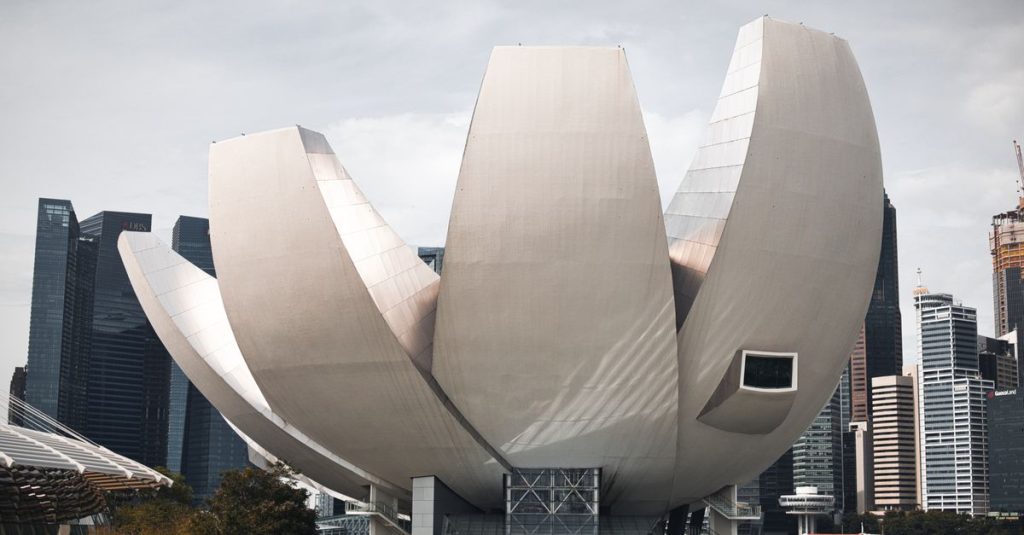
For another indoor cultural visit in Singapore, consider the ArtScience Museum, while checking its current exhibitions separately.
Prioritise Singapore Odyssea, the current temporary exhibition and the accessible architectural spaces. Ask Visitor Services for the day’s floor plan, as the renovation is changing the route.
The National Museum of Singapore’s provisional schedule for 2026 announces a reopening in October. This date does not guarantee access: ask the museum to confirm whether it is actually open.
According to the arrangements announced by the museum since September 2025, no reserved time slot is required with General Admission. Access nevertheless depends on capacity and whether the installation is open; check the conditions before your visit.
No. The National Museum of Singapore states that this exhibition ended on 13 October 2024. Older photographs and recommendations therefore no longer correspond to a current installation.
Updated on 01/11/2026
Scroll to see more articles →