
Bird Paradise Singapore: Mandai’s Bird Park
Discover Bird Paradise Singapore, Mandai’s bird park, with immersive aviaries, rare species and memorable experiences for the whole family.
Durian in Singapore is mainly available through harvests from nearby producing regions. Supply is generally more abundant in the middle of the year, while a secondary season may occur at the end of the year or the beginning of the next. Dates, variety availability and quality nevertheless vary according to growing conditions and deliveries. To enjoy a durian tasting, ask the seller what is ripe that day rather than relying on a fixed calendar.
The choice also depends on the flavour you are looking for. Musang King, often called Mao Shan Wang, is known for its rich flesh and bittersweet notes; D24 is generally milder and creamier; and Red Prawn is particularly sweet. Finally, durian’s strong smell means that you should take a few precautions in Singapore: check the rules for public transport and your accommodation before taking the fruit away.
In brief

The main season generally runs from June to September, with the peak harvest often falling in July and August. These periods correspond to a greater supply of fruit from nearby plantations, particularly in Malaysia. In Singapore, this increase can be seen at specialist stalls and in the wider range of fresh durian options available.
This calendar is a guide, not a guarantee. Tree maturity, plantation conditions and the weather affect both the volume and timing of harvests. According to information about cultivation, heavy rain can affect the texture or concentration of flavours; a dry period alone does not guarantee perfect quality. The seller remains the best person to ask which fruits have ripened.
Early deliveries may appear in spring, before supply expands in the middle of the year. They are often less abundant, and the available varieties may be more limited. For travellers, these first fruits can nevertheless offer a chance to try durian before the busiest period, provided you confirm their origin and ripeness with the seller.
A secondary period sometimes occurs between the end of the year and the beginning of the next. It may offer another opportunity to try the fruit, but it will not necessarily match the abundance of the main harvest. Deliveries vary according to the producing regions and the conditions that year, so do not plan a trip solely around the promise of a particular variety.
The table provides seasonal guidelines, not a guaranteed forecast. It gives no indication of price or certain availability: these details change and should be checked directly with sellers when you buy.
| Indicative period | Supply trend | What to remember |
|---|---|---|
| Spring | First deliveries possible | More limited supply and quality to be checked fruit by fruit. |
| Early summer | Gradual increase | Varieties generally become easier to find. |
| Middle of the year | Main period, often more abundant | Availability still depends on harvests and the weather. |
| Autumn | Supply may decrease | Choice varies according to deliveries. |
| End of the year and beginning of the next | Secondary period possible | Volume and varieties are less predictable. |
Harvest variations can also affect prices and selection. When supply is limited, a sought-after fruit may be harder to find; when deliveries are plentiful, stalls may offer more choice. As prices change frequently, compare sellers’ indications on the day of purchase and check what is included in the advertised price.
To fit durian stalls into your everyday plans, see the guide to grocery shopping and food in Singapore. The best time to try durian is when the fruit is available, ripe and being enjoyed in the appropriate conditions, rather than on a date fixed in advance in an itinerary.
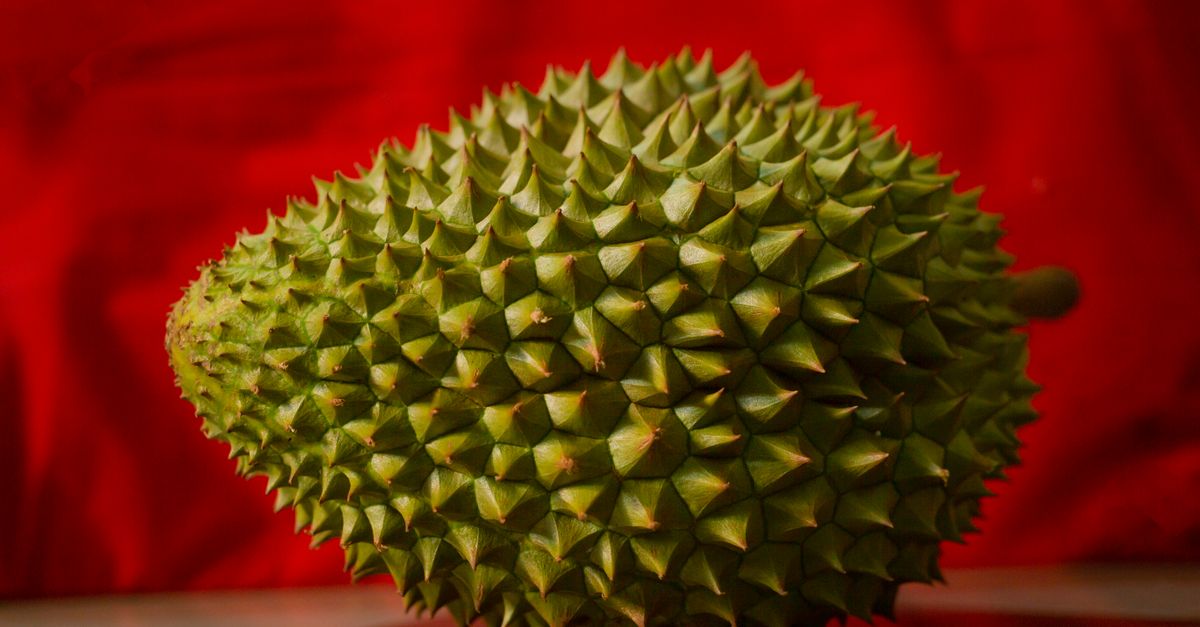
Durian varieties differ in more than just their names. The flesh may be more or less sweet, bitter, dense or creamy, and the intensity of the aroma also varies. For a first tasting, it is better to explain to the seller what you like rather than simply choosing the best-known variety. Someone drawn to mild desserts will not necessarily want the same profile as someone who enjoys bitter notes.
Musang King, also known as Mao Shan Wang, is often associated with golden-yellow flesh and a complex balance between sweetness and bitterness. Its texture is generally described as rich and creamy. It is popular with enthusiasts who want a pronounced profile, although its intensity can be surprising on a first tasting.
D24 is often presented as a more accessible option. Its creamy flesh and relatively mild flavour may suit those who prefer to begin with a less intense taste. This does not mean that every D24 fruit will have exactly the same profile: ripeness, origin and storage conditions also play a part. Asking to taste a small portion, when the seller offers this, lets you decide without buying a large quantity.
Red Prawn is associated with orange-red flesh and a predominantly sweet flavour. Its soft texture, sometimes described as almost melting, appeals to people looking for less bitterness. It can therefore be compared with Musang King: tasting both side by side shows how different their profiles are.
Black Thorn is considered a sought-after variety by enthusiasts of dense, buttery flesh and a lingering flavour. Its availability depends on deliveries, so do not assume that it will be available at every stall or throughout the season. If a seller offers it, ask about its origin and degree of ripeness before choosing.
Variety names are useful, but they do not replace a conversation with the person opening the fruit. The vocabulary may also vary between sellers and origins. Simply express your preference: “rather sweet”, “more bitter”, “very creamy” or “a light first tasting”. This gives the seller practical information to guide their choice.
Durian is also used in desserts, including ice cream, pastries and preparations made with dough and cream. These recipes sometimes soften the fruit’s intensity and offer a different way to discover it than eating it fresh. To explore more local specialities, the guide to Singapore restaurants and cuisine is a useful starting point.
A comparative tasting says more than a long list of descriptions. Start with a mild variety, then try a more bitter profile: the contrasts in texture and aroma become easier to identify.
Durian markets and specialist stalls are the most direct places to compare varieties and ask for advice. Some sellers open the fruit on site, allowing you to inspect the flesh before taking it away. Traditional markets also let you see how the produce is presented and talk to traders who are used to advising customers according to their preferences.
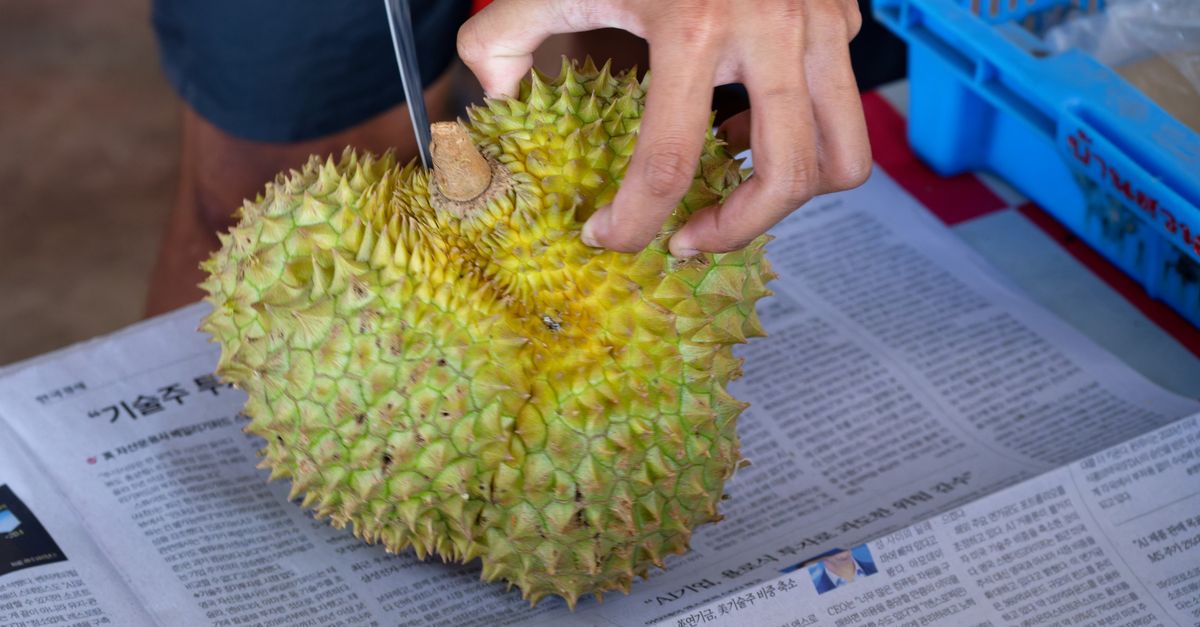
Start by looking at the shell and stem. Natural separations along the shell’s seams may be an indication, while a very dry stem deserves further checking. No external sign alone is enough to confirm ripeness; ask the seller to check the fruit and open it if you plan to eat it immediately.
Some experienced buyers gently shake the durian to detect slight movement inside. This method takes practice and does not replace an examination by a seller who knows their stock. Avoid handling a shell covered in spikes without care: ask the person selling the fruit to do it.
The smell of durian is another indication, but it should be interpreted cautiously. A noticeable aroma may accompany a fruit that is ready to eat; a weak smell alone does not prove that it is unripe. The variety, condition of the shell and storage conditions also affect the result. If you are buying the fruit to eat later, tell the seller clearly so they can advise you on the appropriate degree of ripeness.
In an area where several stalls are close together, take time to ask about the variety, origin and recommended way to eat it. A seller who explains the differences between fruits will help you more than a choice based solely on a label. Price and quantity should be understood before the fruit is opened: confirm them aloud to avoid misunderstandings.
A busy stall may suggest that products are sold quickly, but this alone does not guarantee freshness. Look at the presentation, ask about deliveries and choose a trader who is willing to explain what they are selling. If the fruit has already been opened, inspect the colour and condition of the flesh before confirming your purchase.
Sellers in residential areas may offer a quieter setting than busy specialist districts. Geylang is particularly known for its stalls and evening activity, but opening hours and supply vary from one business to another. Check details directly with the place you choose rather than assuming it will be open or carry a particular variety.
To combine a food outing with an urban visit, plan your journeys around the heat and distance; information about getting around Singapore can help you plan travel between neighbourhoods. A successful purchase depends as much on the fruit’s ripeness as on clear communication with the seller.
To get online as soon as you land, a Singapore eSIM can be installed before you leave, with no need to look for a local SIM card.
Durian’s aroma is powerful and distinctive. Some people find it pleasant and sweet, while others find it overwhelming; the reaction depends on the fruit and each person’s sensitivity. For a first experience, eating durian where it is sold avoids transporting an opened shell and allows you to ask the trader to explain the differences between the fruit’s segments.
Start with a small bite and take time to distinguish the texture, sweetness and bitterness. The flesh may seem creamy, dense or softer depending on the variety and ripeness. Rather than trying to identify one flavour immediately, compare your impressions: Musang King may seem more complex, while D24 is often described as milder.
If several varieties are available, taste them separately and ask for their names before starting. Comparing them helps you understand descriptions such as “buttery”, “sweet” or “sweet-bitter”. It also makes your conversation with the seller more precise if you want to buy another portion.
The richness of the fruit can make you feel full. It is sensible to eat it gradually and drink according to your thirst, without considering any particular drink a remedy or medical guarantee. Anyone following a specific diet or with a food sensitivity can ask a healthcare professional for advice.
For people who find the aroma too intense, durian desserts offer a different introduction. Ice cream, pancakes, cakes and pastries combine the fruit with other textures and can make its flavour less direct. These preparations do not exactly reproduce a tasting of fresh flesh, but they offer another way to explore durian’s place in local cuisine.
Freshness and ingredients vary from one business to another. Ask whether the preparation genuinely contains durian and whether it is served fresh or chilled, particularly if you are sensitive to dairy products or certain ingredients. Menus may also change according to deliveries, especially outside the main season.
Busy stalls and neighbourhoods where several sellers operate side by side make comparison easy, while a restaurant or café may offer a more elaborate presentation. In both cases, the experience is best kept simple: identify the variety, taste a reasonable amount and note which flavours you prefer. Looking for nearby places to eat can be part of an outing without turning the tasting into a race from one stall to another.
After eating, remember that packaging often retains a strong smell. Do not leave an open shell or container in a shared space; ask the seller how to dispose of or transport leftovers. The tasting is more enjoyable when you also anticipate the practical issues linked to the aroma.
Transport rules should be taken seriously: durian is generally prohibited on the MRT and buses because of its persistent smell. Instructions may be displayed by operators or transport authorities and may change. Check them with the relevant organisation before travelling with the fruit; do not rely on simple packaging to make transport permitted.
The distinction matters: airtight packaging may limit the spread of the smell, but it does not mean that transport is allowed on a network where the fruit is prohibited. The simplest option is to eat it at the stall, or ask the seller what delivery or private transport options are available. Conditions, waiting times and prices vary between sellers and must be confirmed when you buy.
Many hotels refuse durian in rooms or shared areas because its smell may remain after the guest has left. Policies vary between establishments: check your accommodation’s rules or ask reception directly before buying a fruit to take away. This avoids having to improvise a solution once you arrive.
The same precaution applies to rented or shared accommodation. A sealed package may reduce smells, but does not guarantee that the owner or other occupants will accept the fruit. If you are staying in a shared space, eat it somewhere where this is permitted and dispose of the waste according to the seller’s or establishment’s instructions.
The shell is covered in solid spikes and can cause injuries if handled carelessly. Opening it requires the right tool and technique; for a visitor, the safest option is to leave this to the seller. Do not place the fruit loose in a bag with fragile objects or try to open it in a bedroom or public space.
When buying, say whether you want to eat the durian immediately or take it away. The trader can explain storage conditions and, if their business permits, provide suitable packaging. Do not assume that vacuum packaging is available everywhere, or that it cancels public transport or accommodation restrictions.
To plan a day of culinary discovery, keep tasting locations close to your other activities and check travel rules before choosing your transport. The page about mobility and transport in Singapore can help with your preparation. The basic principle is simple: eating on site is often the most practical way to enjoy the fruit without imposing its smell on other travellers.
Deliveries may be available outside the main harvest, but choice and quality vary. The main period is generally in the middle of the year, with a possible secondary period at the end of the year or the beginning of the next. Ask sellers what is fresh on the day of your visit.
D24 is often recommended for people who prefer a creamy, less intense flavour. Red Prawn is associated with a sweeter profile, while Musang King generally has more pronounced sweet-bitter notes. Taste and ripeness vary, so ask the seller for advice.
Durian is generally prohibited on the MRT and buses because of its persistent smell. Check the current rules with the relevant operator or transport authority; airtight packaging does not guarantee that it is allowed.
Many establishments prohibit durian in rooms or shared areas, but their rules differ. Contact reception before buying and do not assume that a packaged fruit will be accepted.
It is best to ask the seller to open it. The shell is very spiky, and opening it requires both a suitable tool and the right technique.
To book tours and activities in Singapore ahead, see the options on Klook.
Updated on 16/11/2026
Scroll to see more articles →