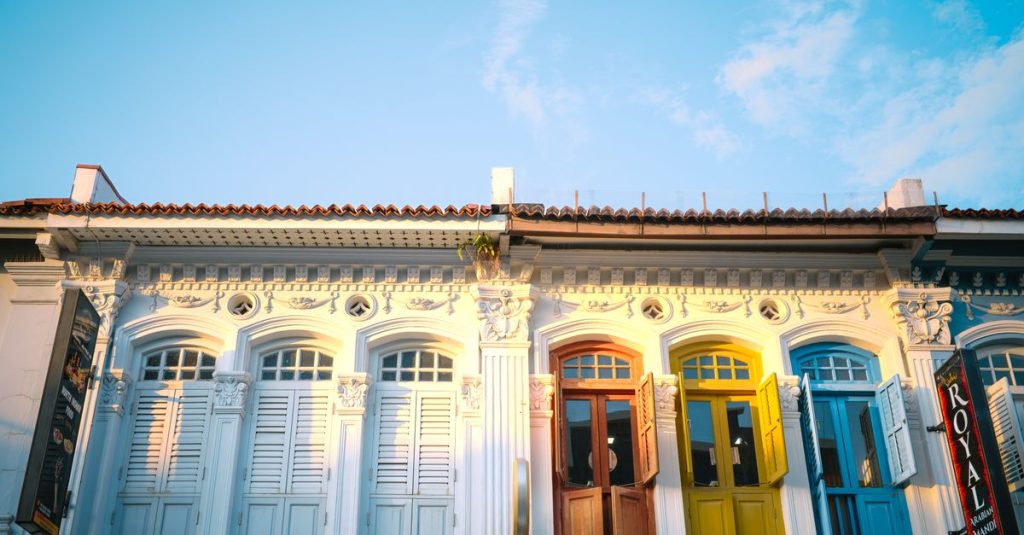
Katong and Joo Chiat: Peranakan Houses and Great Food
Explore Katong and Joo Chiat in Singapore: colourful Peranakan houses, local heritage, laksa, kueh and neighbourhood food spots.
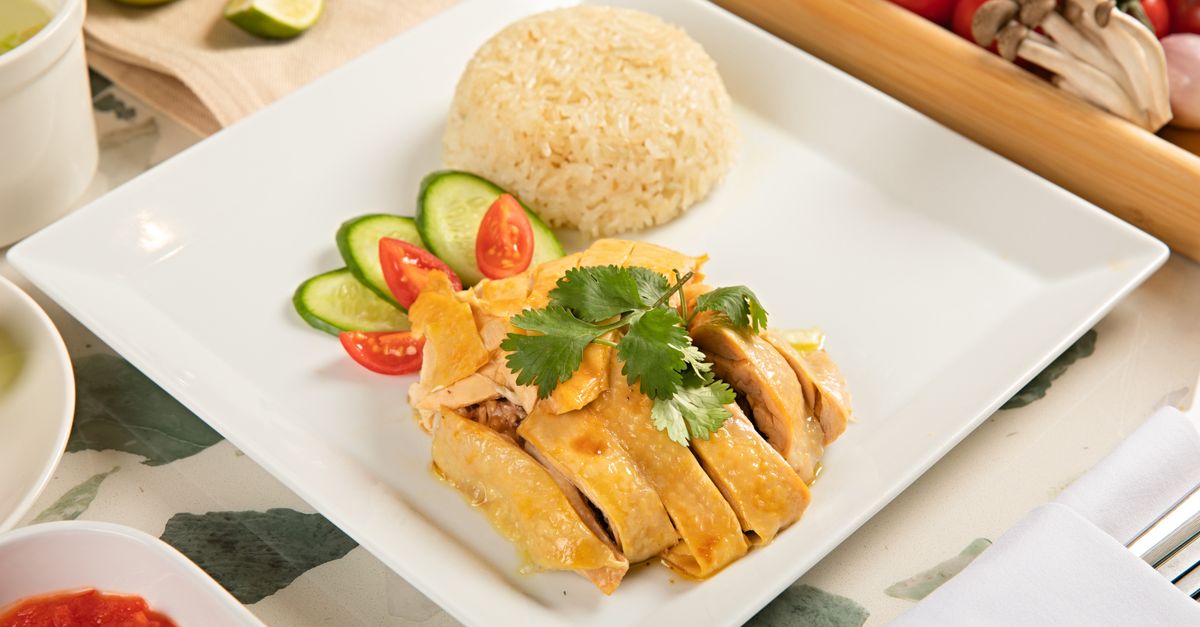
In Singapore, Hainanese chicken rice is one of the most iconic dishes found on everyday tables. It combines tender chicken, fragrant rice cooked in chicken stock and sauces that change the flavour of every mouthful, particularly a chilli sauce with a hint of ginger. Often described as the “national dish” of the city-state, it is above all a shared culinary symbol: the name reflects its place in daily life, rather than an official status.
Its strength lies in balance rather than complexity. The rice absorbs the aromas, the meat remains delicate and the condiments add an intensity that each diner can adjust. The dish also reflects encounters between culinary traditions, local habits and hawker culture, with hawker stalls playing an important role in Singapore’s Asian cuisine.
In brief

Hainanese chicken rice holds a special place in Singapore’s gastronomic imagination. It appears in everyday meals as well as discussions about local specialities: it is familiar without being ordinary, and adaptable enough to suit different tastes. The term “national dish” sums up its popularity, but should be understood as a cultural expression rather than an official designation. Singapore has a diverse food scene, and no single dish can represent all its communities and cuisines.
The name refers to a tradition associated with Hainan, an island in southern China, and to the changes it underwent in Southeast Asian societies. In Singapore, the recipe became part of an environment where habits, ingredients and techniques meet. This explains why Hainanese chicken is both recognisable and local: it retains a preparation centred on poultry and rice, while expressing itself through the condiments, portions and customs found at Singaporean tables.
This identity is particularly easy to discover in hawker centres. You can order the dish from specialist stalls, watch the chicken being cut and choose from different sauces. To plan a food-focused exploration, the page about Chinatown hawkers in Singapore offers a starting point connected to stall culture and the neighbourhoods where popular food is enjoyed every day.
Calling Hainanese chicken Singapore’s “national dish” highlights its reputation, its presence in eating habits and its ability to evoke Singapore abroad. The phrase is useful for understanding its symbolic status, but it does not mean that the country has one unique, codified and imposed national recipe. Other specialities from different traditions contribute just as much to the richness of Singapore’s food culture, as illustrated by the country’s wider restaurant and cuisine scene.
This distinction matters if we are to avoid reducing local cuisine to a single emblem. Hainanese chicken is instead a gateway: its accessible recipe opens up discussions about influences, cooking techniques and dining venues. It also shows how a speciality can become a shared reference point without erasing the differences between its variations.
Its popularity also comes from its clarity. The dish makes sense from the very first plate, but leaves room for personal preferences: more chilli, a touch of ginger or a mouthful of rice dipped in the stock. Its iconic status comes as much from this adaptable simplicity as from its history.
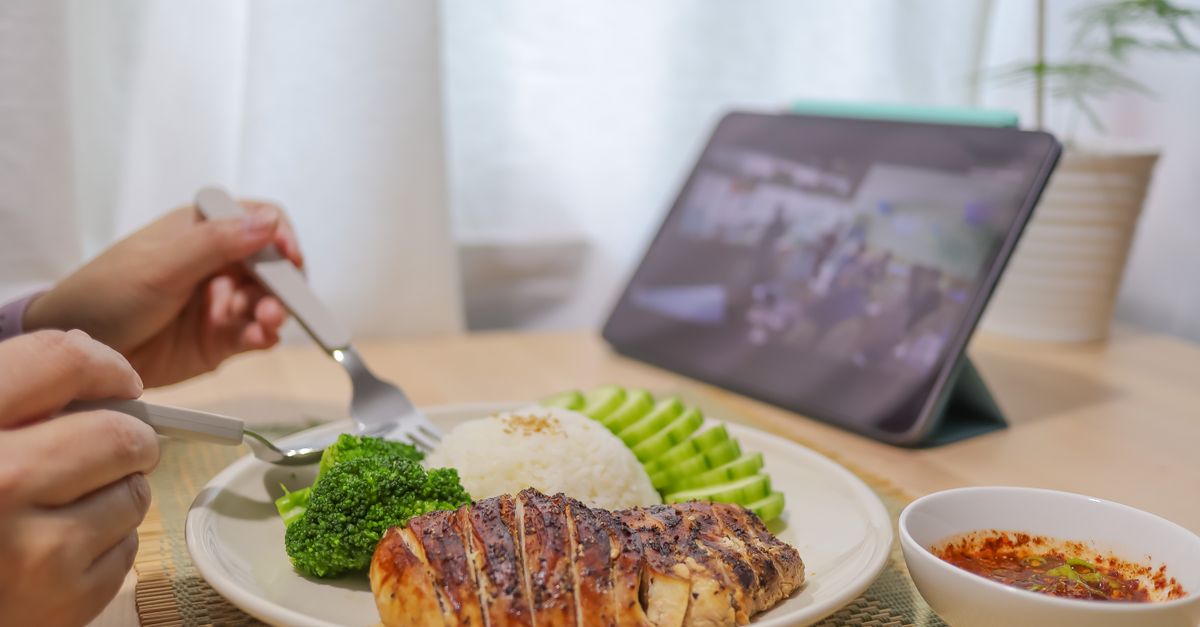
The success of the dish first depends on cooking its two main elements. The chicken should remain tender and juicy, while the rice should be fragrant without becoming greasy or sticky. The preparation therefore aims to circulate the aromas between the poultry, cooking liquid and grains. The expected result is not strongly seasoned meat, but delicate flesh complemented by the sauces.
In a common preparation, the chicken is gently cooked in an aromatic liquid. The chicken stock is then used to cook the rice, which absorbs some of its flavours. Aromatics such as ginger and garlic may be added, depending on the recipe. Proportions and methods vary from one cook to another, so it is best not to present one version as the single authentic and definitive recipe.
The rice is not simply a side dish added at the last minute. It carries an essential part of the dish’s identity, as its cooking gives it a texture and fragrance that respond to the mildness of the chicken. If it is too wet, the grains stick together and lose their lightness. If it is too dry or insufficiently flavoured, it no longer links the meat, stock and sauces.
The preparation generally involves coating the grains in aromatics before or during cooking, then using a flavoursome liquid to give them depth. The exact details vary between kitchens. For a home-cooked meal, the essential idea is to cook the rice so that the grains remain separate while giving them a noticeable but balanced fragrance.
Cooking the chicken requires a different kind of attention. Heat that is too high or cooking for too long can dry out the meat, whereas controlled cooking preserves a soft texture. Cutting also matters: evenly sized pieces are easy to eat and allow you to combine a little meat, skin and rice in the same mouthful. At the stalls, the presentation often reveals the care taken at this stage.
The stock served with the meal completes the dish. Served separately, it adds a warm, light note while extending the preparation’s flavours. It does not need to be powerful: its appeal lies precisely in remaining delicate enough not to compete with the condiments. Good Hainanese chicken is recognised by the harmony between its textures, not by a sauce that dominates everything.
The condiments turn Hainanese chicken into a dish that each person can adjust to taste. Chilli sauce adds liveliness, while ginger brings aromatic freshness and gentle heat. A soy-based sauce, often deeper and saltier, can complete the plate. These accompaniments are not mere decoration: they change the balance of every mouthful.
Serving the sauces separately allows you to taste the chicken and rice first in their mildest form, then gradually add the condiments. This way of eating suits different palates around the same table. A small amount of chilli can sometimes be enough to awaken the rice; ginger can highlight the delicacy of the poultry without making it heavier.
A well-balanced chilli sauce brings acidity, heat and freshness. It should not erase the taste of the chicken or turn the rice into a mere vehicle for chilli. To appreciate the contrast, it is better to add a little to one mouthful rather than mix a large amount into the whole plate. This leaves you free to vary the intensity throughout the meal.
Recipes can differ from one stall to another. Some sauces place greater emphasis on chilli, while others focus on garlic or acidic notes. It is therefore useful to taste cautiously when the level of heat is not indicated. In Singapore, as in many cuisines from the region, seasoning varies according to the habits of each kitchen and the cook’s preferences.
Ginger adds a clear, fragrant note that contrasts with the mildness of the chicken. It may be finely chopped, grated or incorporated into a sauce, depending on the preparation. This variety shows that there is no single way to assemble the plate: what matters is maintaining harmony between the ingredients and allowing each element to remain identifiable.
To explore all these flavours, you can taste the elements separately and then combine them: first a piece of poultry with a little sauce, then rice with a touch of ginger, followed by a spoonful of stock. This tasting makes the role of each component clear. The sauces do not correct the dish: they multiply its nuances.
To get online as soon as you land, a Singapore eSIM can be installed before you leave, with no need to look for a local SIM card.
To discover Hainanese chicken in Singapore, hawker centres provide a particularly revealing setting. These spaces bring together several food stalls and let you choose a speciality without being limited to one interpretation. You can observe the pace of service, how the plates are prepared and the habits of local diners. The experience is also a way to understand that local Asian cuisine is passed on through everyday gestures as much as through written recipes.
Restaurants may offer a more elaborate presentation, but the choice of venue does not by itself determine the quality of the meal. It is useful to look at the apparent freshness of the ingredients, the consistency of the service and how the chicken is cut. A queue may indicate strong demand, but it is not an absolute guarantee: tastes and expectations remain personal.
A classic plate generally includes chicken, a portion of rice, sauces and sometimes a serving of stock. The skin may be left on or removed, and presentation varies between stalls. Before mixing the elements, identify the condiments and taste the rice on its own: this will allow you to assess its fragrance and decide how much sauce to add.
If the menu offers different chicken preparations, asking what distinguishes the options will help you order with confidence. The terms used are not always the same from one establishment to another. It is therefore better to rely on the description displayed or the staff’s answer rather than assume that a particular name refers to the same method everywhere.
| Element | Role on the plate | How to enjoy it |
|---|---|---|
| Chicken | Provides tender, mild meat | Taste it plain before adding sauce |
| Fragrant rice | Brings the aromas together and accompanies the meat | Taste it on its own, then with the stock |
| Chilli sauce | Adds heat and liveliness | Start with a small amount |
| Ginger | Provides a fresh, aromatic note | Pair it with the chicken or rice according to taste |
| Chicken stock | Completes the meal with a warm, light touch | Drink it separately or between mouthfuls |
Stalls and restaurants change, as do their service hours. When planning an outing, check practical information directly with the establishment concerned. A tasting can also be part of a broader exploration of neighbourhoods and specialities, for example by consulting information about festivals in Singapore, where food often contributes to the cultural experience.
Hainanese chicken is not fixed in one single recipe. From one stall to another, the rice may be more or less fragrant, the chicken may be served with the skin prepared differently and the sauces may vary in heat. These variations do not necessarily indicate an error: they show how a popular speciality is also shaped by the preferences of cooks and customers. In Singapore, where culinary traditions meet, this flexibility contributes to the dish’s longevity.
The Hainanese cuisine referred to by the name provides a point of reference, but the plate served in the city-state bears the marks of local adaptation. The way the rice is served, the importance given to the condiments and the hawker-centre setting give the dish a Singaporean identity. This evolution is common in diaspora cuisines: a tradition travels, encounters new environments and changes without losing all its links with its origins.
A good plate does not need to be loaded with garnishes. The chicken should remain pleasant to eat, the rice should have a clear fragrance and the sauces should offer contrasts rather than uniform intensity. The stock, when served, completes the tasting. These criteria are more useful than looking for an identical appearance everywhere, as local interpretations may differ.
To compare several versions, observe the texture of the rice, the tenderness of the meat and the way the sauces complement the whole. An overly dominant sauce can hide the other flavours; a plate that is too dry loses the balance between rice and poultry. Conversely, a well-designed preparation allows each component to stand out while bringing them together in a coherent mouthful.
The dish can also be prepared at home, but the experience of a hawker centre provides a particular setting: choosing between several stalls, fast service and the proximity of other cuisines. For a homemade version, you can follow the essential principles — gentle cooking, rice flavoured with stock and condiments served separately — without claiming to reproduce every local variation.
For visitors, Hainanese chicken offers an accessible introduction to Singapore’s food scene. For residents, it remains a familiar meal whose details are discussed and compared. That is where its interest lies: a dish that appears simple but brings together precise techniques, blended influences and considerable freedom of interpretation. In Singapore, its iconic character can be tasted in the balance of the plate as much as in the diversity of its versions.
The expression highlights its popularity and its value as a culinary symbol. It does not correspond to an official status or a single national recipe.
The plate generally combines chicken, fragrant rice, sauces such as chilli and ginger, as well as stock served separately, depending on the establishment.
First taste the chicken and rice without sauce, then gradually add the condiments. This allows you to appreciate the mildness of the meat, the fragrance of the rice and the heat separately.
Hawker centres and specialist restaurants offer different interpretations. As menus and opening hours may vary, check the information with the establishment you choose.
To book tours and activities in Singapore ahead, see the options on Klook.
Updated on 15/11/2026
Scroll to see more articles →