Protecting yourself from online scams in Singapore
Banking phishing, fake websites and reporting scams: the 2026 guide for foreign residents.
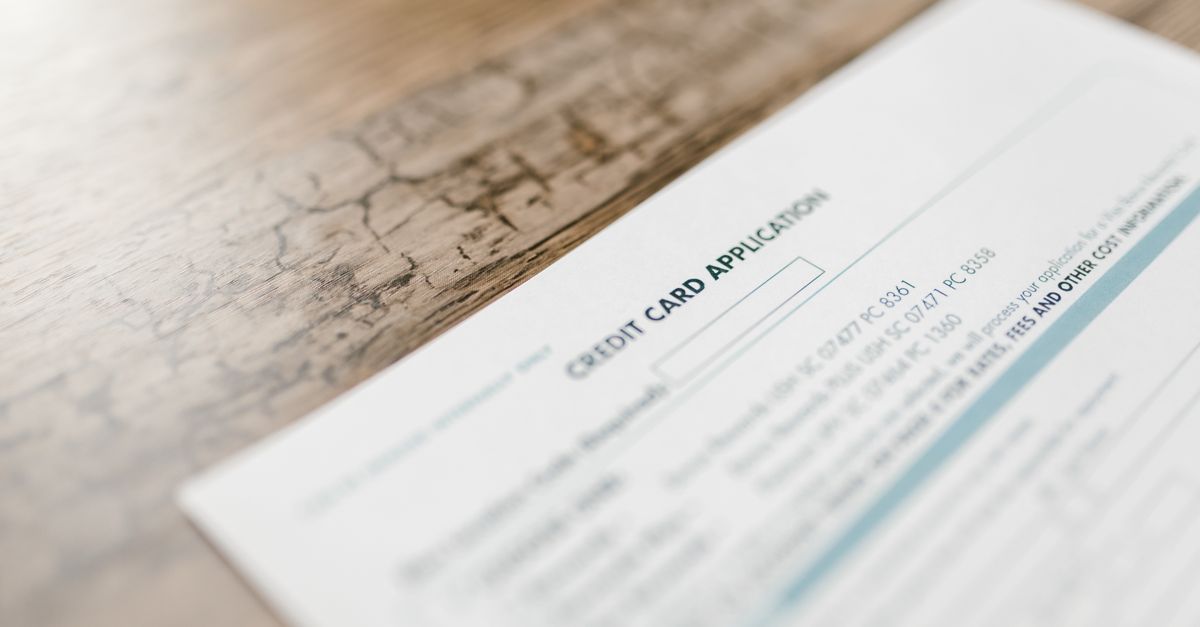
Opening a bank account in Singapore remains, in 2026, one of the most important steps towards a successful move to the city-state…
Opening a bank account in Singapore remains, in 2026, one of the most important steps towards a successful move to the city-state. For a French-speaking family that has just arrived in Singapore, a local account is not simply an administrative tool: it determines how rent is paid, salaries are received, colleagues are reimbursed, international transfers are made and everyday services are accessed. In an environment where everything is settled quickly, often digitally, not having a local account soon creates unnecessary friction. Singaporean banks offer a solid framework, but they also apply very strict checks, which can sometimes surprise newcomers used to more flexible procedures.
In practice, the decisive factor remains your residence status. An Employment Pass holder is generally better received than a short-term visitor, while a Dependant Pass, EntrePass or Student Pass can open doors, provided you present a coherent and complete application. Banks carefully examine your identity, residence, income and the rationale for your stay. Faced with these requirements, expats should prepare their documents in advance, compare providers and plan a temporary solution such as Wise or Revolut until their local account is activated. The system is welcoming, but it mainly rewards clear, well-prepared applications.
Designed for French-speaking expats: compare the major local banks, a local digital bank and temporary solutions. Conditions vary depending on your application, residence status, employer, supporting documents and the provider’s current commercial policy.
| Provider | Type of provider | Status most easily accepted | Average opening time | Indicative minimum deposit | Indicative monthly fees | Advantages | Limitations |
|---|
To maximise your chances, prepare a clear application: passport, work pass or visa, proof of address, employment contract or offer letter, recent bank statements and an explanation of your expected income flows.
The ranges below are indicative and should be checked directly with the provider before taking any action.
In this guide
In Singapore, a local bank account is the backbone of almost all financial life. Without one, salary payments may be delayed, paying a security deposit becomes more complicated and everyday payments require workarounds. In a country where services are digitalised, instant transfers have become the norm and rents are paid in Singapore dollars, the usefulness of a local account is immediate. This is particularly true for French-speaking families arriving with children, school enrolments, medical expenses and housing arrangements to manage at the same time.
The stability of Singapore’s banking system also plays a major role. The regulatory framework, overseen by the Monetary Authority of Singapore, is known for being rigorous, reassuring those who wish to secure part of their savings outside their country of origin. Singapore also stands out as a serious financial centre, with solid institutions, strict supervision and high compliance standards. For many newcomers, this level of oversight is precisely what makes the country attractive: the rules are clear, practices are regulated and operational risks are contained.
Another often underestimated point is that local banking services make it easier to adopt everyday practices in Singapore. PayNow enables instant transfers between individuals or to compatible merchants, mobile apps are highly advanced and most routine transactions can be completed in a few clicks. For a family that needs to reimburse a nanny, split the cost of a dinner, pay a school deposit or track household spending, this convenience makes a huge difference. In Singapore, a local account is not a banking luxury; it is an everyday essential.

Immigration status is the first filter used by Singaporean banks. An Employment Pass makes opening an account considerably easier, as it proves that you have a local employment contract and a long-term presence in the country. In most cases, this is the easiest profile for banks to deal with, especially when accompanied by a local address and proof of income. Banks value consistency: stable employment, genuine residence and clear supporting documents.
A Dependant Pass may also allow you to open an account, but requirements vary more widely. A bank may accept an employee’s spouse, provided the family situation is documented, the address in Singapore is clear and the application gives some visibility on financial needs. This is important for French-speaking households where only one adult works locally, while the other manages the family budget, school fees and everyday expenses. A personal account can then be opened, but you should often expect a few additional questions.
A Student Pass is sometimes accepted, particularly for basic accounts. It is generally suitable for students staying for an extended period who can show proof of enrolment, their address and, sometimes, financial support. By contrast, visitor profiles remain difficult. Travellers staying temporarily, even with a strong financial profile, often face refusals or significant limitations, as banks first want to see a lasting, verifiable presence. In some cases, an existing relationship with an international bank that has a local branch may help start the conversation, but it can never replace local checks.
Banks also check how you intend to use the account. Is it a salary account, a savings account, an account for family expenses, or a temporary account before a permanent move? This question affects the level of scrutiny and the types of products offered. The more stable your status and the clearer your plans, the smoother the account opening process.
Most refusals or unnecessary delays stem from the same problem: an incomplete or poorly aligned application. Banks want to understand who is opening the account, why, with what resources and under what residency arrangements. A simple copy of your passport is almost never enough. You need to provide a set of consistent supporting documents, rather than submitting a single document at the last minute.
In practical terms, a credible application tells a simple story. The applicant has a valid residence permit, a tenancy agreement or residential address, proof of employment or income and, where applicable, a previous bank reference. This reassures the bank because it reduces the risk of compliance errors. In Singapore, the accuracy of your documents matters just as much as your status itself.
The documents requested vary by bank, status and sometimes account type, but the same core documents are required very often. You will generally need to provide a valid passport, proof of residence in Singapore, proof of income or employment, and sometimes banking or professional references. Some banks also want to see the physical residence permit or IPA, depending on how far the application has progressed. Supporting documents must be legible, recent and consistent with one another.
For an expatriate family, proof of address can take several forms: a utility bill, tenancy agreement, letter from the employer confirming accommodation, or an official document linked to local status. Proof of income may include payslips, an employment letter, tax returns or documents relating to self-employment. When the application concerns a spouse or student, the bank will often seek to verify the source of funds. This is not a minor detail: in Singapore, anti-money-laundering compliance is taken very seriously.
The most common mistakes are easy to avoid. Many applications fail because a document has expired, the address differs from one document to another, or the source of funds is not clear enough. Other applications are delayed by unnecessary translations, poor-quality scans or an incoherent set of documents. One simple tip often helps: prepare a neat, dated and complete application, and avoid including unnecessary documents. In Singapore, clarity speeds things up more than quantity.
DBS/POSB, OCBC and UOB account for a large proportion of account openings among residents and expatriates. DBS and its POSB arm appeal through their digital capabilities, branch network and reputation as a very practical bank for everyday life. OCBC often attracts people looking for a good balance between personal services, savings and family solutions. UOB remains popular for its strong local presence and comprehensive range, particularly among those who may later wish to expand their banking relationship to include financing or investment products.
This comparison needs some nuance. DBS works well for everyday banking, particularly thanks to its mobile app, fast transfers and easy integration with local tools. OCBC is often seen as more flexible for certain profiles and appealing to savers who want to structure their finances around a main account and an additional account. UOB, meanwhile, wins over those looking for a stable, well-established bank with a broad range of services for individuals and families settling in for the long term.
Local banks have a major advantage: they fit naturally into Singaporean habits, from QR payments to instant transfers via PayNow. However, opening requirements can remain demanding for non-residents or people who have only recently arrived. A family moving from France may therefore find local banking very convenient day to day, while still having to go through a slightly stricter opening process. The ease of use often makes up for the initial rigour.
| Bank | Profiles often well accepted | Main advantages | Points to bear in mind |
|---|---|---|---|
| DBS/POSB | Employees, families and new arrivals with stable status | Highly developed app, simple day-to-day use, extensive network | Strict document checks depending on the profile |
| OCBC | Expats looking for a good balance between savings and services | Well-balanced offers, solutions for family life | Processing times vary depending on the quality of the application |
| UOB | Residents wanting a solid local bank for the long term | Established network, comprehensive range, institutional credibility | Opening an account can sometimes take longer for certain foreign profiles |

Digital banks have profoundly changed Singapore’s banking landscape. Providers such as Trust Bank and other local digital offerings often simplify onboarding, mobile use and day-to-day expense management. For someone who wants to open an account quickly, with minimal friction and a modern interface, these solutions have become credible options. They are particularly popular with expats looking for a secondary account for everyday use, groceries, small payments and budget tracking.
Their main advantage is speed. Whereas a traditional bank may require a branch visit, a series of checks or extra time for the card, a digital solution can sometimes reduce the process to a few steps on your phone. In practice, this appeals to new arrivals who are still settling in, or partners who want a simple tool for managing the family budget. Some digital banks also offer features suited to local habits, such as instant transfers or integration with Singaporean payment practices.
However, this model is not suitable for every profile. People who may later want to invest, finance a property purchase, receive wealth management advice or have a personal banking relationship will often be better off using a traditional bank, or combining the two. Digital banks often remain more limited when it comes to certain advanced services, wealth management and more complex lending solutions. Digital banking offers greater convenience, but it does not always replace the depth of a major local bank.
The sensible approach is therefore to distinguish between immediate use and a long-term strategy. For everyday spending, a neobank may be sufficient. For salary payments, structured savings, borrowing or family plans, a traditional bank retains a clear advantage. This combination is often the most effective option for French-speaking expats.
In 2026, account-opening times remain variable, but a realistic range is often 3 to 10 working days for full activation, including the card and digital access. Some simpler applications may be processed more quickly, especially when the paperwork is clear and identity checks go smoothly. Others take longer if the bank requests additional information, or if the applicant’s status calls for enhanced checks. Families who have just arrived in Singapore should therefore allow some leeway rather than count on immediate activation.
The initial minimum deposit largely depends on the type of account. For mainstream products, it can range from 0 to 1,000 SGD, while some more demanding packages require more. Local banks sometimes offer accounts with no monthly fees, particularly when certain conditions are met. International banks and some more premium products are more likely to charge account maintenance fees, generally in the range of 2 to 10 SGD per month for everyday services. Wealth-focused or premium customer accounts follow different rules and are often more selective.
The real issue is not just the advertised price. You need to look at the total cost of use, including transfer fees, currency exchange commissions, insufficient-balance penalties and the cost of additional services. An inexpensive account can become costly if you frequently transfer money in foreign currencies or make extensive international use of it. Conversely, an account that is slightly more expensive but better suited to your local lifestyle may save you time and hidden fees. The right way to assess banking costs is over the year, not by looking only at the account name.
Non-residents often face three major obstacles: the requirement to be physically present, enhanced checks on the source of funds and selectivity based on status. Someone who has arrived without a long-term permit may be refused, even with a good income. This is frustrating, but understandable in a country where financial compliance remains very strict. Banks aim to reduce the risks of fraud, misuse and accounts being opened without a genuine connection to the country.
The second obstacle concerns documentary consistency. An expat who changes address, has not yet received all their documents or cannot clearly prove their income will often see their application delayed. The third obstacle concerns atypical profiles: recent entrepreneurs, self-employed workers, regular visitors or people whose plans for staying in Singapore have not yet stabilised. In these situations, the bank may ask for more supporting evidence or even offer a polite refusal rather than open the account immediately.
In the meantime, solutions such as Wise or Revolut can be extremely useful. They make it easier to receive, convert and spend money during the transition period. They do not completely replace a local account for receiving a salary or making certain Singaporean payments, but they are very useful for managing your move, making international transfers or avoiding tying up the family budget. For many expats, this temporary solution removes the pressure to have “everything straight away”.
A common situation illustrates the issue well: a French couple arrives with an Employment Pass and a Dependant Pass, but the tenancy agreement has not yet been signed. In this situation, the bank may wait for a permanent address before approving the account opening. In the meantime, a multi-currency account can serve as a bridge. The most effective strategy is often to think in two stages: immediate stopgap, then local establishment.
The right choice depends less on the bank’s prestige than on your actual lifestyle. A family settled in Singapore with a local salary, recurring bills, school fees, healthcare expenses and a need for banking credibility will often be better off choosing a traditional bank. DBS, OCBC or UOB then provide a solid foundation for managing the household, receiving income, paying everyday expenses and preparing for possible larger projects. Their strength lies in their complete integration with local life and the breadth of their product range.
Conversely, someone who has just arrived, a spouse who does not yet have a local income or a student may find a digital bank more convenient to start with. The logic is simple: less friction, less waiting and a better user experience. For everyday spending, a digital account may be more than sufficient. It is particularly useful if the main need is to manage simple payments, keep track of a tight budget or receive money from another country. In this case, speed takes priority over sophistication.
People with substantial assets, entrepreneurs and families planning regular transfers between several countries will often need a hybrid approach. A traditional bank serves as the main foundation, while a digital solution complements it for currency conversions, small payments or fast transfers. This setup avoids bottlenecks and offers greater flexibility. The best bank is not always the one that opens an account fastest, but the one that matches your pace of life in Singapore.
The first step is to identify the right status and the right institution. An employee with an Employment Pass will not have the same chances as a visitor, and a basic current account does not involve the same requirements as an account intended for savings or investment. Before even making an appointment, check the eligibility criteria, the documents required and whether opening an account is possible in a branch or online. This check avoids making a wasted trip.
The second step is to prepare a consistent application file. Your passport, residence permit, proof of address, proof of income, bank references and any relevant family documents should be ready in a clear, up-to-date version. It is useful to keep both a digital and a printed copy, as some banks require documents to be presented in person. Once the file is ready, the appointment or online application will be much smoother.
The third step is to choose the right primary use. If the account is to receive your salary, it is better to choose a local bank that is well integrated with Singapore’s services. If the aim is to have a quick supplementary tool, a digital bank may be sufficient. Next come approval, activation of the mobile app, ordering a card and setting up essential payments. Families will also benefit from activating PayNow when the option is available, as it quickly makes everyday life easier.
The final step, often overlooked, is to check the fees after opening the account. An approved account is not yet an optimised account. You need to monitor the minimum balance, currency conversion fees, international transfer costs and any card-related charges. A quick review after the first few weeks can help you avoid unpleasant surprises. An account opened properly is useful; an account used properly is cost-effective.
Here is a useful checklist to go through before submitting your application:
Singapore’s banking sector operates under strict regulation. The MAS supervises financial institutions, issues licences and imposes high standards for compliance, transparency and fraud prevention. Major sector laws, such as the Banking Act, set out banks’ obligations and govern their relationships with customers. For the end user, this means sometimes extensive checks, but also a robust and predictable environment.
Deposit protection is another reassuring factor. The Singapore Deposit Insurance Corporation covers deposits with member banks up to 75,000 SGD per depositor and per institution. This level of protection strengthens the confidence of individuals wishing to use Singapore as their banking base. In addition, personal data is protected under the PDPA, which imposes confidentiality obligations and requires customer information to be handled responsibly. This combination of regulation, security and confidentiality largely explains the appeal of Singapore’s financial centre.
In practice, it is useful to adopt a few simple habits. You should update your address as soon as you move, keep proof of income, respond to requests for additional information, and avoid transactions that are difficult to explain. A bank may temporarily block an account if activity appears inconsistent or if information becomes outdated. Transparency remains the best protection. For a family or a working expatriate, this discipline is not excessive: it secures access to services and avoids unnecessary interruptions. In Singapore, peace of mind when banking is built on accuracy and anticipation.
Yes, in some cases, but the process becomes more difficult. A Dependant Pass, EntrePass or sometimes a Student Pass may be accepted depending on the bank, provided you supply complete and consistent supporting documents.
The timeframe varies depending on the bank and the quality of your application, but a few days to around ten working days remains a realistic estimate for full account opening, the card and digital access.
Wise or Revolut can serve as a temporary solution for everyday spending, currency conversions and some international transfers while you wait for a Singapore bank account to be activated.
DBS is often a very good fit for digital and everyday banking, OCBC for a balance between services and savings, and UOB for a strong local banking relationship over the long term. The best choice mainly depends on your status and needs.
You should check the minimum deposit, any monthly fees, international transfer costs, currency conversion charges and any penalties if the minimum balance is not maintained.
Banking phishing, fake websites and reporting scams: the 2026 guide for foreign residents.
Overview of the banking providers and financial services available.
Tax system, tax residence and reporting obligations.
All the procedures you need to know to settle in with peace of mind.
Comparison of solutions for sending and receiving funds.
Explore all our guides to help you prepare for your move to Singapore: housing, tax, cost of living and administrative procedures.
See all guides →Updated on