Educational Excellence in Singapore
From nursery to world-class universities, discover the ultimate guide to educating your children in the city-state in 2026.
Singapore: The Global Education Summit
In 2026, Singapore retains its position as the undisputed leader in the PISA (Programme for International Student Assessment) rankings. This benchmark, which assesses the skills of 15-year-olds in science, mathematics and reading, consistently places the city-state at the top of the global rankings.
Why such success? Singapore’s system is based on exceptional academic rigour, continuous teacher training and a deeply rooted culture of achievement. For expatriate families, settling here means offering their children a stimulating, albeit highly competitive, environment.
"Education is the engine of our survival and prosperity." – Vision of the Ministry of Education (MOE)
The School Year in 2026
Local School Calendar
The calendar follows the calendar year, which is crucial when planning your family relocation.
- 📅 Start of the year: 2 January 2026
- 🏖️ Main holidays: Late November to late December
- 🌸 Mid-year holidays: The whole of June
International & French Schools
They generally follow the northern-hemisphere school year (August to June), which is ideal for those considering a return to France.
- 🗓️ Start of term: Mid-August
- ❄️ Christmas: 3-week break
- ☀️ Summer: Late June to mid-August
Pre-school: Bilingual Development
In Singapore, pre-school (Playgroup, Nursery and Kindergarten) welcomes children aged 18 months to 6 years. This is where the strength of Singapore’s bilingualism takes shape. Most establishments offer immersive English-Mandarin programmes, preparing children to thrive in a multicultural environment.
Public & Private Options
PCF Sparkletots and My First Skool are the most common local options, offering affordable fees but limited places for expatriates who are not permanent residents. Private centres (such as MindChamps or EtonHouse) offer high-end facilities, with fees ranging from 1,500 to 2,500 SGD per month.
The French-Speaking Option
To maintain their mother tongue, establishments such as La Petite Ecole and Les Petits Gaulois offer supportive, often French-English bilingual environments that respect children’s developmental stages while incorporating elements of the French curriculum (AEFE).
Primary School: The PSLE Milestone
Primary school lasts 6 years (P1 to P6). It is compulsory for Singaporean citizens. The cycle is divided into two phases: Lower Primary (foundations) and Upper Primary (exam preparation).
A Closer Look at the PSLE
The Primary School Leaving Examination is the cornerstone of the system. At the age of 12, this exam determines entry to secondary school. For an expatriate child in a local school, it is an intensely stressful period, as the results determine the prestige of the secondary school they can attend.
Before any primary-school admission, don’t forget the health requirements. The vaccination schedule must be followed carefully and validated by Singapore’s Health Promotion Board (HPB). See our guide to the healthcare system for more details.

Discipline & Rigour

The Secondary-School Revolution: Full SBB 2026
The rigid streams (Express vs Normal) are a thing of the past. Since 2024, Singapore has rolled out Full Subject-Based Banding (Full SBB) nationwide. The aim? To reduce social stigma and allow each student to progress at their own pace according to their strengths.
Mixed Classes
Students are no longer separated by an overall "stream", but share classes for non-academic subjects (Art, Music, PE).
Subject-Based Levels
A student can take Mathematics at G3 level (the most demanding) while taking English at G2 level. Unprecedented flexibility.
Greater Equity
This reform aims to promote social cohesion in a city where academic success is often linked to a person’s background.
Towards A-Levels and University
The ultimate goal of Singapore’s system is admission to Junior College to prepare for the A-Levels (equivalent to the French Baccalauréat + level).
- ✓ NUS (National University of Singapore)
- ✓ NTU (Nanyang Technological University)
- ✓ SMU (Singapore Management University)
The Pressure of the A-Level
The A-Level examination in Singapore is reputed to be far more difficult than its British counterpart. Students devote two years to intensive study. The stress is palpable in the libraries and Tuition Centers that spring up on every street corner. In Singapore, almost 90% of students use private tuition to maintain their ranking.
Competition & Holistic Profiles
To gain admission to the world’s top universities, grades are no longer enough. Applications must include involvement in CCA (Co-Curricular Activities), leadership projects and innovation initiatives. Scholarships are plentiful but extremely selective. French nationals can discuss specific forms of assistance through local associations.
Annual School Budget Calculator (2026)
Estimate your child’s total education costs according to the type of school chosen.
*One-off registration fees not included (~3000-5000 SGD)
The “Top 5” International Schools
| School | Curriculum | Annual Budget (~SGD) | Key Strength |
|---|---|---|---|
| Tanglin Trust School | British (A-Levels / IB) | 35,000 - 48,000 | Tradition & Outstanding Results |
| UWC South East Asia | IB (International Baccalaureate) | 38,000 - 45,000 | Social Commitment & Leadership |
| SAS (Singapore American School) | American (AP) | 40,000 - 52,000 | High-tech Campus & Innovation |
| IFS (International French School) | French (Baccalauréat) | 18,000 - 28,000 | Continuity with the French Education System |
| St. Joseph's Inst. Intl | Catholic / IB | 30,000 - 38,000 | Values & Close-knit Community |
For more information, see the article on the best international schools.
The Local Option: The AEIS Pass
Joining a Singaporean state school as a foreigner is possible but challenging. You will need to take the AEIS (Admissions Exercise for International Students) exam. Places are limited and priority is given to citizens and permanent residents.
-
1
Excellent command of English: The exam tests only English and maths in English.
-
2
Total immersion: Your child will be surrounded by Singaporeans, which is ideal for cultural integration.
-
3
Lower cost: Expect to pay around 800 to 1,500 SGD/month depending on the level, much less than private education.
Practical Advice & Logistics
Uniforms Are Compulsory
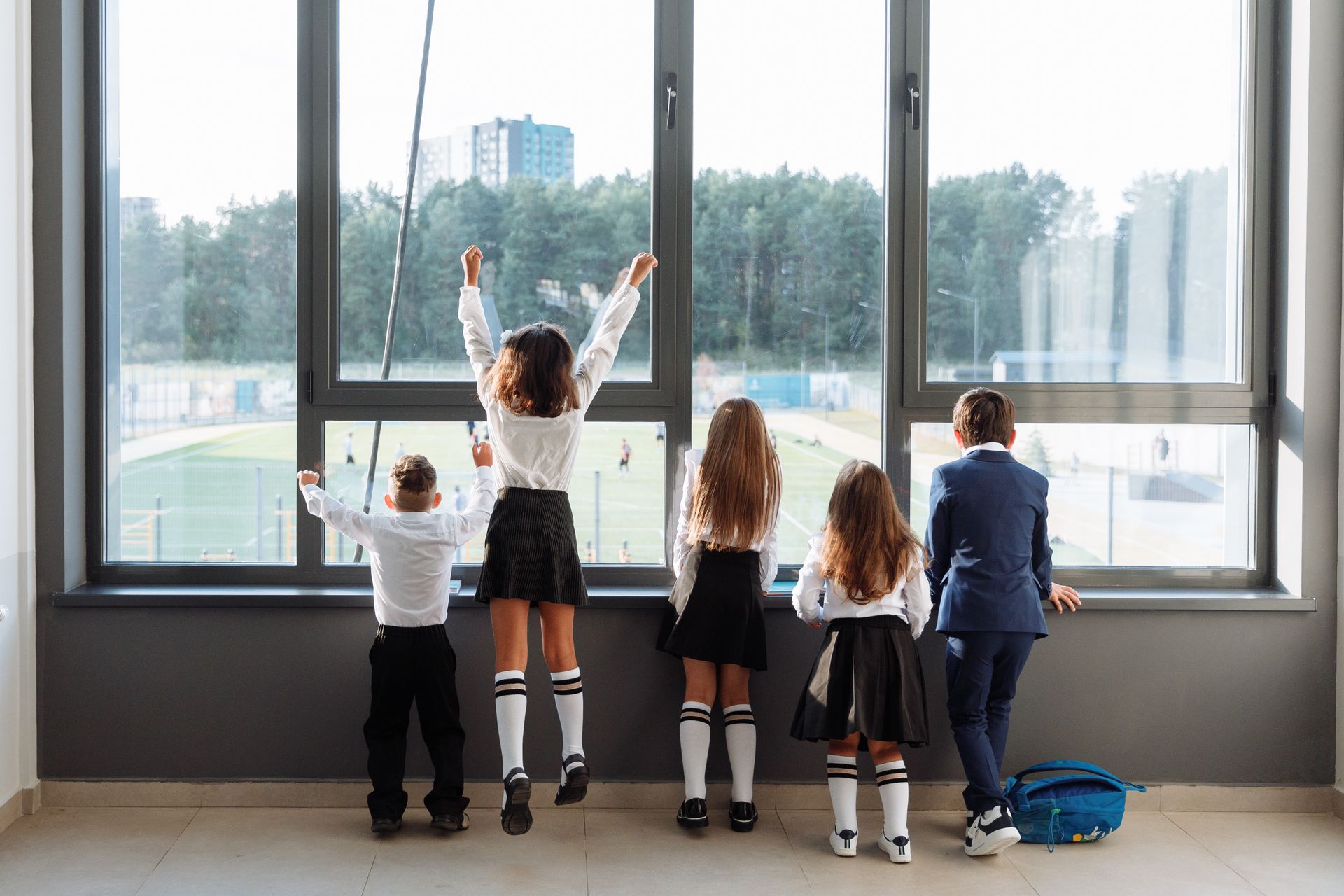
Almost all schools (local and most international schools, such as IFS) require students to wear a uniform. This often includes specific sports shoes.
Housing & Proximity
Traffic can be heavy. Choose your accommodation based on the school. See our Finding accommodation guide to target family-friendly neighbourhoods.
Waiting Lists
Some premium schools (Tanglin, UWC) have waiting lists of more than 2 years. Plan your application even before you have your final work visa.
Frequently Asked Questions (FAQ)
Can I enrol my child in a local school during the school year? ▼
This is very difficult for local schools because of the AEIS. International schools are more flexible if places are available.
Is IFS (Lycée Français) accredited? ▼
Yes, IFS is part of the AEFE network. It follows the French curriculum and allows French-nationality children to benefit from school grants.
Are there trilingual schools? ▼
Yes, schools such as IFS offer international sections. Private kindergartens also offer French-English-Mandarin programmes.
What does “Kiasu” mean? ▼
It is a local term meaning “fear of losing” or “fear of missing out on an opportunity”. In education, this translates into a frantic race for the best grades and the best activities.
Are AEIS exams compulsory for private schools? ▼
No. Each international school has its own entrance tests (often the CAT4 exam or interviews).
What is the age of entry into primary school? ▼
Children enter Primary 1 in the year they turn 7.
Is financial assistance available for school fees? ▼
Companies sometimes include school allowances in expatriate packages. Otherwise, check the French Embassy’s grants.
Is Mandarin compulsory? ▼
In local schools, learning a “Mother Tongue” (often Mandarin) is required. In international schools, it is generally an option or an elective.
What are the usual school hours? ▼
Lessons start early (around 7:30-8:00 am) and finish around 1:30-3:30 pm, followed by CCAs (co-curricular activities).
Is school free for permanent residents? ▼
No, but fees are subsidised and much lower than for holders of work visas only (EP/DP).
Ready for the great educational leap?
Join our community on the forum to ask questions of parents who are already settled here.