Preparing for your return: a four-phase timeline
Organising your return to France from Singapore requires careful planning. Here are the four main phases to follow for a successful transition.
Phase 1: four to six months before departure
Check that your identity documents and those of your family are valid. If your passport or national identity card expires within six months, renew it at the Embassy of France in Singapore. For non-EU spouses, submit your application for a Long-Stay Visa equivalent to a Residence Permit (VLS-TS) to the consulate now, as processing times can be several months.
Also start looking for accommodation in France. Put together your rental application file (tax notices, bank statements, letter from your employer) or explore bank guarantee options if you do not yet have a French employment contract. For more information on the steps involved in settling in, see our guide to settling your family in Singapore, which also covers the process in reverse.
Phase 2: two to three months before departure
Inform your employer of your departure and prepare to close your Singaporean contracts. Re-read your tenancy agreement to identify any early termination clauses and required notice periods. Contact your telecommunications and electricity providers to arrange cancellations.
Request several quotes for an international removal and book your removal company. Prepare a detailed inventory of your belongings for French customs, specifying their age and value. If you have pets, make an appointment with the vet to obtain the international health certificate and check that their microchip and rabies vaccination are up to date.
Phase 3: one month before departure
Obtain Tax Clearance from IRAS. Your employer will generally withhold your final salary until confirmation that your Singaporean taxes have been settled. Close or suspend your local bank accounts, keeping one active account if you need to receive transfers after your departure.
Register on the Service-Public.fr portal to report your return and facilitate your administrative procedures in France. Gather all the documents needed to re-register with Health Insurance and enrol your children in school: health records, family record books, school reports and certificates of deregistration.
Phase 4: upon arrival in France
In the first few days, register your new address with the town hall and request proof of address. Enrol your children at school by presenting the registration certificate issued by the town hall. Contact CPAM to reactivate your French healthcare rights: if you do not have an immediate job, you will come under PUMA after a stable three-month residency period.
If you are looking for work, register with France Travail. Also remember to compare complementary health insurance policies, as French Social Security reimburses only around 70% of healthcare costs.
Taxation on returning to France: avoiding double taxation
Your tax situation changes as soon as you once again become a French tax resident. France taxes worldwide income, but the tax treaty between France and Singapore protects you against double taxation on income that has already been taxed.
Declaring foreign accounts
If you keep a bank account in Singapore after returning to France, you must declare it every year to the French tax authorities using form 3916. This obligation applies to all accounts held abroad, even inactive accounts or those with a low balance.
Income earned in the year of your return
In the year you return, you will have to declare income received in Singapore and France. Singaporean income already taxed locally will qualify for a tax credit in France to avoid double taxation. Keep all your proof of tax payments in Singapore.
The return is completed entirely online at impots.gouv.fr. If you encounter any difficulties, contact the tax centre for non-residents before your departure for personalised advice.
Work and unemployment benefits: what you need to know
Your employment situation when you return determines your social rights. If you resigned from your job in Singapore, you will generally not be entitled to French unemployment benefits, except in certain cases of legitimate resignation, notably following a spouse who has been transferred.
Reactivating previous entitlements
If you worked in France or in a European Union country before moving to Singapore, your unemployment entitlements may sometimes be reactivated. Contact France Travail as soon as you arrive to check your eligibility and provide proof of your employment periods.
Recognition of qualifications
For regulated professions (doctors, lawyers, architects, etc.), qualifications obtained or experience gained in Singapore may require official recognition. Contact ENIC-NARIC to have your qualifications validated. The process can take several months, so start it before returning.
| Situation | Unemployment entitlements | Action to take |
|---|
| Standard resignation | No immediate entitlement | Register with France Travail for support |
| Legitimate resignation (following a spouse) | Possible after review | Proof of the spouse’s transfer |
| End of contract or dismissal | Depending on previous entitlements in France/EU | Form U1 if transiting through the EU |
| Retirement | Not applicable | Form S1 for healthcare entitlements |
Enrolling children in school: rejoining the French education system
Schooling is compulsory from the age of three. The process varies depending on the level of education and your place of residence in France.
Nursery and primary school
Go to the town hall with proof of address (rent receipt, electricity bill), the family record book, your child’s health record and their school reports from Singapore. The town hall will issue a registration certificate, which you must then give to the school head.
Mandatory vaccinations (diphtheria, tetanus and polio) must be up to date. If your children followed a Singaporean vaccination schedule, have their health records translated by a sworn translator.
Secondary school
Placement is handled by the education authority for your local academy. Contact the education department as soon as you know your address in France. If your children attended an international school in Singapore, they may take a placement test to join an international or European section in France.
Request a certificate of deregistration (exeunt) from the Singaporean school before you leave. This document is often required to finalise enrolment in France.
Social protection and healthcare: reactivating your rights
When you return, you must reactivate your French healthcare cover. The arrangements depend on your employment and family situation.
PUMA and the waiting period
If you do not have an immediate job, you come under Universal Health Protection (PUMA). A stable three-month residency period is required before cover begins. If you start working as soon as you arrive, you are covered immediately by the general scheme.
Form S1 for pensioners and seconded employees
If you are retired or were seconded by your French employer, form S1 allows you to transfer your healthcare rights without a waiting period. Request it from your pension fund or employer before leaving Singapore.
Complementary health insurance
French Social Security reimburses around 70% of healthcare costs. Complementary health insurance is essential to cover the remainder, particularly dental care, optical care and hospital treatment. Compare policies as soon as you arrive to avoid any gap in cover.
Practical arrangements and closing contracts in Singapore
Winding up your life in Singapore requires organisation to avoid unnecessary costs and administrative complications.
Tenancy agreement
Read your tenancy agreement carefully to identify any early termination clauses. If you leave before the end of the contract, you will generally have to pay a penalty equivalent to one or two months’ rent. Arrange the check-out inspection with your landlord and recover your security deposit.
Bank accounts
Inform your Singaporean bank of your change of address. If you close your accounts, make sure that no direct debits are still active. Keep an account open if you are expecting refunds or transfers after your departure.
Telecommunications and subscriptions
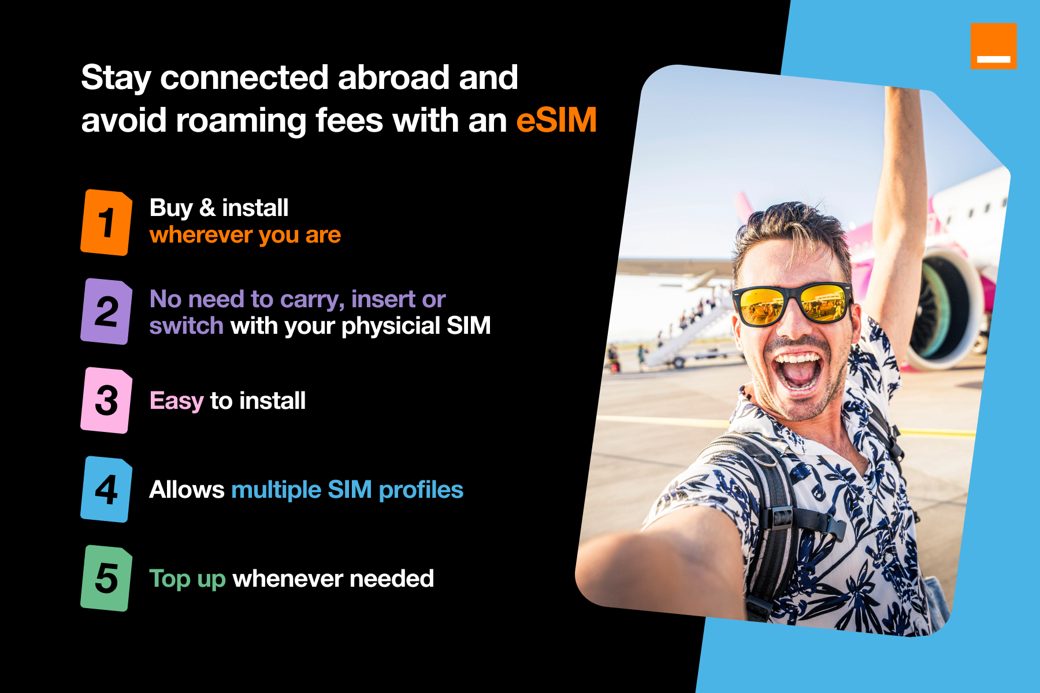
Cancel your mobile phone, internet and television contracts at least one month before your departure. Some operators impose notice periods or early termination fees. If you wish to keep your Singapore number to receive banking two-factor authentication SMS messages, switch to a minimal prepaid plan.
International moving
Container shipping between Singapore and France takes six to eight weeks. Book your removal company at least two months in advance and prepare a detailed inventory of your belongings, including their value and age. Personal belongings that you have owned for more than six months are exempt from import duties in France.
For valuable items (works of art, jewellery, electronics), keep the purchase invoices to prove their origin in the event of a customs inspection.
Social and cultural reintegration
Returning to France after several years in Singapore can cause reverse culture shock. You will encounter habits, lifestyles and social norms that differ from those of the city-state.
Pace of life and services
Singapore offers administrative efficiency and 24-hour service availability that you will not find in France. The opening hours of shops, public services and transport are more limited. Anticipate these differences to avoid frustration.
Maintaining your links with Singapore
If you would like to stay connected with Singapore’s French-speaking community, join groups for former expats in France. These networks facilitate exchanges and allow people to share practical advice. To better understand local cultural dynamics, see our guide to integrating into Singapore, which offers useful insights for comparing the two environments.
Supporting children
Children may experience returning to France as a new expatriation. They will have to adapt to a different school system, new classmates and sometimes a language they are less comfortable with. Support them through this transition by valuing their Singaporean experience and maintaining reassuring family routines.
Frequently asked questions
How long before my departure should I start the return formalities?
Start at least four months before your departure. This allows time to renew identity documents, apply for visas for non-EU spouses, cancel Singaporean contracts and prepare the international move without rushing.
Do my years worked in Singapore count towards my French pension?
No, France and Singapore do not have a social security agreement covering pensions. These years are not taken into account by the French state pension scheme, unless you voluntarily paid contributions to the Caisse des Français de l'Étranger (CFE) during your expatriation.
How long will it take to be covered by Assurance Maladie after my return?
If you start working as soon as you arrive, you are covered immediately. If you are not employed, you come under PUMA after a stable three-month residence period in France. Pensioners and seconded workers can use form S1 to avoid this waiting period.
Do I have to declare my Singaporean bank accounts in France?
Yes, all accounts held abroad must be declared each year to the French tax authorities using form 3916, even if they are inactive or have a low balance. This obligation applies to all French tax residents.
How do I enrol my children in school in France after Singapore?
For nursery and primary school, go to the town hall with proof of address, the family record book, the health record and school reports. For lower and upper secondary school, contact the education authority for your académie. Ask the Singaporean school for a certificate of deregistration before your departure.
Can I receive unemployment benefits when returning to France?
If you resigned, you will generally not be entitled to benefits, except in the case of a legitimate resignation (following a transferred spouse). If you worked in France or the EU before Singapore, your entitlements may sometimes be reactivated. Contact France Travail as soon as you arrive to check your eligibility.