Key Steps to a Successful Move
A successful move to Singapore depends on thorough preparation. Before you leave, make sure you have secured your work visa, as it determines all the other formalities. Once your Employment Pass or S Pass has been approved, you will need to register with the ICA to obtain your biometric identity card, which is essential for opening a bank account, taking out a mobile plan or signing a tenancy agreement.
Plan a comfortable budget for the first few weeks: rental deposits often amount to two to three months’ rent, and set-up costs (furniture, equipment and connections) quickly add up. See our guide to budgeting and the cost of living to plan for these expenses.
Typical Relocation Timeline
| Phase | Duration | Main Actions |
|---|
| Pre-departure | 2–3 months | Visa application, property search, document preparation |
| First week | 7 days | ICA registration, opening a bank account, mobile plan |
| First month | 30 days | Settling into your home, enrolling children, exploring the neighbourhood |
| First three months | 90 days | Professional integration, networking, daily routines |
Choosing Your Neighbourhood
Your choice of neighbourhood determines your day-to-day quality of life. Central areas such as Orchard and River Valley offer immediate access to business centres and shops, but at a high cost. Families often favour East Coast for its green spaces and beaches, or residential neighbourhoods such as Bukit Timah, which are close to international schools.
For an authentic cultural experience on a controlled budget, explore neighbourhoods such as Tiong Bahru, which combine historic charm with a lively community atmosphere. Our neighbourhood life page explains the specific features of each area to help you make the right choice.
Types of Accommodation Available
Private condominiums are the most popular option among expats: secure and equipped with a swimming pool and gym, they offer immediate comfort. HDB flats, built by the state, are more affordable and allow you to experience everyday Singaporean life, although renting them as a foreigner is subject to certain restrictions.
Black & White colonial villas, which are rare and prestigious, appeal to families looking for space and character. Whatever you choose, plan to view several properties and negotiate the tenancy terms, particularly the minimum term and early termination clauses.
Adapting to the Local Culture
Singapore is a multicultural society where Chinese, Malay, Indian and Western communities live harmoniously side by side. This diversity is reflected in every aspect of daily life, from religious festivals to eating habits. Respecting this pluralism is essential for successful integration.
The city-state operates according to strict rules that ensure order and cleanliness: eating or drinking on public transport is prohibited, littering incurs fines, and queues must be respected scrupulously. Far from being restrictive, these standards create a safe and pleasant environment for everyone.
Social Codes to Know
Communication in Singapore prioritises harmony and avoids direct confrontation. Refusals are rarely expressed bluntly: learn to decode polite phrases that actually indicate disagreement. Punctuality is a fundamental sign of respect, both professionally and personally.
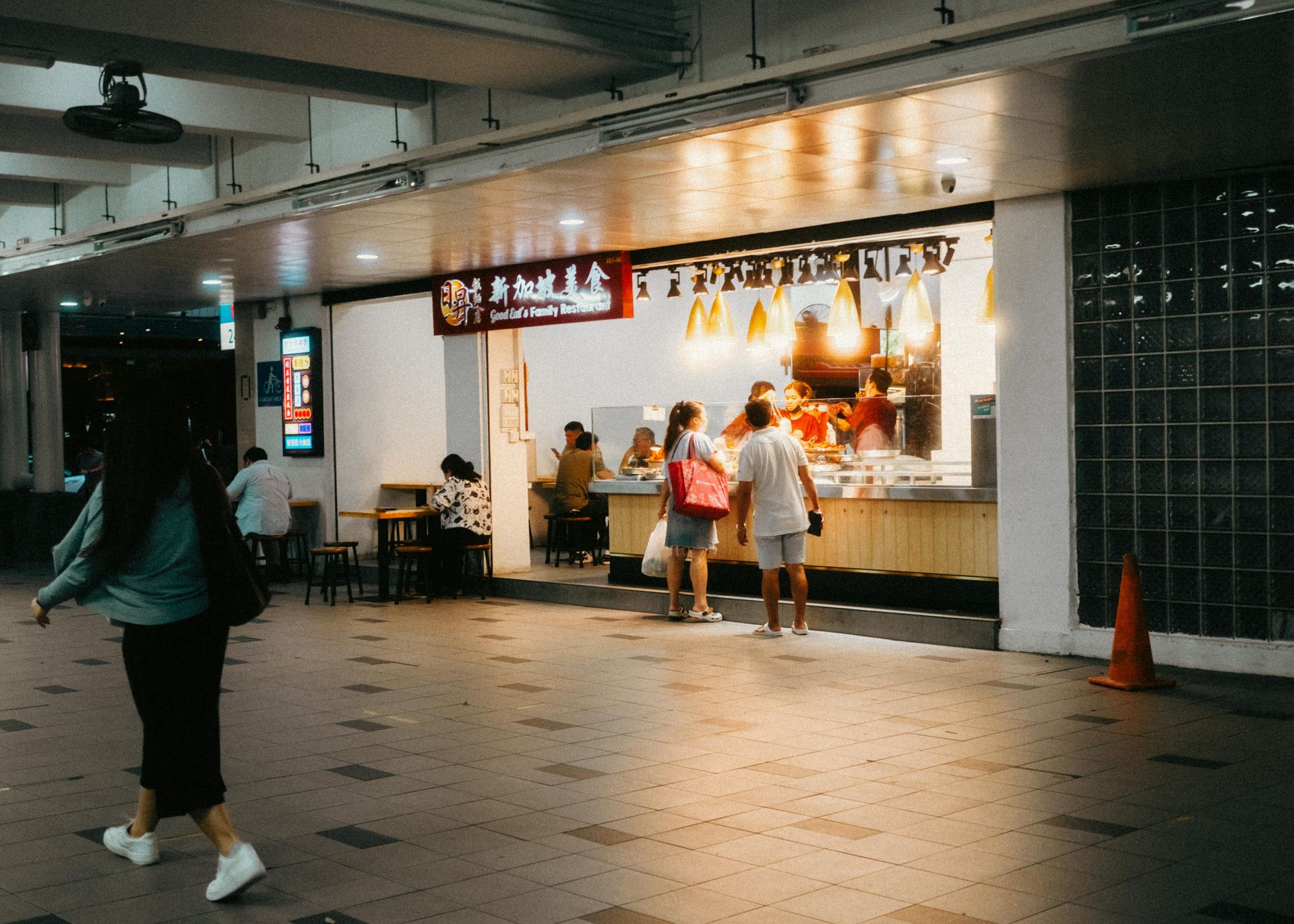
Hawker centres, these popular food courts, are at the heart of Singaporean social life. The practice of "chope" (reserving your table with a packet of tissues) is one local custom to adopt. To discover more aspects of social life, see our guide to building your social network.
Managing Your Budget and Finances
Singapore offers an attractive tax system for residents: no capital gains tax, no inheritance tax, and a progressive income tax scale that remains moderate compared with many Western countries. Income is taxed according to a tiered system, with a maximum marginal rate that applies only to the highest incomes.
Opening a local bank account is simple and quick with the main banks (DBS, OCBC, UOB). Banking services are fully digitalised, and the PayNow instant payment system makes transfers between individuals easy. For international transfers, compare fintech solutions, which often offer better rates than traditional banks.
Main Expenditure Items
| Category | Monthly Range (SGD) | Notes |
|---|
| Accommodation (3-bedroom condo) | 4 000 - 7 000 | Varies according to neighbourhood and facilities |
| International schooling | 1,500–3,000 per child | Excluding initial registration fees |
| Food and groceries | 1 200 - 2 000 | Hawker centres are cheaper than supermarkets |
| Transport | 150 - 400 | MRT is economical, cars are expensive |
| Private health insurance | 300–800 per person | Essential, as medical care is expensive |
For a detailed analysis of costs, see our daily life and budget page, which breaks down everyday expenses.
Settling in with Your Family
Moving as a family requires careful attention to the needs of each member. The choice of school often determines where you live: the French school of Singapore (IFS) attracts many French-speaking families, while others choose English-language or bilingual international curricula.
Spouses holding a Dependant's Pass can apply for authorisation to work (Letter of Consent), making it easier to continue their professional activity. Children generally adapt quickly thanks to the many extracurricular activities and the safety that allows them a degree of independence from an early age.
Singapore offers an exceptional family environment, with its parks, libraries, museums and cultural activities. To explore this aspect further, see our guide to thriving as a family.
Frequently Asked Questions
How long does it take to obtain an Employment Pass?
Processing an Employment Pass application generally takes between one and three weeks once the complete application has been submitted. Processing times may vary depending on the complexity of the profile and the COMPASS points system. Make sure all your documents are certified and translated before submitting your application to avoid delays.
Can you move to Singapore without a job lined up?
It is very difficult to move to Singapore without a work visa, as most long-term visas are linked to employment. Certain highly qualified applicants may apply for the ONE Pass, which offers greater flexibility, or explore the entrepreneur visa if they wish to set up a business. Looking for a job from your home country remains the most common route.
Do children need to speak English to attend a school?
At the French School of Singapore (IFS), teaching is in French and follows the French national education curriculum. English-language international schools generally require a certain level of English, sometimes offering language support classes to ease the transition. Many non-English-speaking children adapt quickly thanks to daily immersion.
Do you need a car to live in Singapore?
No, the public transport network (MRT, buses) is extremely efficient and covers the entire island. A car represents a considerable investment because of the compulsory Certificate of Entitlement (COE), which can cost several tens of thousands of dollars. Most expats use public transport, supplemented by taxis or private-hire services for occasional journeys.
How can you meet other French speakers in Singapore?
The French-speaking community in Singapore is active and well organised. Join associations such as AFIS, attend Alliance Française cultural events, or sign up for French-speaking sports or leisure groups. Social media and expat forums also make it easier to meet people and exchange practical advice between newcomers and established residents.
Which health insurance should you choose when you arrive?
Medical care in Singapore is of excellent quality but expensive without insurance. Check whether your employer offers group cover; if not, take out international private health insurance before you leave. Compare the levels of cover (hospitalisation, consultations, maternity, dental care) and make sure your policy covers your entire family if you are moving with relatives.