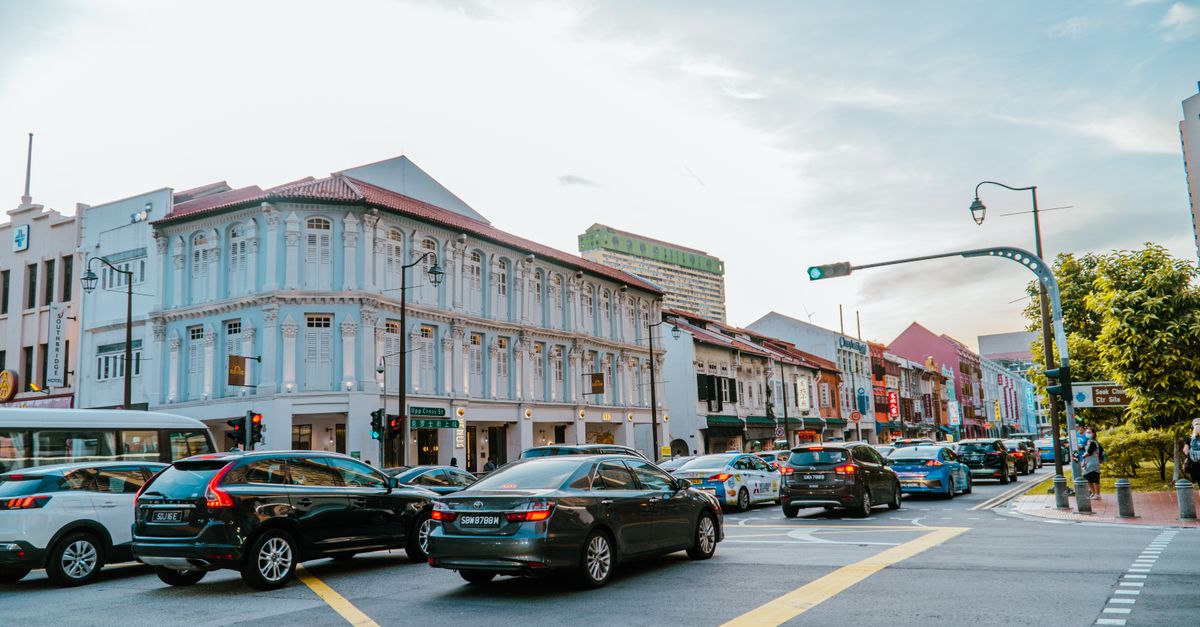
Buying a car in Singapore
The 2026 guide to understanding the COE, the real price of a vehicle and more affordable alternatives.
In Singapore, buying a car is not simply a lifestyle or comfort choice. It is a major budget decision, governed by a system unlike any other in the world, where the right to own a vehicle often costs almost as much as the car itself. In 2026, the subject continues to surprise newly settled French-speaking families, especially those who instinctively compare Singapore with Europe, where people first assess the model, engine and financing. Here, the real starting point is called the COE, the certificate obtained through an auction that determines the purchase, how long the vehicle can be used and even its resale.
In practice, Singapore remains a city where you can live very comfortably without a car, thanks to a particularly efficient MRT and bus network, relatively affordable taxis and services such as Grab, and occasional rental or car-sharing options. However, certain situations change the equation: a large family, school-to-office journeys that are too demanding, irregular schedules, sports activities across the island, or frequent trips to Malaysia. The subject therefore deserves to be examined using realistic figures, cautious ranges and a very practical view of the total cost of ownership, far beyond the showroom price.
Singapore expat calculator
Buying a car in Singapore in 2026
Estimate the total cost of owning a car in Singapore, compare it with a taxi/Grab budget, and see whether buying seems reasonable. Amounts in Singapore are highly volatile: use this calculator as a cautious guide, not a quotation.
Settings
Important reminder
In Singapore, the COE, insurance, parking and running costs can vary significantly. This calculator uses cautious amounts and is intended for comparison, not as an official estimate.
Results
Estimated total cost
—
Average monthly cost
—
COE share of the total
—
Comparison threshold with Grab / taxis
—
—
Recommendation
—
—
Quick overview
- The COE often accounts for a very large share of the total cost.
- If your monthly transport budget is close to the average monthly cost, the alternatives often become more relevant.
- Parking and ERP charges can push the bill up much faster than expected.
Why buying a car in Singapore in 2026 remains such a distinctive decision
The first instinct for a French-speaking expat arriving in Singapore is often to think that a car will simplify everything. On paper, the argument seems obvious: dropping the children off at school, getting to the office, doing the shopping and going away at weekends without relying on taxis or public transport timetables. In reality, this trade-off is confronted by a mobility economy very different from that of a country such as France. A car is not a “normal” purchase in Singapore; it is a scarce asset, limited by public policy, heavily taxed and subject to substantial recurring costs.
This scarcity is no accident. Singapore is a dense, compact island with limited space and a clear determination to limit traffic congestion. For decades, the government has built a system that prevents unlimited growth in the car population, in order to preserve smooth urban traffic, air quality and the efficiency of the road network. The result is striking: while many major cities suffer from congestion, Singapore retains a degree of control, at the price of making car ownership accessible only to those willing to accept a very hefty bill.
For an expat family, the real question is therefore not “which car should we buy?”, but should we really become vehicle owners in Singapore? This question should be considered in light of everyday reality. A household living near an MRT station, with an accessible school, a well-served workplace and flexible urban habits, can live without a car for years. Conversely, a couple with several young children, a fragmented schedule and activities outside the centre may quickly feel the limitations of relying entirely on public transport. The right choice is never abstract: it depends on your lifestyle, neighbourhood and available budget.

Another often underestimated point concerns the emotional relationship with the car. In Singapore, owning a vehicle can feel reassuring, almost symbolic, because it gives the impression of regaining control in a highly organised environment. But this feeling has a real cost. The comfort is certainly there, but you need to treat it as you would a luxury expense. This is why the decision should be viewed through the lens of the household, not just the pleasure of driving.
The COE in Singapore: the permit to buy a car before you even drive it
The Certificate of Entitlement, better known by the abbreviation COE, is the central element of Singapore’s car market. Without it, it is impossible to register a private car for personal use. This certificate gives you the right to own and use a vehicle for 10 years, and no longer, unless it is renewed when it expires. For many expats, this is the biggest culture shock: you are not just buying a vehicle, you are also buying the right to have it.
The COE is allocated through bidding, and its price varies according to demand, market sentiment, government policies and the needs of private fleets. There is therefore no fixed rate, making any rigid calculation unrealistic. In 2026, it is best to work with cautious ranges: for a small or medium-sized car in Category A, the COE may be somewhere between 40,000 and over 100,000 SGD, depending on periods of high demand. Category B, which covers more powerful or larger-engine cars, may be priced at similar or sometimes higher levels, with peaks that go well beyond the psychological threshold for families.
Why such a system? Because Singapore has chosen not to let the number of cars increase freely. The objective is simple: to preserve traffic flow on an island where space is limited, avoid hours lost in traffic jams and manage the externalities associated with private cars. Historically, this approach also responds to the very real challenge of urban density. When the car population grows too quickly, the city grinds to a halt. The COE therefore acts as a regulatory pressure valve: certainly a harsh one for consumers, but remarkably effective as a transport policy.
The distinction between Category A and Category B makes a huge difference to the budget. Category A covers vehicles with more modest power, often city cars, compact cars and small family SUVs. Category B applies to more powerful, heavier or higher-end models. In practice, this classification strongly influences buyers’ choices: a family that does not need a large engine will often try to stay in Category A to limit the impact, but even in this category, the COE can turn an ordinary car into a forced premium purchase. This is one of the most visible paradoxes of the local market.
The price of a car in Singapore: ARF, taxes and the vehicle’s actual value
The COE is only one layer of the overall cost. In Singapore, the price of a car also includes the ARF, or Additional Registration Fee, as well as other taxes and registration-related charges. The ARF operates progressively: the higher the vehicle’s taxable value, the more the bill increases. In other words, a better-equipped model or premium brand carries a heavier tax burden. This is what makes buying a high-end vehicle particularly eye-watering.
The key point for an expat buyer is that the vehicle’s basic price almost never reflects its final cost. For some common models, the “actual” share represented by the vehicle itself can be surprisingly small compared with the total amount paid to the dealer. A small hybrid SUV or family hatchback may have a total price that seems absurd from a European perspective, even though the value of the bodywork, engine and equipment accounts for only a fraction of the bill. The rest goes on taxes, the certificate, dealer margins and administrative fees.
One telling example: someone buying a Japanese family car may pay a total of between 100,000 and 150,000 SGD, sometimes more if the COE is high or the model is positioned further up the range. Yet the vehicle’s “market” value before taxes may be far lower. It is precisely this gap that shocks newcomers. In Europe, an expensive car is often expensive because it has a more powerful engine or a better finish. In Singapore, a significant part of the price primarily reflects regulatory scarcity.
European brands are often penalised even more, as they combine a higher starting price with progressive taxation. By contrast, Japanese vehicles and certain Asian brands are often the most “reasonable” choices—not because they are cheap, but because they limit the escalation. The distributor also plays a key role, sometimes holding exclusive rights to a brand in the country. This situation reduces competition and can push prices upwards. The local car market is therefore not only heavily taxed; it is also small, concentrated and highly structured. This is where the real cost becomes clear.
The total cost of owning a car in Singapore: insurance, parking and ERP
The real trap for a household doing a quick calculation is to stop at the purchase price. In Singapore, the total cost of ownership includes monthly and annual expenses that need to be factored in from the outset. Insurance is one of the first items to keep an eye on. For a standard family car, a cautious range is often around 1,300 to 2,500 SGD per year, depending on the main driver’s age, claims history, model and excess. A first policy may be more expensive, then fall if the local no-claims discount improves.
Parking is the other cost that comes as a surprise very quickly. In residential areas, a space in an HDB season carpark can already represent a regular and significant expense. In the city centre or highly sought-after areas, the bill can become genuinely steep. In the CBD, some monthly spaces approach eye-watering amounts, with prices ranging from a few hundred to well over 500 SGD per month in the most sought-after locations. Orchard Road and major office complexes are also expensive.
On top of this comes ERP, the electronic road-pricing system. It is not a conventional toll, but a traffic-management mechanism that charges for using certain roads during particular time periods. The amount depends on the route, time and zones crossed. For someone who lives and works nearby, the cost may remain reasonable. For someone who regularly travels along congested routes, the bill rises quietly month after month. It is precisely this diffuse nature that makes it so dangerous for a family budget.
Fuel, maintenance, car washes and road tax are added on top. For a basic family car, the total can quickly amount to several hundred SGD per month, even without taking depreciation into account. The conclusion is clear: in Singapore, a car is not only expensive to buy, it is expensive to keep running. It is the sum of these small, recurring costs that tips the decision towards the sensible option or the unnecessary one.
To visualise the impact on a household budget, a simulation tool often helps you reach a decision faster than a lengthy theoretical debate. Between the initial cost, annual expenses and resale, the trade-off becomes much more concrete when you add the journeys actually made in a typical week.
This kind of calculation often changes the initial perception. A car that seemed “manageable” quickly becomes a major item in the housing-school-daily life budget, especially in a city where many families realise that taking the occasional taxi costs less than full car ownership. This is why the total cost matters more than the price displayed on the windscreen.
Category A or Category B: how to choose the right vehicle
The choice between Category A COE and Category B depends first and foremost on your actual needs, not on the prestige of the model. Category A covers cars with more modest power, often the most logical choice for city driving. For an expat family, this generally means a small SUV, a compact car or a saloon designed for everyday use. Category B opens the door to more powerful, larger or more premium vehicles, but the extra cost can be difficult to justify if the car is mainly used in the city.
In practice, many households look for a compromise: boot space, easy parking, reasonable fuel consumption and enough comfort for the children. A hybrid model or a small urban SUV often fits the bill. This type of vehicle is not glamorous, but it makes sense because it limits the financial impact while remaining fairly easy to live with in cramped car parks. The aim is not to impress, but to get by without breaking the bank.
Category B can make sense in a few specific cases. Some families prioritise a larger car for fitting three child seats, carrying luggage or sports equipment, or regularly making longer journeys. Others need a more powerful vehicle because driving comfort matters over long distances, particularly when travelling to Malaysia. But you have to accept a simple principle: the more ambitious the vehicle, the higher the entry cost, and the more painful the financial hit will be when you resell it.
The right approach is to compare your actual usage with the annual cost. A larger car may seem reassuring, but if it is almost always used in the city, its additional cost becomes difficult to justify. Conversely, a model that is too small can quickly frustrate a large family. In Singapore, the right middle ground is not an abstraction; it is often the result of a highly pragmatic negotiation between family comfort, urban constraints and budget discipline. Once again, concrete needs should take priority over image.
More affordable alternatives to private car ownership in Singapore
For many expats, the real good news is that there are credible alternatives to owning a car. The MRT network and buses are extensive, reliable and well integrated. In central and semi-central neighbourhoods, getting to a school, office or shopping centre is often faster by public transport than by car during peak hours. It is not merely an “economical” option; it is sometimes the most rational one.
Grab and taxis also play a major role. They allow you to cover occasional journeys without taking on all the fixed costs of a vehicle. For a couple or a small family, using taxis regularly can still cost far less than owning a car annually. Many households discover that they only use a car for very specific needs: large shopping trips, medical appointments, late-night outings or rainy days. In such cases, paying as you go makes more sense than owning one permanently.
Car-sharing and occasional rental reinforce this logic. When a weekend in Desaru, a trip to Johor or a special journey is coming up, booking a vehicle for a day or two may be enough. This model avoids fixed costs while preserving occasional freedom. Cycling, meanwhile, remains suitable for some short journeys, as do PMDs where their use is permitted and appropriate to the local setting. For short trips within residential areas, they offer genuine flexibility.
The most appealing thing about this range of options is that it allows you to create a hybrid transport solution. A family can easily live without a car day to day and rent one when necessary. For households based near MRT lines, this is often the smartest strategy financially. It offers the freedom to get around without having to bear the tax and administrative burden of a private vehicle. In Singapore, the alternative is not a second-best option; it is often a winning strategy.

This lighter approach to mobility works all the better because the city was designed for it. Where other metropolises make a car essential, Singapore has built infrastructure that makes going without one viable. For many households, this reality changes everything.
When owning a car in Singapore really becomes worthwhile for an expat family
Owning a car starts to make sense again in a few clearly defined scenarios. The first concerns large families or those with very busy schedules, with several children, pushchairs, school bags, extracurricular activities and journeys at different times. When days involve a constant round of school, sport, medical appointments and work, a car can sometimes prevent logistics from becoming fragmented. It becomes a tool for domestic peace of mind, even if it is expensive.
The second scenario involves regular trips off the island, especially to Malaysia. For people who cross the border frequently, transport belongings, visit family or take frequent long weekends, having a personal vehicle can be genuinely worthwhile. The car then makes it easier to manage space, schedules and flexibility. Without this cross-border use, the financial case is considerably weaker.
There are also more specific situations: living in an area with poorer transport links, unusual working hours, recurring medical needs, or frequent transport of bulky equipment. In these cases, a car is no longer a whim. It becomes a household service. That does not make it cheaper, but it does make it easier to justify. The distinction is essential: buying a car in Singapore is not a good idea because it is generally “convenient”, but because it can sometimes meet a very specific and regular need.
The useful question to ask is how many times a week a vehicle would genuinely change your life. If the answer is “a little”, you probably do not need a car. If the answer is “every day, several times”, then the calculation deserves closer consideration. In Singapore, automotive comfort is never free, but it can make sense when family life genuinely requires it. Everything else is often just an elegant justification for an accepted luxury.
Resale, COE lifespan and the 10-year financial trade-off
The COE lifespan completely shapes what happens to the vehicle at the end. After 10 years, there are two main options: scrap the car and recover part of the amounts linked to the vehicle, or renew the COE if the market and budget allow it. In theory, selling before the expiry date can also be worthwhile, particularly when COE prices are high and push up second-hand values.
This is where a fascinating feature of the Singaporean market emerges: resale value depends heavily on the current COE. If the price of a new certificate rises, already-registered cars become relatively more attractive. As a result, an owner who bought at the right time may lose very little, or even recover part of their outlay thanks to market tightness. Conversely, a purchase made when COE prices are at a peak can become a serious financial haemorrhage if the car is resold at the wrong time.
This mechanism means thinking of a car as a time-limited asset rather than something you keep indefinitely. The best time to sell is often between 3 and 5 years, when the car is still recent enough to appeal to a buyer, while having already absorbed part of the depreciation from use. This does not mean there is a magic rule, but this window is often the most rational for limiting losses.
Families that think things through therefore consider three time horizons: the entry cost, the running cost and the exit value. This trio is more useful than a simple comparison of new-car prices. In Singapore, the final gain or loss depends as much on COE market conditions as on the vehicle’s wear and tear. The market sometimes rewards patience, sometimes luck, and often the discipline to resell at the right time.
| Cost item | Cautious range in Singapore | Impact on a household |
|---|---|---|
| Category A COE | Around 40,000 to over 100,000 SGD depending on the market | Determines the starting point for the purchase |
| Category B COE | Often at levels comparable to or higher than Category A | Makes more powerful cars considerably less accessible |
| Annual insurance | Around 1,300 to 2,500 SGD | Varies according to the driver’s profile and driving history |
| Monthly parking | From a few dozen to several hundred SGD | Can exceed the fuel budget |
| ERP and urban use | Varies according to the journeys | A modest but recurring cost |
| Maintenance and servicing | A few hundred to over 1,000 SGD per year | Rises quickly for premium vehicles |
This type of table helps to put the essentials into perspective: in Singapore, a car is not only expensive at the outset, but expensive at every stage of its life. That is precisely what makes it closer to a functional luxury product than to a simple means of transport.
A typical budget, common pitfalls and useful pointers for making the right decision
For an expatriate household, the right approach is to draw up a complete budget before signing anything. This budget should include the COE, ARF, insurance, parking, fuel, maintenance, road tax, car washes, ERP and a realistic resale assumption. A family can quickly convince itself that a vehicle “will not cost that much” if it only compares the price with that of a car in Europe. In Singapore, this comparison is misleading because the cost structure is entirely different.
The classic pitfalls are easy to identify. The first is underestimating parking costs, especially when the household lives in HDB accommodation but works in an expensive area. The second is assuming that maintaining a small model will always be inexpensive; in reality, dealer servicing packages, parts availability and the type of powertrain can quickly push up the bill. The third pitfall is psychological: buying in response to immediate convenience, then discovering a few months later that the alternatives would have been sufficient.
A useful benchmark is to compare the car with the cost of a mix of MRT, taxis and occasional rental over one year. If this mix remains far cheaper than the vehicle’s total cost, ownership only makes sense if there is a genuine lifestyle constraint. On the other hand, if the family uses a vehicle almost every day, especially outside the centre, the car becomes easier to justify. The right criterion is not the desire to own one, but the real level of relief it provides.
To sum up the decision-making approach without turning it into an abstract formula: the more centralised your life is, the more sufficient the alternatives will be; the more spread out your life is, the easier it is to justify a car. In Singapore, this simple logic helps avoid many mistakes. Buying a car here is rarely a rational impulse purchase. It is often a carefully calculated compromise between family logistics, everyday comfort and the budget’s ability to absorb a luxury that has become almost structural.
Frequently Asked Questions
Can you buy a car in Singapore without obtaining a COE?↓
No. A COE is compulsory to register and own a private car in Singapore. Without this certificate, the purchase cannot be completed for standard private use.
How much does a family car really cost in Singapore in 2026?↓
For a typical model, the total budget is often in the region of 100,000 to 150,000 SGD, and sometimes more depending on the COE, category, make and taxes.
Is it better to choose a Category A or B car?↓
Category A is usually suitable for families looking to keep costs down and mainly drive in the city. Category B becomes relevant if power, size or comfort is essential, but the cost rises significantly.
Are public transport options in Singapore sufficient for a family?↓
In many cases, yes. The MRT, buses, Grab and car-sharing cover most daily needs very well. A car is mainly useful for larger families, complicated schedules or frequent journeys to Malaysia.
Is it possible to sell your car without losing everything?↓
Yes, especially if the COE has risen significantly in the meantime or if the car is resold during a favourable window, often between 3 and 5 years. The resale value depends heavily on the COE market at the time of sale.
Need help choosing?
Compare your mobility options and connect with the French-speaking community on our forum.